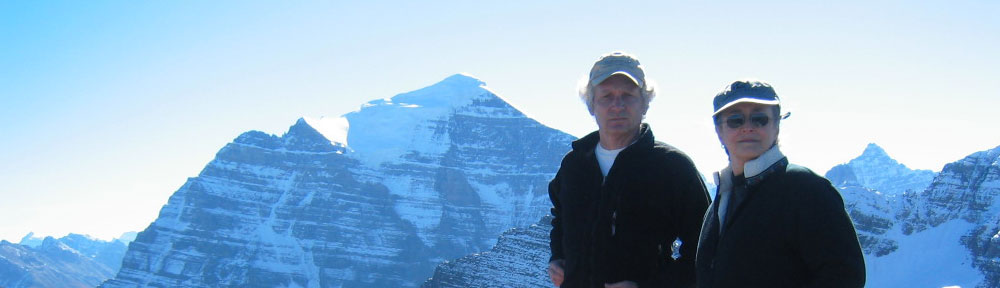
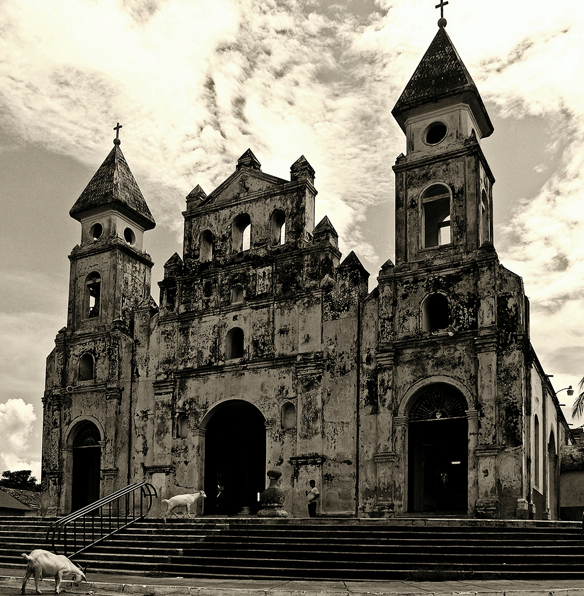
 Our Swiss friends from Bern, Linda and Hubert, are now living in Nicaragua. They have invited us to come visit. We are going to take them up on their generous offer this February, 2014.
We figure February is the right month.
It will be winter here in Cambridge, while in Nicaragua, it will be summer.
 In February, the average Cambridge temperature will be 30° F, while in Managua, Nicaragua, it’ll average 81° F.
Nicaragua can get really wet. February is about as dry as it gets.
The blue bars on the chart to the left are inches of rain.
In February, Nicaragua will still be green from the October and November rains, while the days will be sunny.
2014 is the right year, because Hubert and Linda won’t be in Nicaragua all that much longer.
The tentative plan is to stay with Linda and Hubert in Managua for a few days at the beginning and the end of our trip.
We don’t want to overstay our welcome, and they will be having European guests in town for the International Poetry Festival in Granada.

Initially I was thinking we would hit a few Nicaraguan highlights and then slip across the border to Costa Rica.
Lots to see and do in Costa Rica, and it’s tourist friendly.
Nicaragua, on the other hand, is on the raw and rugged side.
Which is not necessarily a bad thing, if approached properly. The more I looked at Nicaragua the better it looked.
Nicaragua is relatively safe, inexpensive, and undiscovered.
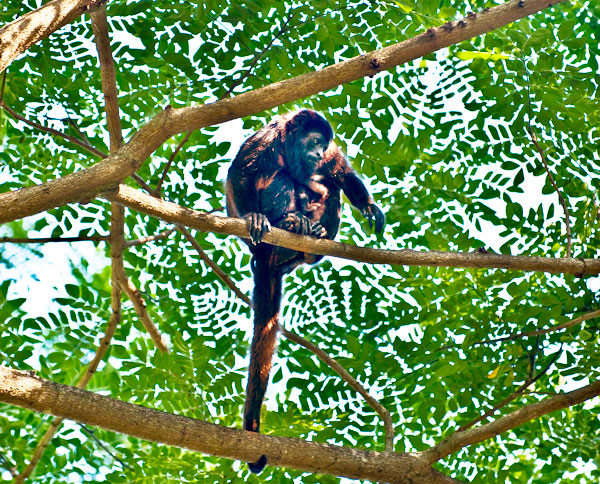
Linda says that friends, who visited from Germany, said they saw more animals in their first four days in Nicaragua than in two weeks traveling with a tour group through Costa Rica.
The deal was sealed, when I discovered Nicaragua’s volcanoes. Nicaragua has world-class volcanoes.
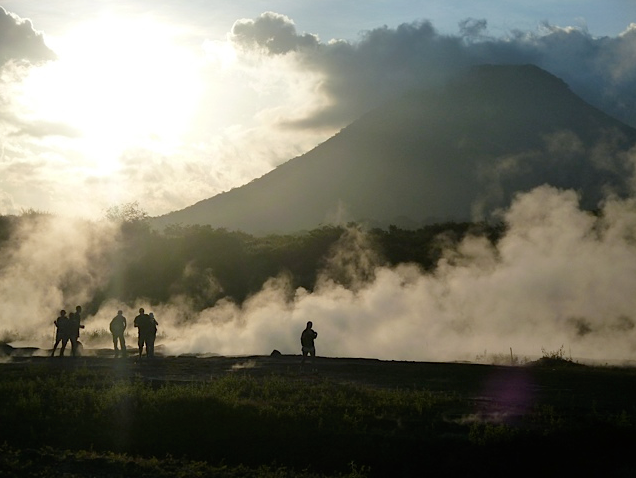
Costa Rica is going to have to wait.
We’re going to hike Nicaragua’s Ring of Fire, see the sights, and attend Spanish School along the way.

We will begin and end in Managua. In between, we will stay in León, Granada, and Ometepe.
Managua
Our plan is to avoid Managua.
Except for Linda and Hubert’s neighborhood, which is said to be both safe and lovely.
The rest of Managua is said to be neither. Best approached thoughtfully and carefully.
This is what Linda has to say about Managua:
“You mention culture. Managua doesn’t have “culture” per se. It has history, mostly sad. And poverty. As one young tourist told me before I’d ever been here, “Managua is a big, dangerous, ugly city and we got out as fast as we could.”
Managua is the capital of Nicaragua, today.
Nicaragua has been a bit out-of-control, and disorderly- for a very long time.
Nicaragua is the kind of place where in the 1500s the Spanish conquistadors famously fought each other in the War of the Captains.
Recently, criminals wanted in the USA have been spotted driving around in Winnebagos.
Maybe it’s the location. Nicaragua is a crossroads of sorts with the accompanying chaos that comes with such a location.
Nicaragua is smack dab in the middle of the Central American isthmus, linking North and South America.
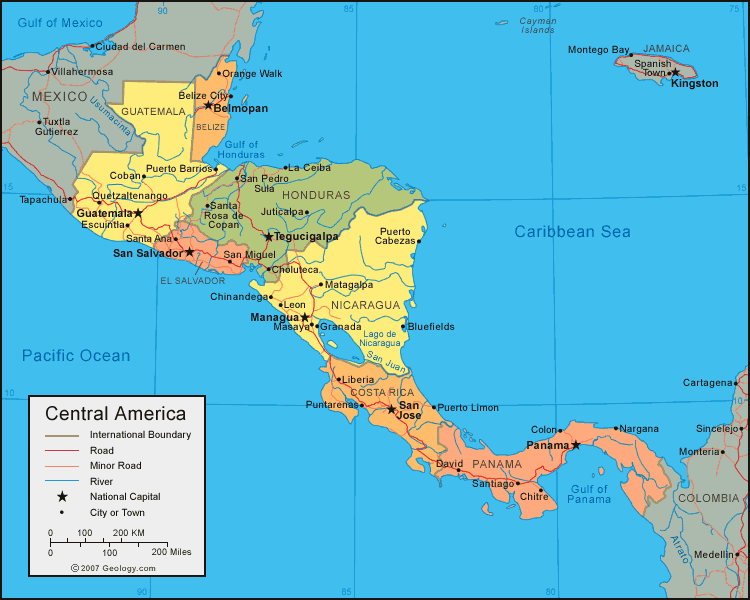
Honduras, murder capital of the world, is to the north, while gentile Costa Rica is to the south.
We will be flying into Sandino International Airport in Managua.
Since the early 1970’s the airport’s name has changed three times.
Today, Sandinistas, rule in Nicaragua, once again. And the airport is, once again, called Sandino International Airport.
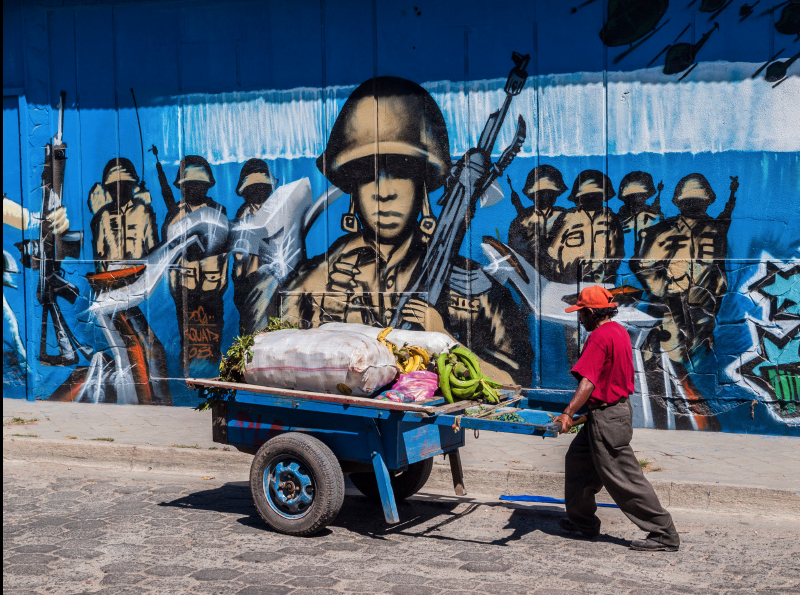
After LInda and Hubert arrived in Nicaragua, Linda sent out the following in her 2011 Xmas newsletter:
“Since we arrived in the house, we’ve had two tarantulas, one black coral snake – poisonous; she laid at least two eggs – and a three-inch scorpion.
“Fumigate!” the wives of diplomats told me. We removed our clothes from the closets, put everything in the kitchen into plastic bags or the fridge, and moved into a hotel for one night. By the time we returned, Carmen and Isidro had swept and mopped all the floors. Not a dead bug was to be found, though an odor of chemical lingered. I slept with a mask over my mouth and nose, and an sleep mask to cover my eyes.
Today, no mosquitoes bite me constantly while I sit at my computer, and no ants patrol the kitchen. Our ants were so tiny, they survived in the microwave while it was running! Carmen and Isidro said lots of ants and cockroaches came out from the walls, but no scorpions or spiders. All our geckos survived, thank goodness! The birds were fat and happy, stuffing themselves. I hope they didn’t ingest too much pesticide!
Once again, I feel confident in my own home. I have learned to wear shoes and not to walk on the lawn or swim in the pool in the dark. Hopefully, by the time the next scorpion or snake appears, I’ll be so acclimatized I can just ignore it. There is plenty of room in the ravine just beyond the garden wall for all the snakes, insects, and mosquitoes.”
I find Linda’s comments on arriving in her new world, far from Switzerland, most charming.
That said, on this trip, I’ll be wearing shoes-
Always.
León

León is about an hour and a half drive from Managua and the second largest city in Nicaragua after Managua. As of 2005, the city had an estimated population of about 175,000 people.
 León is the principal city of northwestern Nicaragua- An area that has been described as steamy, volcanic and intellectual. León is home to Nicargua’s best museums, oldest universities and finest churches.
Also home to Flor de Cana, a distillery for one of the world’s best rums.
Flor de Cana has won more than 100 international awards since 2000.
We hope to visit, taste some, and then if it’s as good as advertised, bring a couple of bottles home.
Which means I should acquire some of those specially-designed, leak-proof bottle armor bags for packing glass bottles in luggage- that Sharon has been hinting about for years.
Our Peruvian Ocucaje Verde Pisco made it home without mishap, wrapped with shirts and buffered by socks. One of these days my luck is going to run out.
No need to tempt the luggage-handling fates.
Old León was founded in 1524 and abandoned in 1610 when the Momotombo Volcano erupted.
In 2000, the remains of the founder of Nicaragua, Francisco Hernández de Córdoba, were found in Old León, sans head.

Cordoba was an officer under Conquistador Pedrarias Dávila, known as Pedrarias the
Cruel.
Cordoba himself seems to have been a good guy, at least in a relative kind of way.
As one Nicaraguan scholar put it,
“He’s one of the few Spanish conquistadors of whom there are no accounts of
atrocities against the Indians, That’s very unusual.”
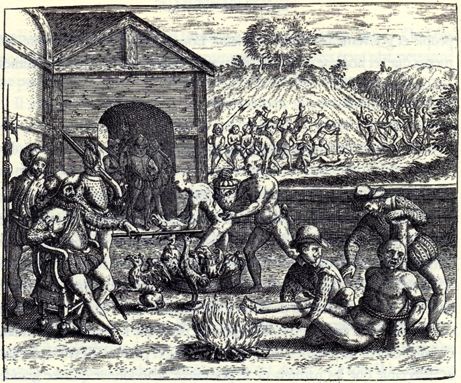 Dávila, on the other hand, was a very bad guy:
“The history of the Spanish conquest is filled with tales of wanton ferocity and
slaughter,
but even in that context, Davila was something special. In pursuit of the riches of the natives, he murdered them so profligately and so barbarically that when his men fell into Indian hands, they were forced to drink molten gold.”
As the story goes, Davila had Cordoba decapitated, because Davila thought he could become a rival.
“The head of Nicaragua’s founder [Cordoba] was stuck on a pole in the town plaza, a reminder to others of the costs of incurring Davila’s wrath, while his body was buried at the foot of the altar in Leon Viejo’s only church.”
The 21st century end to this 16th century story:
When the remains of both Cordoba and Davila were found in 2000:
“The remains of Hernandez de Cordoba were escorted out of Leon Viejo by a
military honor guard to lie in state at various sites throughout Nicaragua. After
that, they’ll be interred in a special crypt near the church where he was originally
buried.
Davila’s bones have gone to a back room at the National Museum.”
Clearly, no love for Davila, even after 500 years.
The back room of the National Museum- a very 21st century level of Hell.
León is a great base for visiting volcanoes.
Volcanoes, Volcanoes, Volcanoes
The Central American Volcanic Arc runs from Guatemala to Northern Panama. Nicaragua is front and center.
Volcanoes to spare.
There are 19 volcanoes in Nicaragua. They march across the Pacific lowlands, a volcano every 10 to 15 miles.
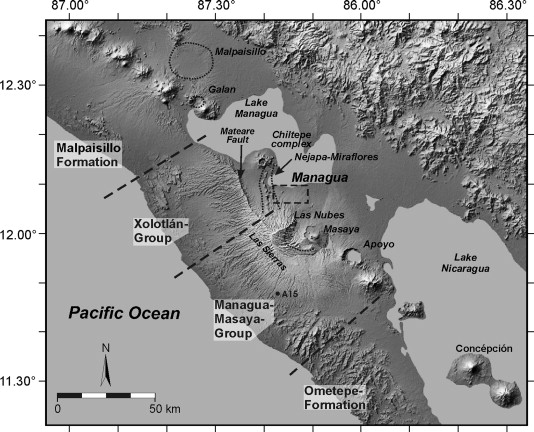
If all goes according to plan, we will visit/climb 5 from León: Cosigüina, San Cristóbal, Telica, and Cerro Negro.
We will also visit/climb: Masaya volcano from Managua; Mombacho volcano from Granada; and Maderas volcano from the island of Ometepe.
Some of these volcanoes are young. Some are old. Some are tall. Some are short. Some are extinct. Some are active. Some are dormant.

Cosigüina volcano is located in the far northwestern corner of Nicaragua, a bit out of the way, and as such it is one of the least frequented in Nicaragua.
Cosigüina blew it’s lid In 1835 in one of the largest and most explosive eruptions in Central America since the Spanish Conquest. The eruption cloud blocked out the sun in a 93 mile (150 km) radius.
Ash was thrown 870 miles north to Mexico City and and some huge pieces of rock splashed down in the ocean forming islands in the Gulf on Fonseca.

These would be worth a visit, but it might be a stretch. First one has to get to the local town of Potosí and then, the instructions go: “you can ask a fisherman to take you there.”
In any case, today, Cosigüina volcano is less than 500 feet tall with a lake inside. And purportedly has great views of El Salvador and Honduras, across the Gulf of Fonseca.
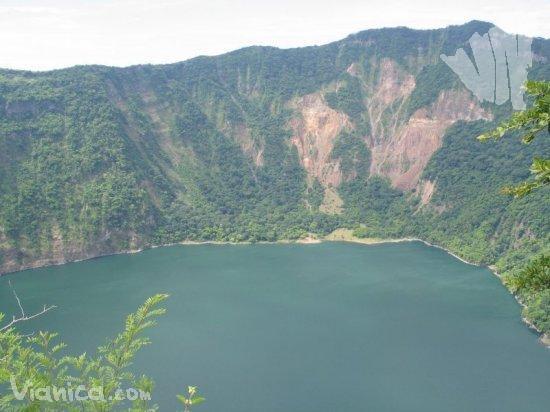
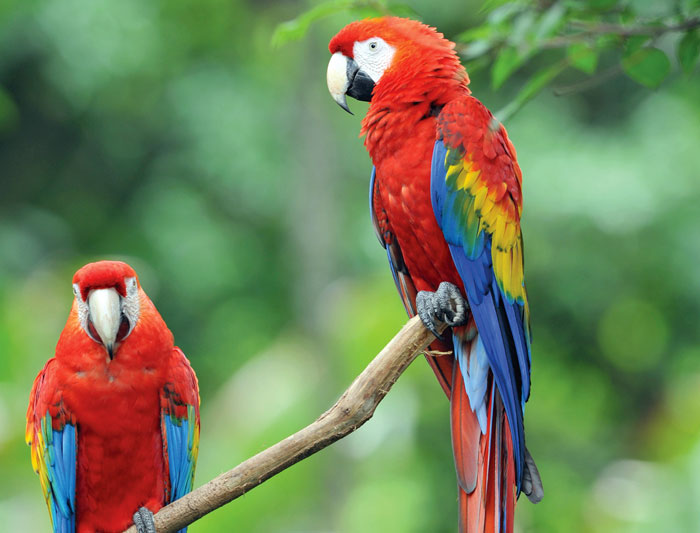
The forest reserve that wraps Cosigüina volcano is home to Scarlet Macaws. I’d love to see these in the wild.
Speaking of birds, the national bird of Nicaragua is the Turquoise-browed Motmot (below), found across all of Nicaragua. We’re going to keep an eye out.

Whereas Cosigüina is sleeping, San Cristobal, the next volcano down, is another story altogether.
San Cristobal is Nicaragua’s highest active volcano @ 5,725 ft.

It’s an hour and half drive from León. And a 9 to 10 hour hike up from there. Vamos a ver. We shall see.
The pic below purportedly was taken on top of Telica Volcano. I like this image a lot. It has a warm, comfy, end-of-the-world feel.

As you might gather from the red glow, Telica is an active volcano. The most recent eruption was in 2011.
We hope to visit Telica, I’m not sure we’ll do the overnight by the cone, but it’s tempting.
Cerro Negro, below, is youngest volcano in Central America.
Since its birth in 1850, Cerro Negro has erupted 23 times.

Cerro Negro is a 45 minute drive from Léon. While geologically interesting, Cerro Negro’s 21st century claim to fame is volcano boarding.
#2 on CNN’s “Thrill seeker’s bucket list: 50 experiences to try before you die.” One behind “Be a jet fighter pilot for a day” and one ahead of “Enter the Cage of Death, Australia.”

Here is a youtube video on volcano boarding Cerro Negro (volcano), with riding instructions and crash.
Hike up to the rim, hop on a board and ride down the 40+ degree slope.
We shall see.
Masaya volcano is Nicaragua’s first and largest National Park and as Linda says,
“It never fails to impress.”
I’m impressed already.
Masaya is supposedly the only active Volcano in the Western Hemisphere, where one can drive right up to the rim. For scale, note the car in the parking lot about half way up, on the left side of the pic below.
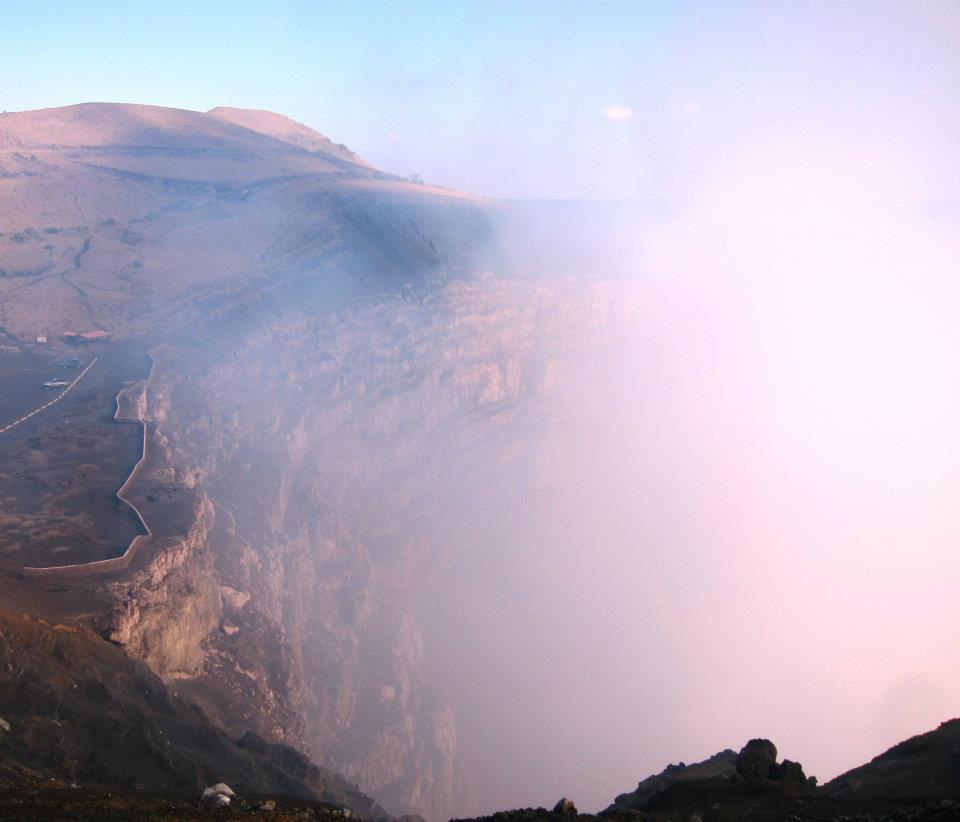
Masaya spews tons and tons of sulfuric gas into the air every year. Apparently it’s one of the largest natural polluters in the world. Sounds a bit hell-like.
Which is exactly how the first Spanish saw it in the 16th century- in a very literal kind of way.
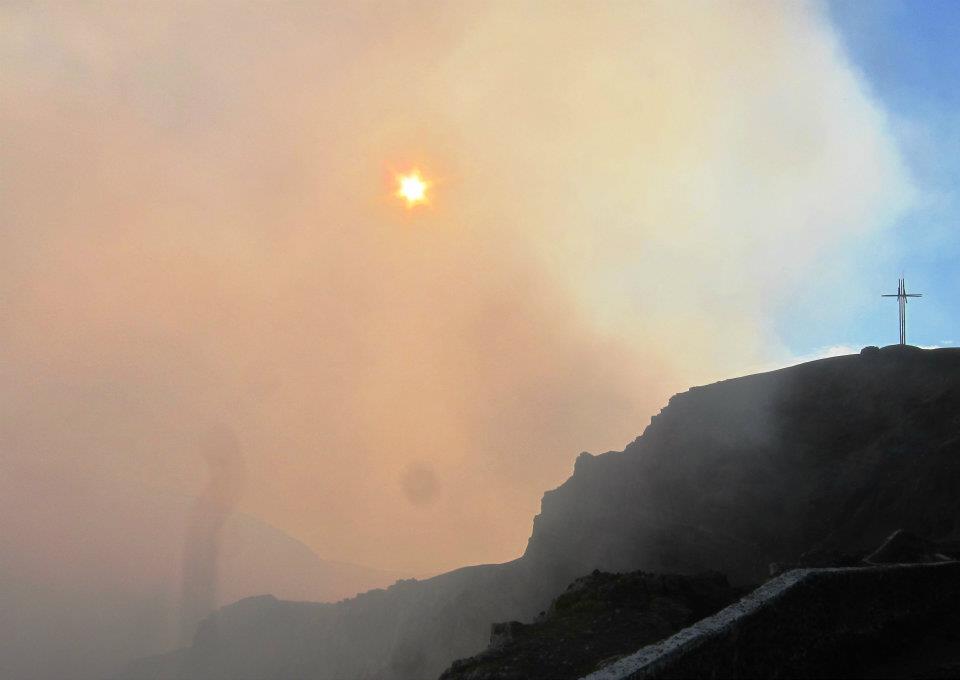
They thought they were actually seeing Hell’s front door. They named the volcano accordingly: “La Boca del Infierno” or “The Mouth of Hell”.
A group of friars climbed up to this mouth of hell and planted a cross in hopes of keeping the dark forces at bay. Although their efforts don’t seem to have been entirely successful, metaphysically, one has to admire their courage.
American-backed, Nicaraguan President-for-life, Somoza used to have his political rivals flown over the Masaya crater in a helicopters and dropped into the lava.

The Somoza family ruled Nicaragua as a family dictatorship from 1936 to 1979. As far as cruelty goes, they probably outdid conquistador Pedrarias Dávila.
And that’s saying something.
Masaya is rather active. The warning below says it all.
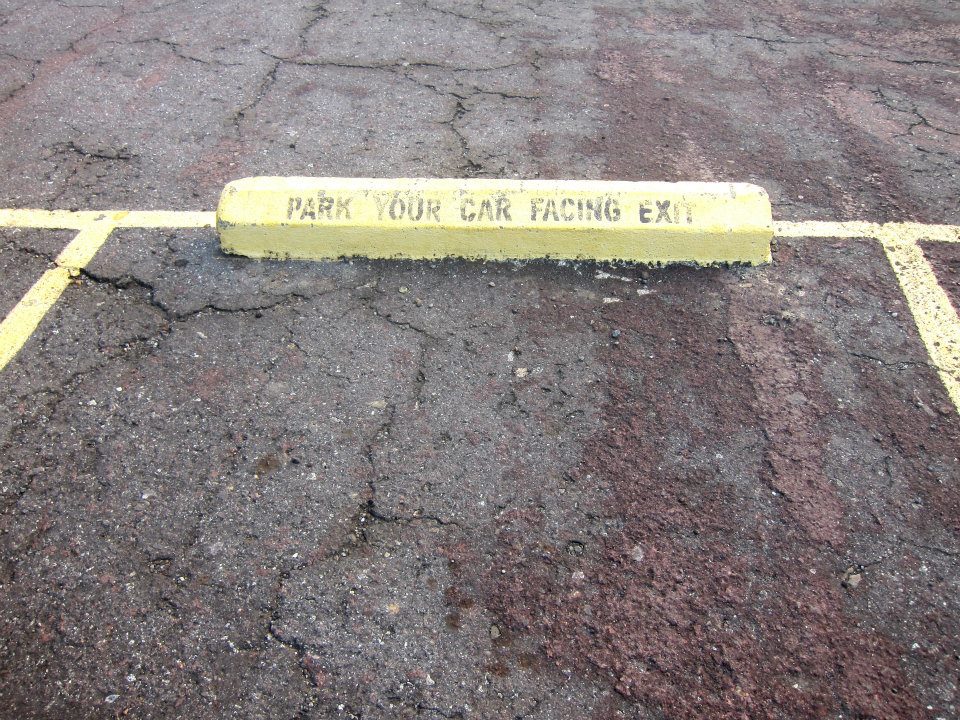
Here is a youtube video of Masaya’s 2008 eruption. American (likely) dad and kids on the walk along the rim, trying to get back to their car. It’s a classic. The audio might be even better than the video. My favorite lines:
This is not a good thing”
“Let’s go guys”
“This is not funny”
and the most inspired line…
“We should have made a sacrifice”
Granada
After a week or so in Léon, we will move a couple of hours down the road to Granada.

Granada is the sister city of León. It was founded in the same year -1524 – by the same Spanish conquistador – Francisco Hernández de Córdoba. He of the lost head.
Granada is a tourist favorite. It is also home of many of the country’s conservative, economic and political elite.
In the 1970s, Somoza bombed León, but left Granada alone.
Granada sits on on the edge of Lake Nicaragua. Lake Nicaragua is big, about twice as big as the Great Salt Lake in Utah, though a freshwater lake, or “sweet sea” as the translation goes.
Granada is said to be Nicaragua’s most picturesque town. And restoration is underway- fueled in no small part by USA ex-pat money.
That said, Granada is no San Miguel de Allende. No Orient Express Hotels. At least-
Not Yet.
Our guidebook says that much of Granada’s “colonial” architecture is intact.
I wonder about that- given the number of times Granada has been burned to the ground over the years.
In the 1600s, Granada was the most important city in Central America. And the most prosperous- fueled by the incredible New World wealth, which passed through the town on its way back to Spain.
Curiously, Spain ignored Granada’s vulnerability.
Which, predictably, made Granada a target for creative, infamous pirates, such as Henry Morgan and William Dampier.
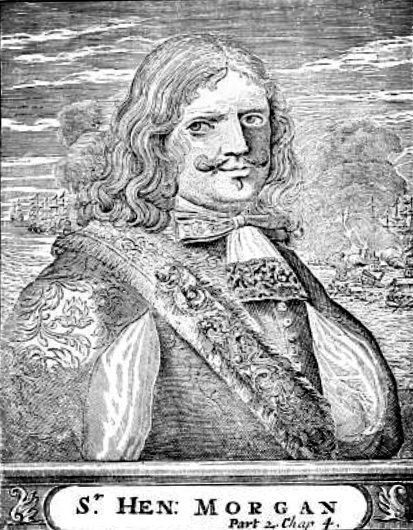 Sir Henry Morgan, came up the San Juan River at night, and surprised the Spanish in 1665.
He made off with a whole lot of treasure, burning Granada on departure.
In 1670, another pirate, Captain Gallardito, overran Granada once again.
The Spanish had had enough, and built the Fortress of the Immaculate Conception, next to a rapid in the San Juan River, effectively sealing the pirates of the Caribbean, off from Lake Nicaragua.
5 years later in 1685, buccaneer William Dampier overran Granada. He surprised the Spanish by coming in from the backside- overland from the Pacific. On his departure, he burned Granada once more.
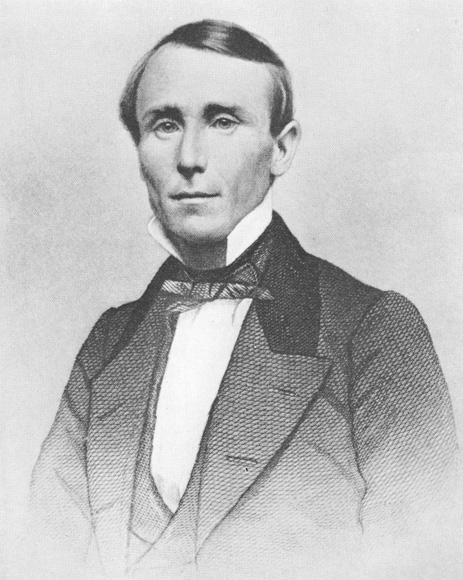 In the mid-1800s, a freelancing American, William Walker, ruled Nicaragua for about a year.
Walker was a lawyer, journalist, adventurer, and a true-believer in American manifest destiny.
First, unsuccessfully, he tried to take over Mexico.
Thanks to a fraudulent election and the backing of Wall Street tycoon Cornelius Vanderbilt, Walker realized his dream in Nicaragua, albeit briefly.
He lasted as “President” for about a year, and in the tradition of preceding pirates, burned Granada to the ground on his way out of town.
Our current plan is spend about a week in Granada. Same formula as León: Spanish school, and volcanoes.
Mombacho volcano is only 6 miles from Granada. Mombacho is one of the two cloud forest volcanoes in Nicaragua. Photo of Mambacho from Granada below.
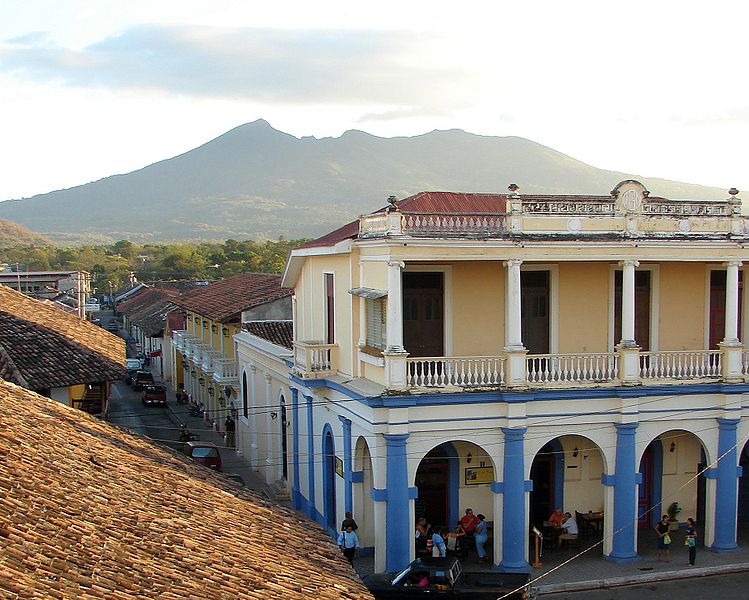
Mombacho is still classed as active, though the last eruption was in 1570.
The big draws for us are the cloud forests and the dwarf forests which are home to many exotic native plant and animal species, including bromeliads and red-eyed frogs.
After a week in Granada, the plan is to sail off across wind-swept Lake Nicaragua to the Island of Ometepe for a few days.
Isla Ometepe
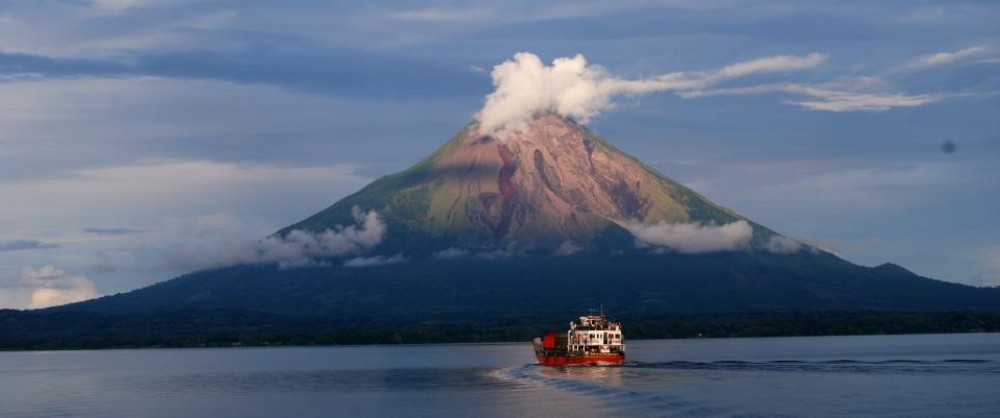
I’m not quite sure what the draw of Ometepe is.
But it’s working on me.
I suspect it’s an archetypal thing.
A huge freshwater lake in the middle of an isthmus between two continents. In the middle is an island of double volcanoes. One active and one extinct.
And swimming around the island are freshwater sharks.

Ometepe has been considered special for a very long time.
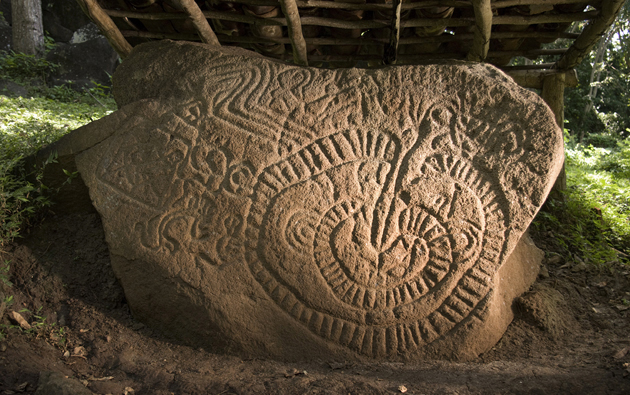
Native peoples believe the island is sacred.
Some say Ometepe should be considered one of the great rock art areas of the world due to the many petroglyphs and stone idols carved into and from basalt boulders spread over the island.
The oldest petroglyphs on Ometepe are said to date to around 1000 B.C.
Ometepe is the world’s largest volcanic island in a freshwater lake.
There are two volcanoes on Ometepe.
The northern volcano is Concepción, a perfectly-cone-shaped, active volcano. The southern volcano is the extinct Maderas, swathed in a cloud forest.
Linda and her family made the trip to Ometepe. Linda says she’s never going back.
Too isolated. Too third world.
We’re tempering our expectations and planning accordingly.
We hope to climb the Maderas volcano at 4600 ft.
This will be the big one of the trip. No 4 wheel vehicles driving us part way up. It’ll be legs all the way up- and all the way down.
We’ll have a guide, be expecting mud, and a very long day.
We’ll be in a cloud forest, with white-faced monkeys, mountain crabs, howler monkeys, and butterflies- including the Blue Morpho.
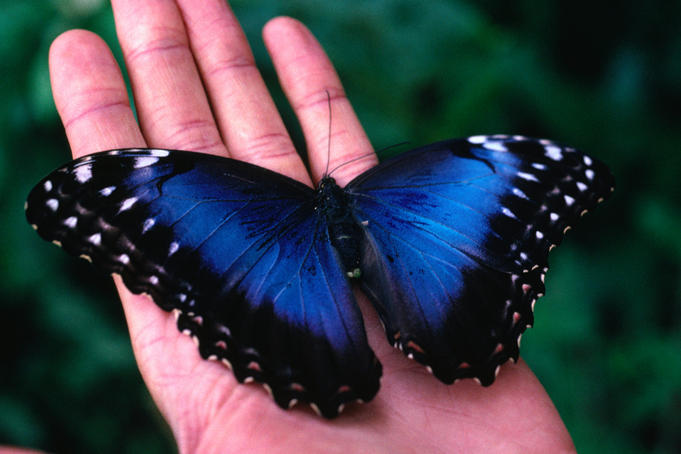
The iridescent Blue Morpho is one of the largest and most beautiful butterflies in the world, with wings spanning five to eight inches.
On reflection, it’s curious that butterflies seem to be becoming a theme in our travels.
I look at it as a good thing.
 Advencha before Dementia