The Wild Atlantic Way is relatively new. At least as a tag line. The trademark was registered in 2008 by Ireland’s national tourism development authority. The places go themselves are old, old, old. Folks have been hanging out in these parts at least 33,000 years.
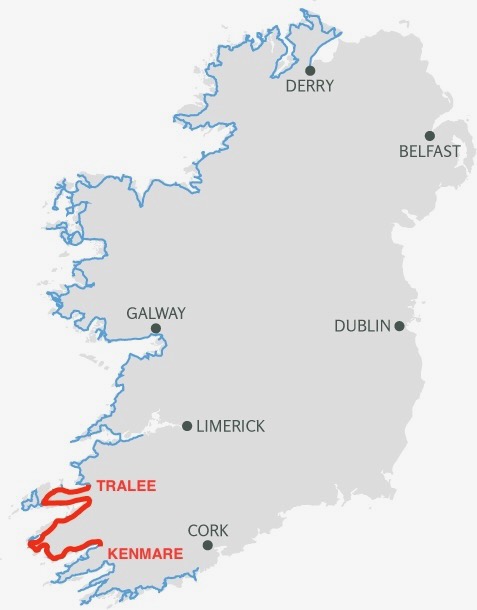
Today’s Wild Atlantic Way is 1500 miles of road along Ireland’s Atlantic Coast.
At one point I had schemes of pushing for the whole enchilada.
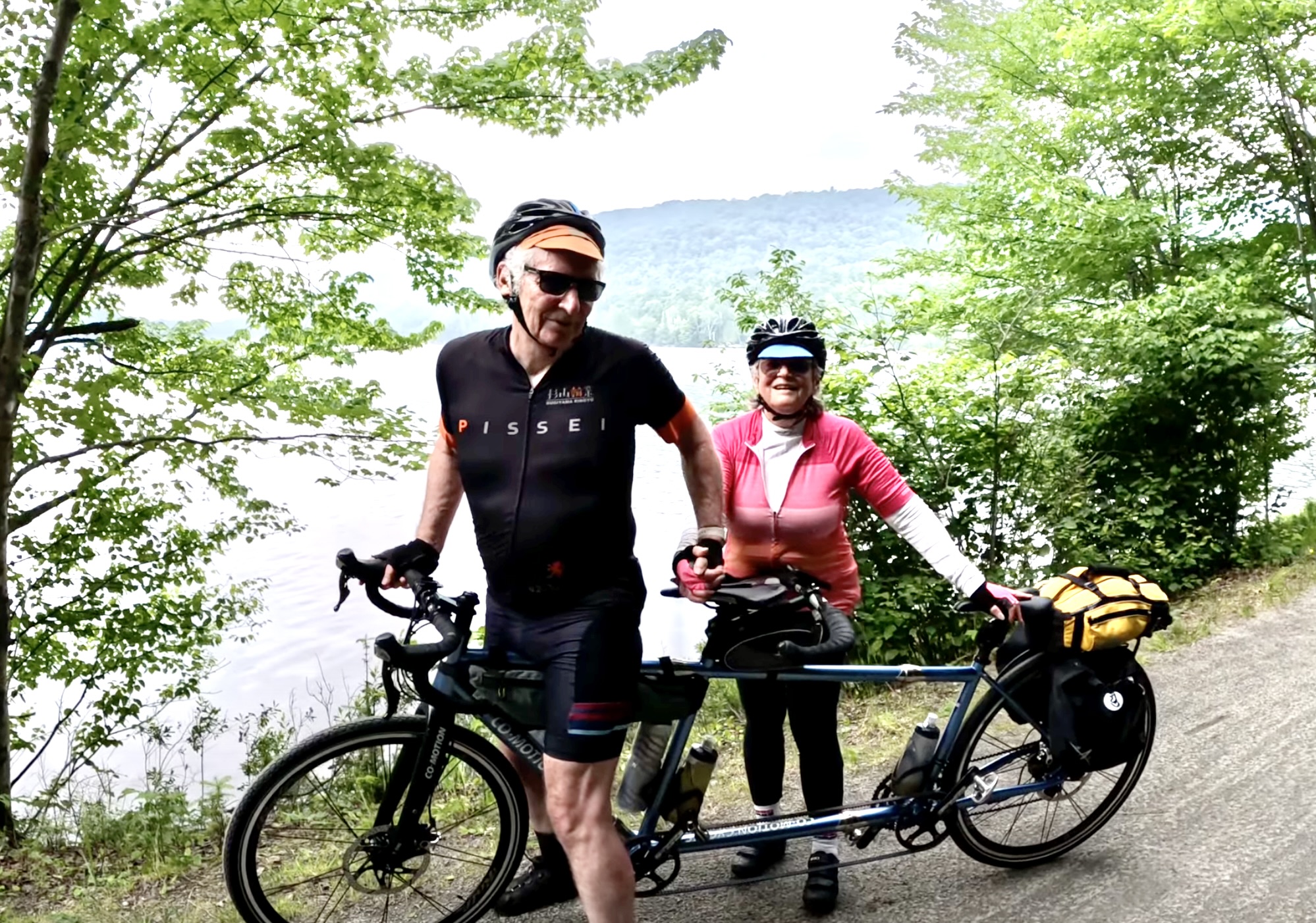
At the end of the day, it just wasn’t meant to be. Too many miles. Not enough time. At least for old folks riding on a tandem bicycle.
We decided to just focus on the low hanging fruit. The southern stretch: the Dingle and Kerry Peninsulas. Dripping in history, and Irish soul.
Smaoineamh Maith. Good idea.
The Plough and Stars
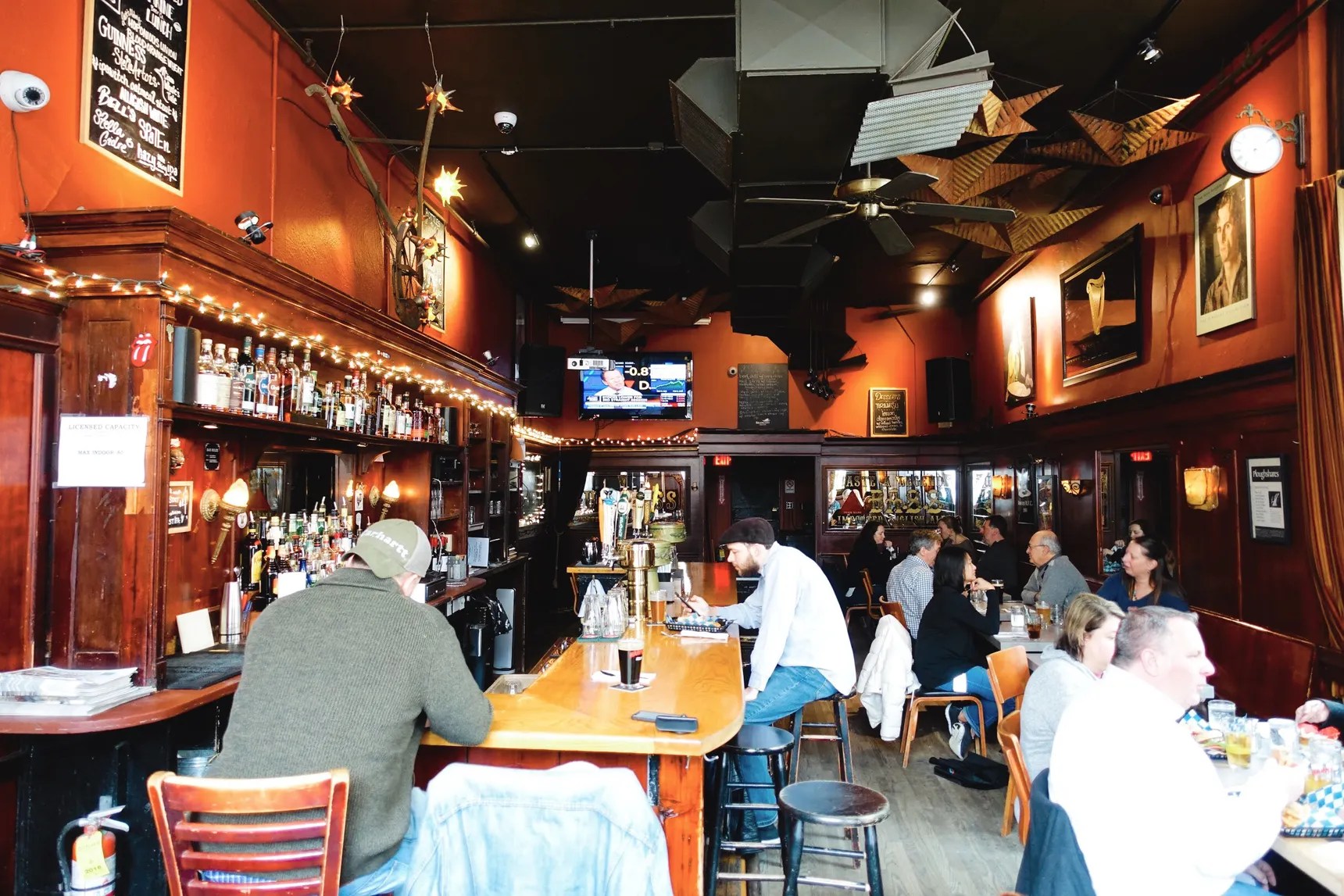
So we’re sitting in our local Irish Pub, The Plough and Stars, at the best table in the house, right next to the window onto Mass Ave, when this elderly gent walks up, tapping the floor with his cane and addresses us,
“You’re sitting at my table.”
The place is pretty empty, after all it’s 11:30 on a Sunday Morning.
I give him a blank look. Thinking:
“There’s lots of tables, and so what makes ours, your table”
He gives me a hard look, and tapping his cane adds,
“I own the place.”
Was this guy for real? Dressed nicely, well worn and dapper. Irish accent. A judgement call.
We slide over to the adjoining table. Truth-be-told, every bit as good.
He sits down and adds,
“I own the whole block”
And so we met Peter O’Malley, a bit of a legend, locally and internationally. Advisor to the World Bank, etc, etc. And yes, he does own the whole block and a whole lot more.
Goes to show you never know who you’re sitting next to, or who wants your table.

Peter was waiting on friends, as were we. We got to trading stories.
He was from Ireland. We were training for it. Which he found amusing.
“Skellig Michael, Eh.
Well, I heard a story, the monks first came from North Africa. The Atlantic is like the desert. The island was their desert hermitage at the end of the world.”
The bartender, recently over from Kerry adds,
“Nice bicycling in Kerry. Just don’t try to go over Conor Pass”
At which point my heart sank.
Over Conor Pass
From Boston, we flew all night, arriving at Shannon Airport just before dawn.
Customs was a mere formality.
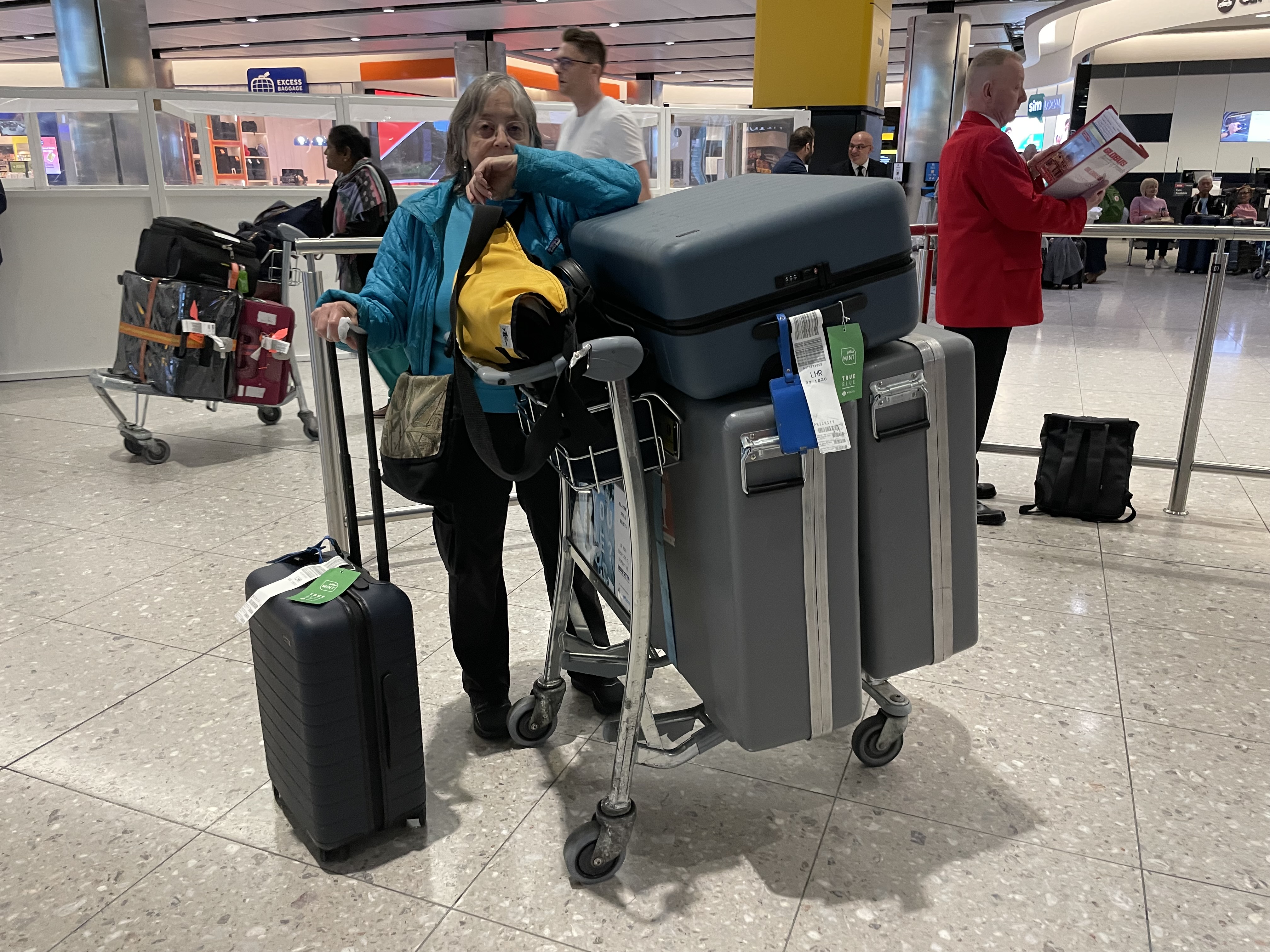
Our transfer to Ballyseede Castle, ambled in minutes later at 6 AM. We headed out into morning night, bike cases in tow.
Good thing our ride was a Tesla. Larger inside than outside. Kinda-like Dr. Who’s Tardus.
Our bike cases barely fit. Perhaps a 1/4 of an inch to spare. We all laughed a relieved laugh.
We had a bit over an hours drive. Sharon sat upfront, as she is the more entertaining of the two of us. Conversations wandered from electric cars, to Irish tariffs, to politics, and old personal stories.
On both sides.
Our driver David was 50’s-ish. Very perceptive guy. Round about the time he was telling his tale of an English ex-girlfriend and bar toasts with disreputable far left political types back in the day, I started wondering IRA?
Perhaps. Many levels to that equation. Our revolutionary war is way back. In Ireland, not so much.
We were dropped off a bit after 7 AM. Front desk hadn’t arrived. We dozed in the rooms off the lobby, as the day rolled in.

Ballyseede Castle was a lot of fun. Complete with wolfhounds, and gobs of history. Truth-be-told, it’s not really a castle per se. More of a manor house dating back to the 1700s.
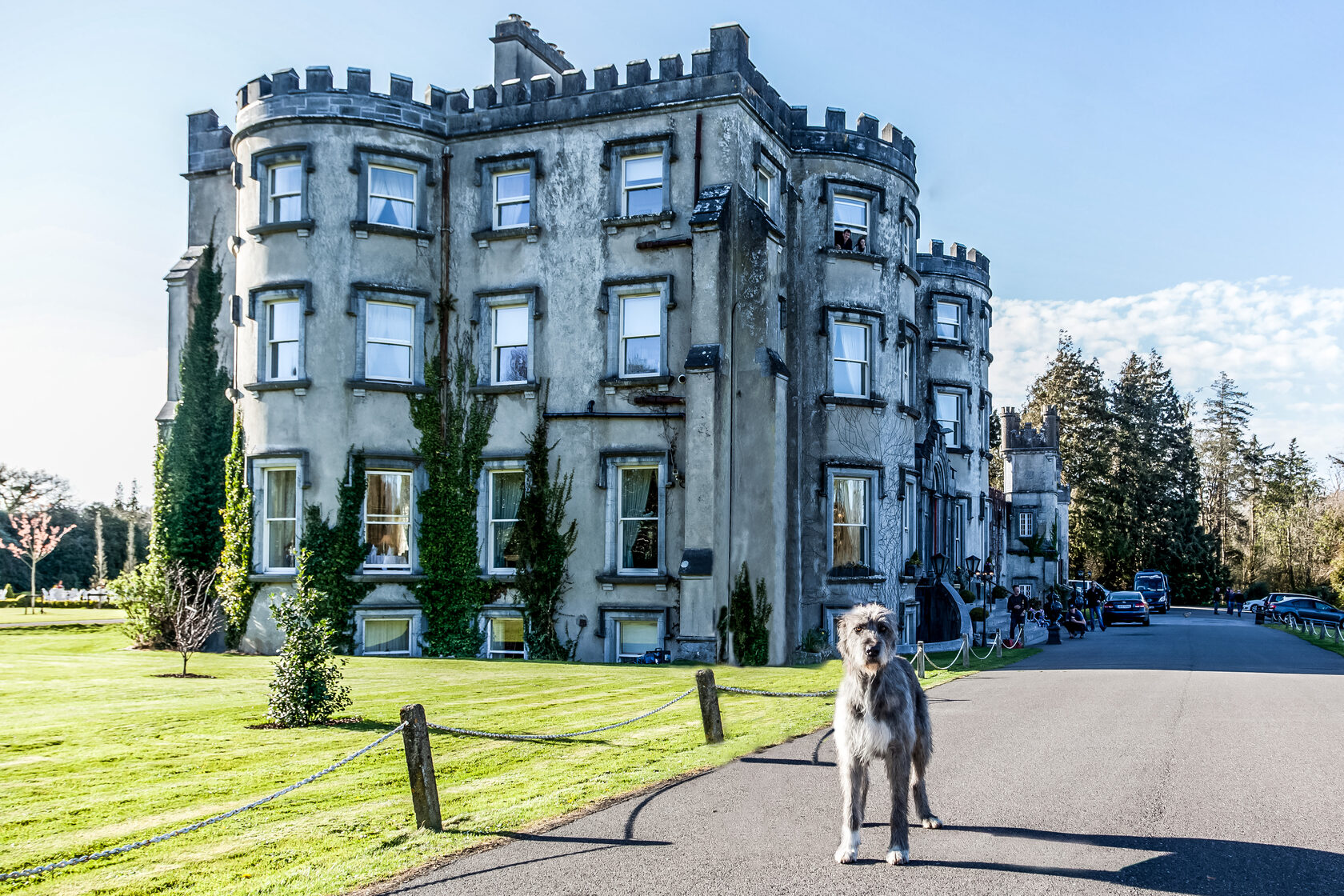
What’s left of the real Castle was somewhere out in the Ballyseede Woods. That would be the place where the English finally caught up with Gerald FitzGerald, 14th Earl of Desmon, cut off his head, and sent it to England for display in November 1583.
So we walk up to reception And start chatting about the adjoining Ballyseede Woods. I think the entrance is on the back left corner of the parking lot, Sharon thinks it’s on the right.
Left it is.
A couple of times a year, I win one of these.
“So now she has to be nice to me.”
I hear a woman’s voice behind me,
“Nice-er”
I continue,
“Time to celebrate with a Guinness.”
Same voice,
“Two and she’ll be gorgeous”
Pause.
“Three and I’ll be gorgeous!”
Laughter all around.
So we met Mollie. Owner of the castle. And owner of the Wolfhound-in-residence Joe, who chasing her car, could hit 28 mph.
We head down to the bar/cafe.
Yes, Guinness is a totally different drink in Ireland. Creamy head and fine tiny bubbles.
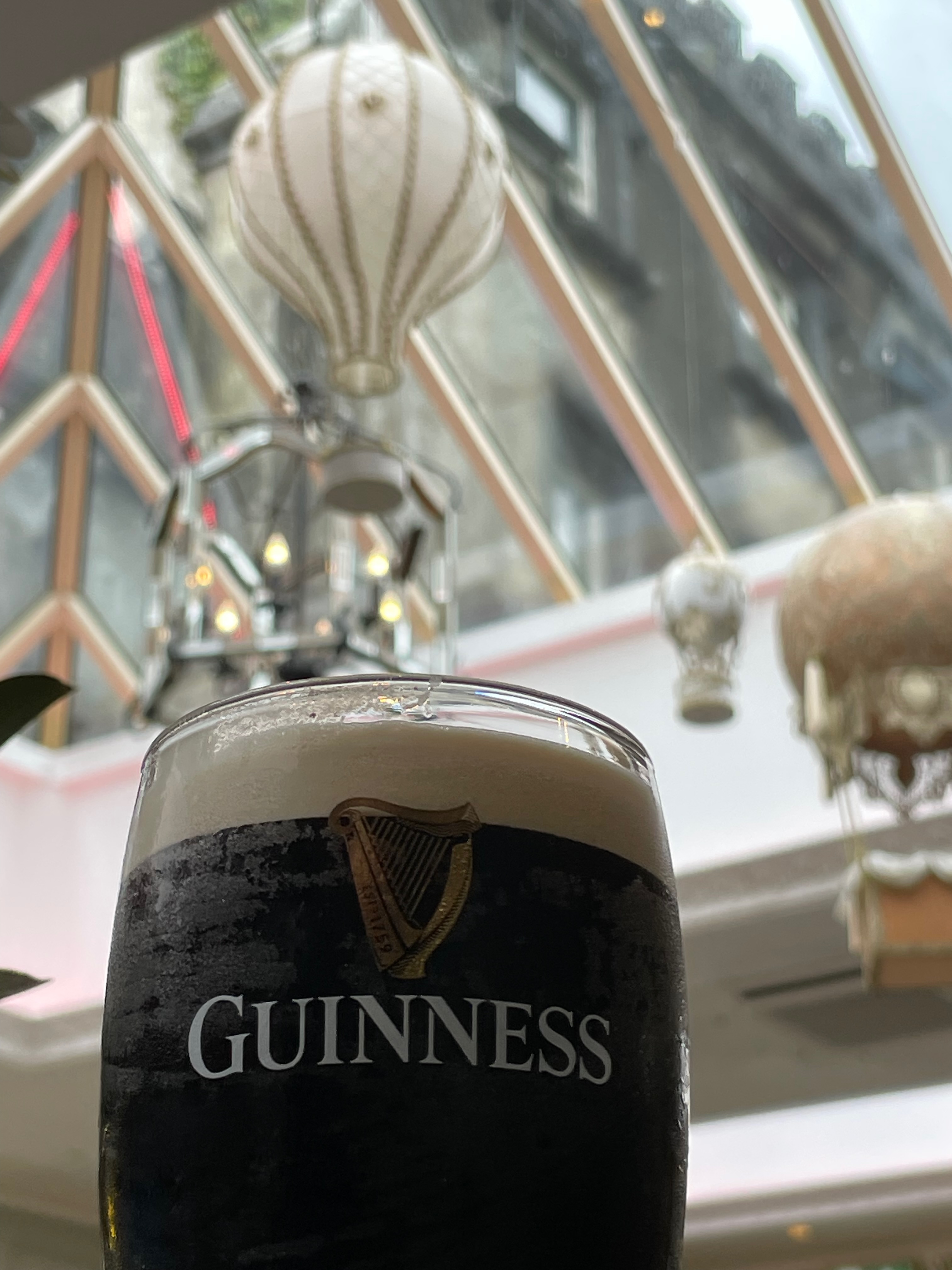
Everyone says Guinness doesn’t travel well. The further you get from Dublin, the less the drink. True enough. Though we have yet to make it to Dublin.
The next day we headed off into the Ballyseede Woods.
The Ballyseede gardener said way back when, 30+ years ago, he had seen the foundations of the original castle in the woods, but it’s not marked, and he’s never been back.
We explored the Ballyseede Woods a bit, but found no sign of any castle. We did run into a couple who had lost their car.
“We parked our car in a lot just like this one, but our car’s not here. This isn’t the lot.”
We could offer no help.
When we told folks at the Castle our story,
They laughed. “Yup. Lots of folks get lost. Did you?”
No actually, well at least no more than the usual.
****
Our tandem assembled, our bags packed, we said our goodbyes to Ballyseede and headed off towards Conor’s Pass.
Outside the gates, a couple of left turns later we were riding along the northern edge of the Ballyseede Woods. Here we passed the memorial to the victims of the 1923 Ballyseede Massacre. One of the worst atrocities of the Irish Civil War. And that’s saying something.

British Crown forces brought 9 Irish IRA prisoners to these, then remote parts, tied them together in a circle around a land mine, and then triggered the land mine. Just for good measure they tossed in a few grenades and machine gunned the remains.
The cover story was to be that the IRA folks had been blown to smithereens clearing mines along the road. The remains were shoveled up and put in 9 coffins.
Which might have been the end of that, except for a curious twist.
Only the body parts of eight men were in those 9 coffins.
#9 lived to tell the tale. He was blown clear and blown unshackled. He crawled away and told the real story. He considered his survival a miracle.
Yep.

Stephen Fuller lived to the ripe old age of 85. Story has it that that in later years, he considered having O’Daly, the Irishman responsible for the incident, killed, but decided it was better to leave him to live with the knowledge of what he had done.
Well played.
****
We skirted the heart of Tralee on the bypass, which thankfully had nice wide shoulders, turned off on some small lanes and caught the bike path along the canal for a stretch. At a break we had a pleasant chat with some Europeans, with big packs and nice gear.
Hiking the Wild Atlantic Way’s Dingle Peninsula, which we were now riding.
We told them we were headed over Connor Pass in a couple of hours and they kind of rolled their eyes. All but saying,
“Yeah right”
****
The Dingle Peninsula is a bit world famous. Quintessential coastal Ireland. Bucolic countryside, sweeping beaches and razor-edged cliffs. But only tiny tour buses on this stretch, as the big ones tend to get wedged on the overhangs of Connor Pass.
The climb to the pass comes all at once, in the last few miles.
My favorite sign of this trip:
“Turn Back Now”
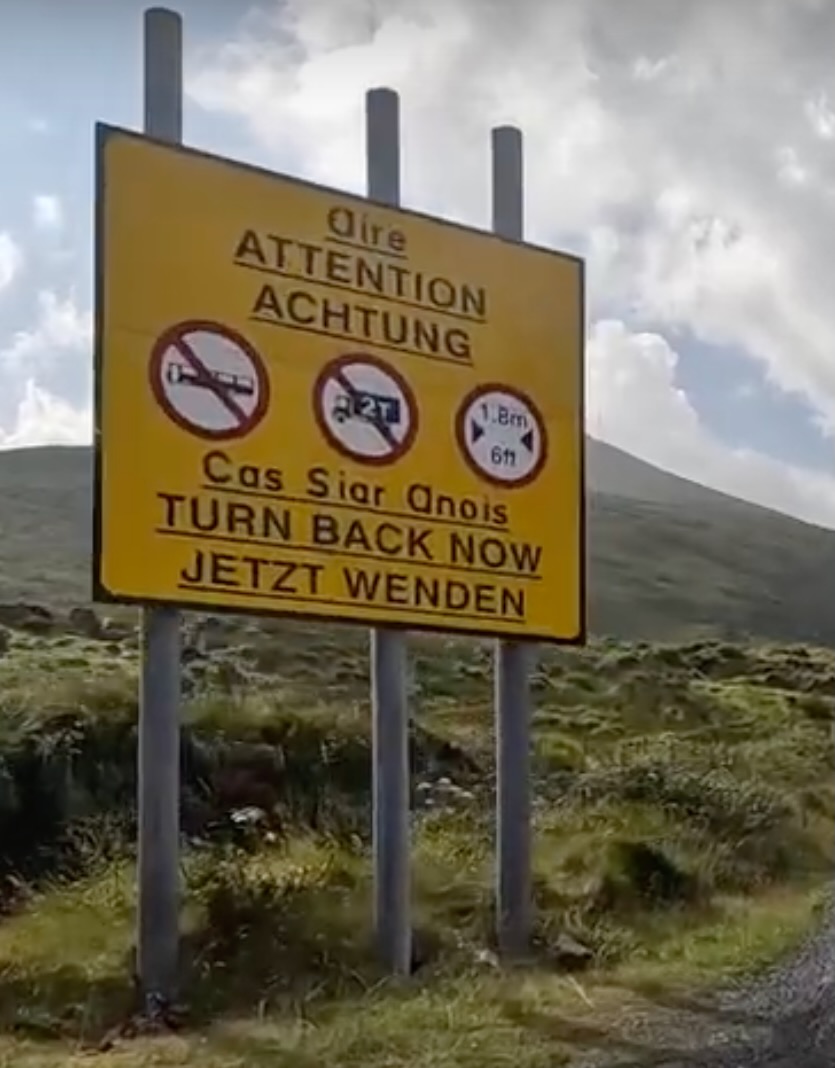
Folks at the pull offs on the climb, found us amusing.
In a kind-of, I can’t believe it, you’re too old, you’re gonna die, kind-of way.

At the top, truth-be-told, I breathed a sigh of relief.
We had a brief chat with a guy on a bicycle heading north, down the way we had just come up. A European with many, many, many miles on his bike. 50s-ish. He ridden across the USA 3 times. Countless Euro-routes.
He looked at our tandem. Shook his head.
“How do you guys do it?”
A mystery to us too.
We headed down to Dingle. Kind-of flying. Cooled it at 35 mph. Sheep were grazing loose on the long tasty shoulder grass. It would be very bad for us if they took a notion to cross take 3 steps onto the road.
We coasted into Dingle. Right up to the front door of our hotel and adjoining pub.
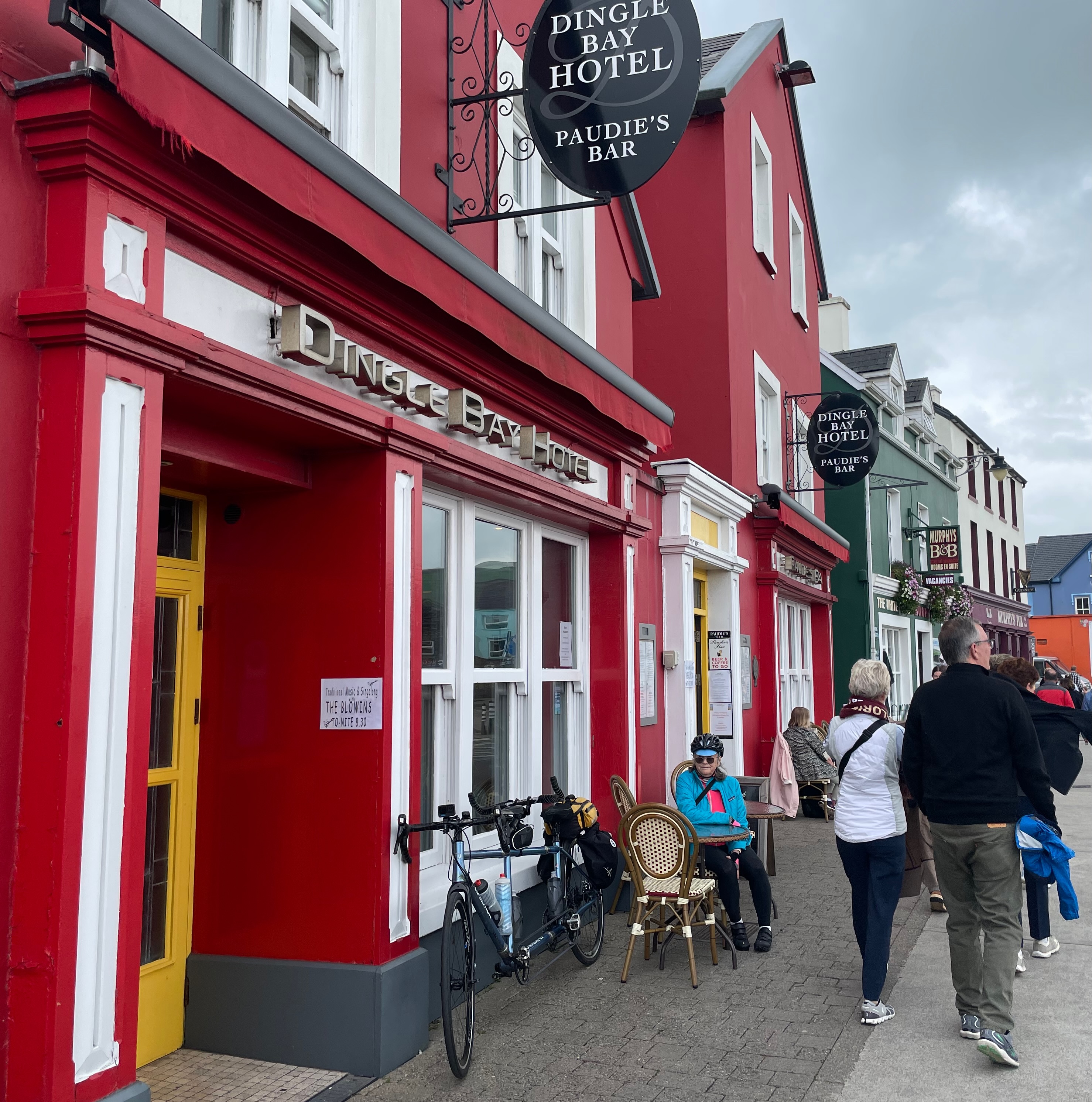
Here is a link to an 8 minute video of our day’s ride
Dingle
After catching our breath, we headed into the hotel. Great place. Great folks. Most accommodating.
“Is there somewhere we can store our bike? BTW it’s a big boy. 8 feet long.”
“Sure, just leave it in the breakfast room. Right through that door.”
Too easy.
“So what happens in the morning?”
“Well we’ll roll it into the overflow dinner area.”
“And at dinner?”
“We’ll roll it back”
And so it went for three days. Mr Tandem was amused.
****
So we’re sitting down in front of our wonderful full Irish hotel breakfast the next morning. Our tandem contentedly nestled in the far room.
We hear a familiar accent from the only other couple up this early.
A retired electrician and his wife from Peabody Massachusetts, none too happy with Massachusetts overwrought building codes.
A third couple wanders in. Motorcyclists. In full leathers. Also Americans. 50’s- ish. We chat about radios. They love theirs. Can talk to others and each other on the road.
Later we ask our spitfire of a waitress,
“So what’s with all the Americans?”
“90% of our guests are American.”
Explains the soundtrack.
****
John Denver was droning on.
“Colorado Rocky Mountain high… Colorado…”
John Denver’s music has been described as “cheesy, tacky, overly sentimental, bloodless and cliche. A step above muzak only in as much as it has vocals.”
I’m not sure I’d go that far, but you get the idea.
Henry John Deutschendorf Jr. aka John Denver dropped his musical pebbles in the pond in the 1970s.
The ripples have been ever so slow to fade out. We hadn’t heard him in the USA for decades, but he lives on in Southern Ireland half a century later.
A hundred years from now, would not be surprised if John Denver is one of last the voices from the 20th century rippling down through time. Perhaps in Elon’s Mars’ station:
“Colorado Rocky Mountain high… Colorado…”
Curious what lasts and how.
Last week, I learned that Mr. Denver had a dark side. KInd of like learning that one of the Muppets has a dark side.
His first marriage ended with John chainsawing his conjugal bed in half.

Ghosts and Whale Songs
The Blasket Islands are a short-ish boat ride from Dingle. Remarkable place. We suspected as much and signed up for an island landing/whale watch early. Our only problem was that our boat would be leaving from Harbor Pier in Ventry, 4 miles down the road from our hotel.
We asked our buddy at the front desk for taxi help.
“Ah, you will want Oamar. Dependable guy. Maybe the only taxi in town working mornings. Everybody else is sleeping in. Taxi business around here is late night. The bars and all”
True to form Oamar showed up at 9:00. Clearly Muslim. The extra “a” kind of makes his name Irish. No? Sharon and he immediately hit it off, sharing family stories.
Oamar, swings down onto the pier does an impossibly tight 3 point turn. First the front end out over the water, then rear end out over water. Swings about and lets us out.
Not only a good guy, but a good driver.
It’s a swimming party. Low 60’s F air temp. Low 60’s F water temp. But the sun was out and the locals were celebrating with crazy dives and such.
We put on our extra layers of clothes, filed onto the boat along with a dozen or so other intrepid adventurers, and were off.
Here’s a 2 minute ± video.
Sharon loved the boat ride. Crashing through the waves was totally her thing. She needn’t have worried.
Today the Islands are uninhabited. The last folks left in the early 1950s. Some to the mainland and some to Springfield, Massachusetts. Just up the road from us.

The Blasket Islands are famous for the ghosts of those who lived the isolated life here. The islands had been inhabited from at least the 1200’s. Isolated as they were at the edge of the known world, pure Irish speech and stories surviving from centuries past.
Mined by anthropologists, linguists and writers, when the Blasket time capsule from ancient days, was discovered in the late 1800s.
Our boat captain said he had grown up on the island. Told a great story about wild all-night parties. Folks from the mainland would come over and party with the locals like it was 1999. The next morning the main-landers would gather themselves up and return to the regular world.
Suspect his story is a tall tale for us tourists. Local tales have it the other way around:
The guys on Blasket would periodically head off to mainland Dingle for their bacchanalia. Dragging their sorry asses home, post-party.
Island isolated life taking its toll. Far more likely to my mind.
In any case, the islands are dripping in some sort of magic.
When the last folks left the Islands, they brought a tune with them: Port na bPúcaí , or Song of the Ghosts.
Story goes that in great mist on a silent evening, the song rose up from the sea. Coming from everywhere at once. A musician in the boat memorized it. Funeral music paying homage to the deceased King of the Faeries.
Perhaps also part whale song:
“The person who heard the music, while he was out on a silent evening in a coracle, a stretched canvas boat, in a deep mist, thought it was the fairies making the music. In fact, there was a pod of whales below him and their singing was amplified by the boat, which acted like a speaker and transferred the sound into the air around the boat.”
King Puck
Our next stop was Killorglin at the hinge between the Dingle and Kerry Peninsulas.
Killorglln was a counterpoint of sorts to the tourist towns. A working town. Complete with a goat king.
I knew we had picked the right hotel when I looked up and above the bar was a goat head in the place of honor.

Sharon was up to speed and launched into a most entertaining conversation with the bartender and his buddy. Both had clearly been around the block a time or two.
They rose to the bait when she asked them how much either of them had seen one person drink. Sharon had done her homework back in Dingle. She had found a book in a niche about Irish pubs. The book’s bottom line was 30 pints.
“Nah, never seen that. 20 pints is about it, and he walked out … on his own.”
Sharon followed up on 2008 legislation tightening up on drinking.
“Not good for us. We used to have 26 pubs in town. Now it’s down to 12″
I was curious about the Puck Fair,
“I heard that during the three days of the fair, pubs could stay open 24 hours.”
“Yes, in those days it was on the wild side. But good for business. Now we have to close at 3 AM. The fair’s been cleaned up too. Probably for the best, though I kind of miss the gypsies.
They considered it their fair.”
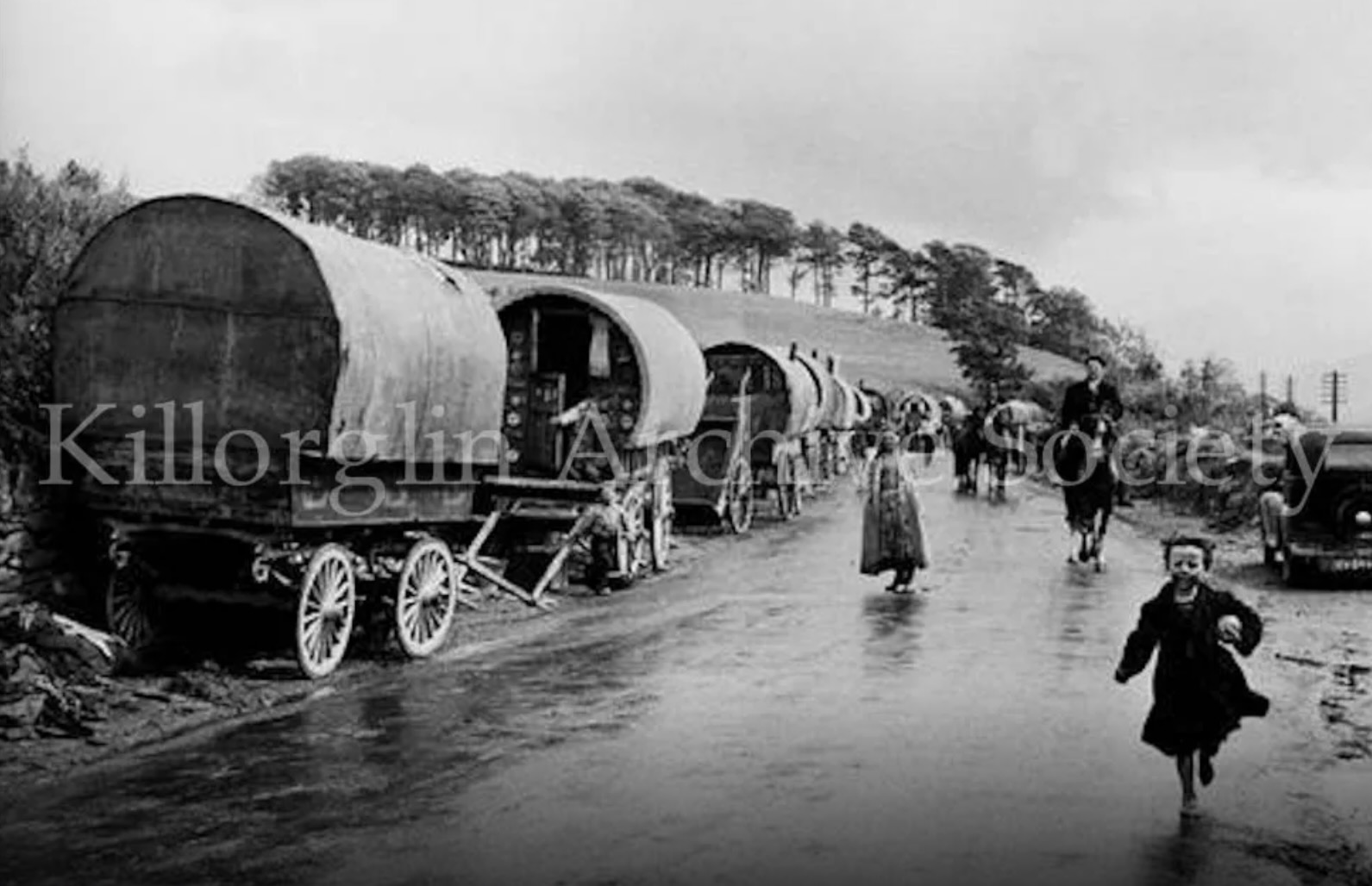
KIllorglin’s Puck Fair is both famous and infamous. Ireland’s oldest fair is the last of Europe’s goat festivals. Pagan stuff. Once also celebrated in Greece, Spain, Scotland and England.
Every year there is a new King and Queen. The King is a wild goat brought down from the highlands. The Queen is a local school girl.
King Puck is a wild goat. Queen Puck is a local virgin. She crowns him and then they are married in the midst of a three day wild rumpus.
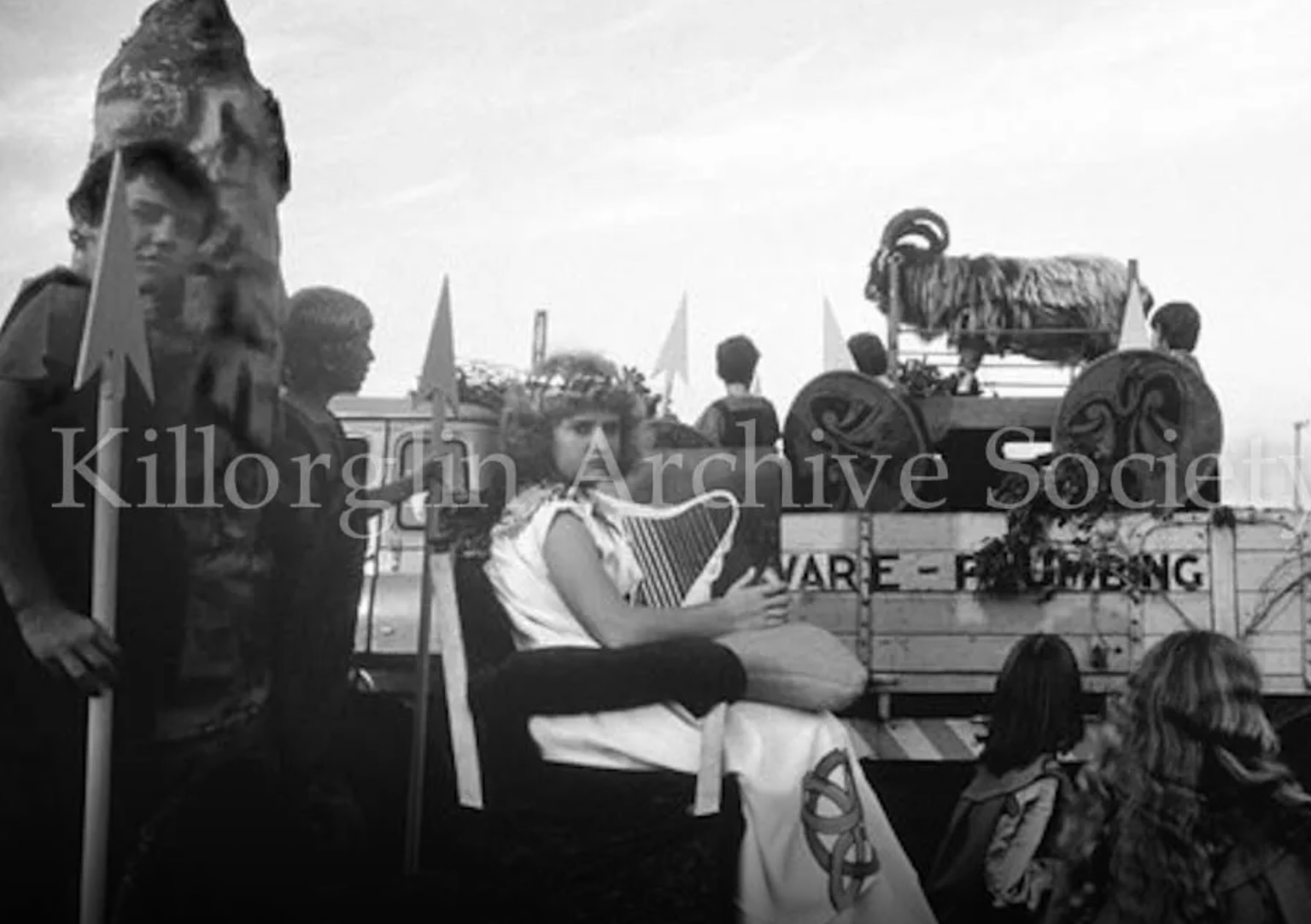
Make of it what you will, but even sanitized, it’s still a bit dodgy.
The semi-famous American poet Muriel Rukeyser visited in the 1960s..
She stumbled on the fair while scouting the festival on behalf of the filmmaker Paul Rotha, who was interested in Irish gypsies or “travelers.”
No film was ever made, but Muriel was inspired to write a monograph-length travelogue about the fair called, “The Orgy” (1965). Excepts courtesy of the Irish Times:
“She saw “a man with rats and ferrets running over his chest and back, and a contortionist tied in a knot of himself”. She saw fierce fights. She noticed that the raffle being conducted at the foot of Puck’s tower had a first prize of £60 or a trip to Lourdes. She noted “the high squealing sexual laughter at the bridge, the heavy wordless sounds, hot dogs in the square, the goat snug and dry under his own roof . . . bare-foot children following the piper”.
For as far back as anyone can remember, King Puck has presided over his fair for all three days from a 50 foot high platform erected in the main square.

Today animal rights activists have intervened over concerns for King Puck’s comfort and well-being on top of the tower for 3 days. No veterinarian’s testimonials seem to suffice.
These activists have suggested ethical solutions, to their minds, which would keep with tradition: “They could have competitions in wood-carving, sculpting, they could have an animatronic goat.”
An animatronic goat would be a sad, sad end, for the last of the goat festivals.
As T.S Elliot put it, “This is the way the world ends. Not with a bang but a whimper.”
Don’t call them “Tinkers”
Irish gypsies have no connection to the Roma gypsies of mainland Europe. Similar lifestyles, but not similar DNA. Genetic analysis points to Irish marginalized some 1000 years ago. Perhaps at the time of the Norman invasion.
On our way out of town, we stopped at Killorglin’s tourist office. We chatted with the local behind the desk about local drug busts and gypsies.
“Yes, he was an upstanding citizen, a pillar of the community, and then he was busted. You never know. As a rural coastal town, we are a gateway for the flow of drugs into Europe”
We could relate. and told her, our story of Everglade’s City in Florida. A rural coastal town and a gateway for drugs to the USA. Locals who knew the turf could make the big bucks. The running joke was – you know something’s up when you see a $10,000 house with a $50,000 pick-up truck parked out front.
She laughed knowingly and added that she kind of missed the gypsies even though they were a bit of trouble.
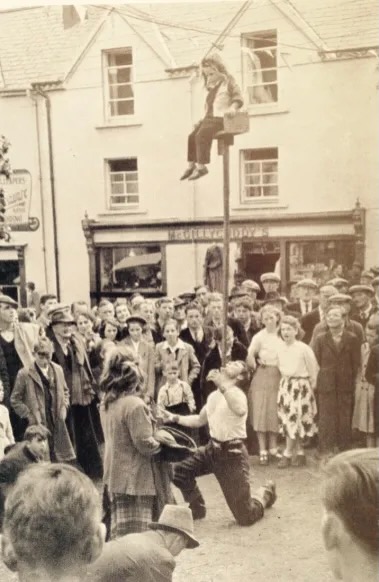
Puck Fair Balancing ActThe Tinkers were made most unwelcome in the mid 1960s as part of the Puck Fair sanitization efforts. She corrected me,
“Don’t call them ‘Tinkers’, it’s very rude. Today they’re known as ‘Travelers’.”
“Still they were a lot of trouble.”
Rumors have it that the Travelers used to crown their own king, in secret, at the Puck Fair.
Another Way to Die
We had made it over Conor Pass. Now we just had to survive our climb up Skellig Michael.
Skellig Michael is an island some 8 miles off the coast of Portmagee, at the tip of the Kerry peninsula. A desolate rock pinnacle jutting up out of the ocean. The top of a mountain, the rest of which is beneath the sea.
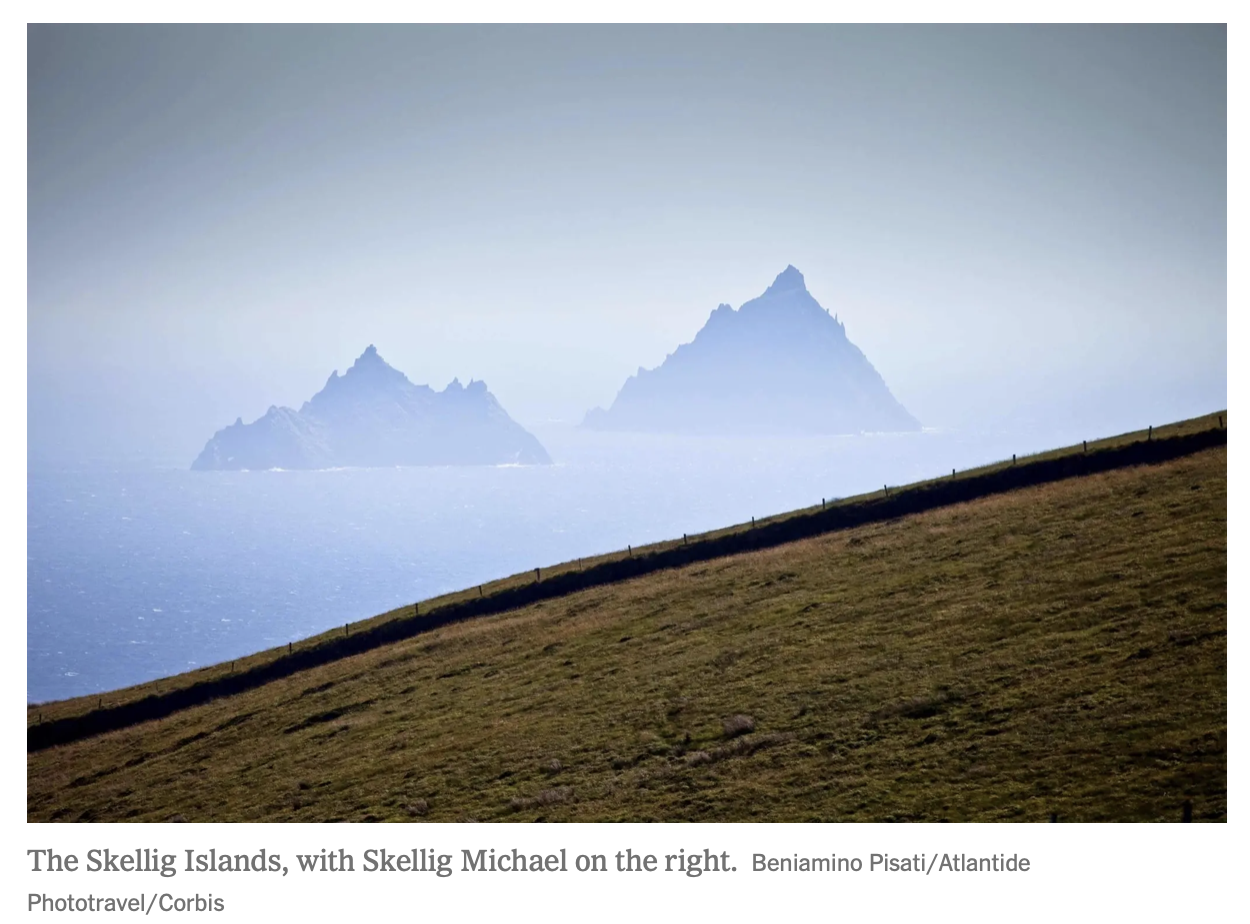
Monks lived on this remote rock, from A.D. 600 to 1200 ±. It has been a pilgrimage destination ever since. Though only for the stout of heart.
There was a mandatory orientation at the base of the climb.
A young woman encouraged us to be most careful, pointing out there had been serious fatalities due to falls. At which point Sharon muttered,
“As opposed to what, Non-Serious fatalities?”
Behind our cheerful orientation ranger, a middle aged woman was descending oh so slowly, on her rear end, step-by-step. Her face was stone-cold white.
620 Dry laid stone steps are the only way up and the only way down.
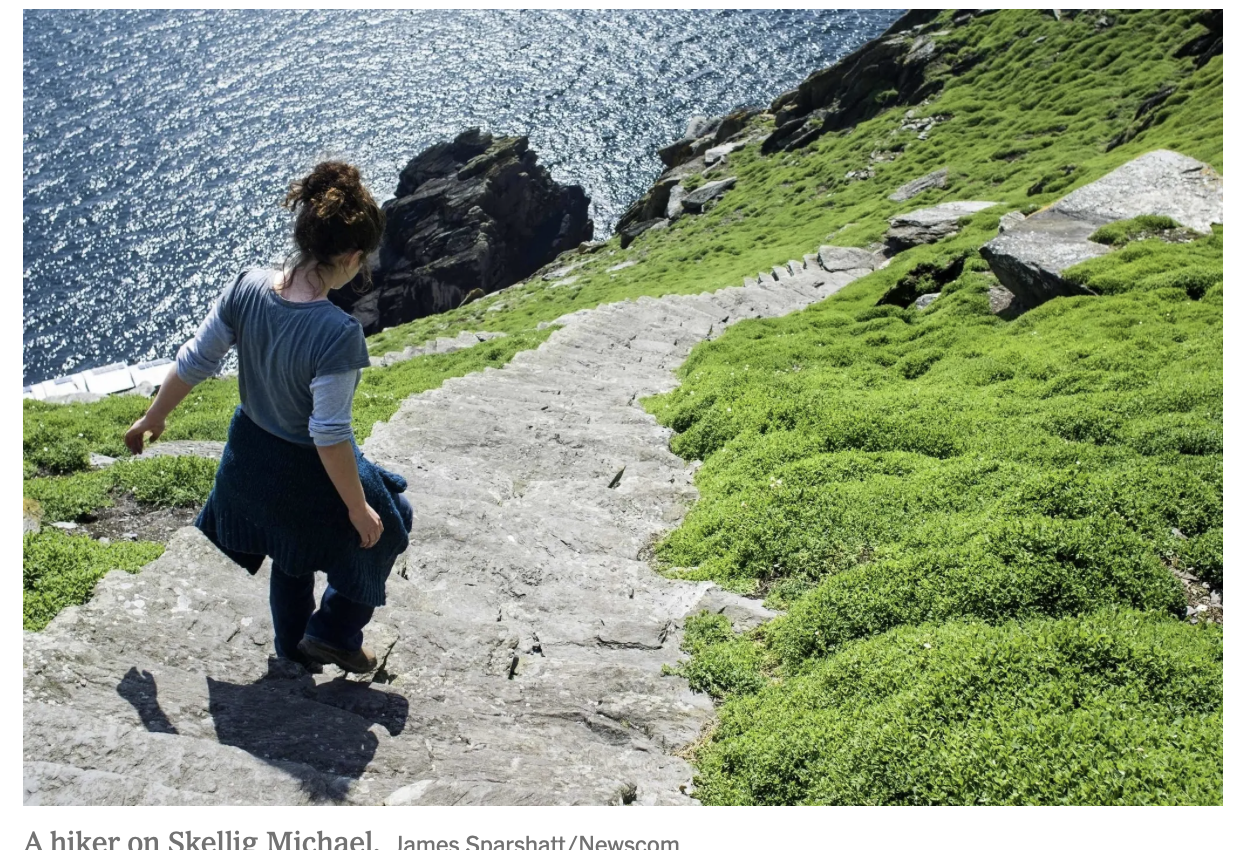
We had done our due diligence and had our hiking poles in hand and hiking shoes tightly laced.
We particularly liked this arrow at a 90 degree turn in the path. Take one more step and you’ll die. Modest enough. True enough.
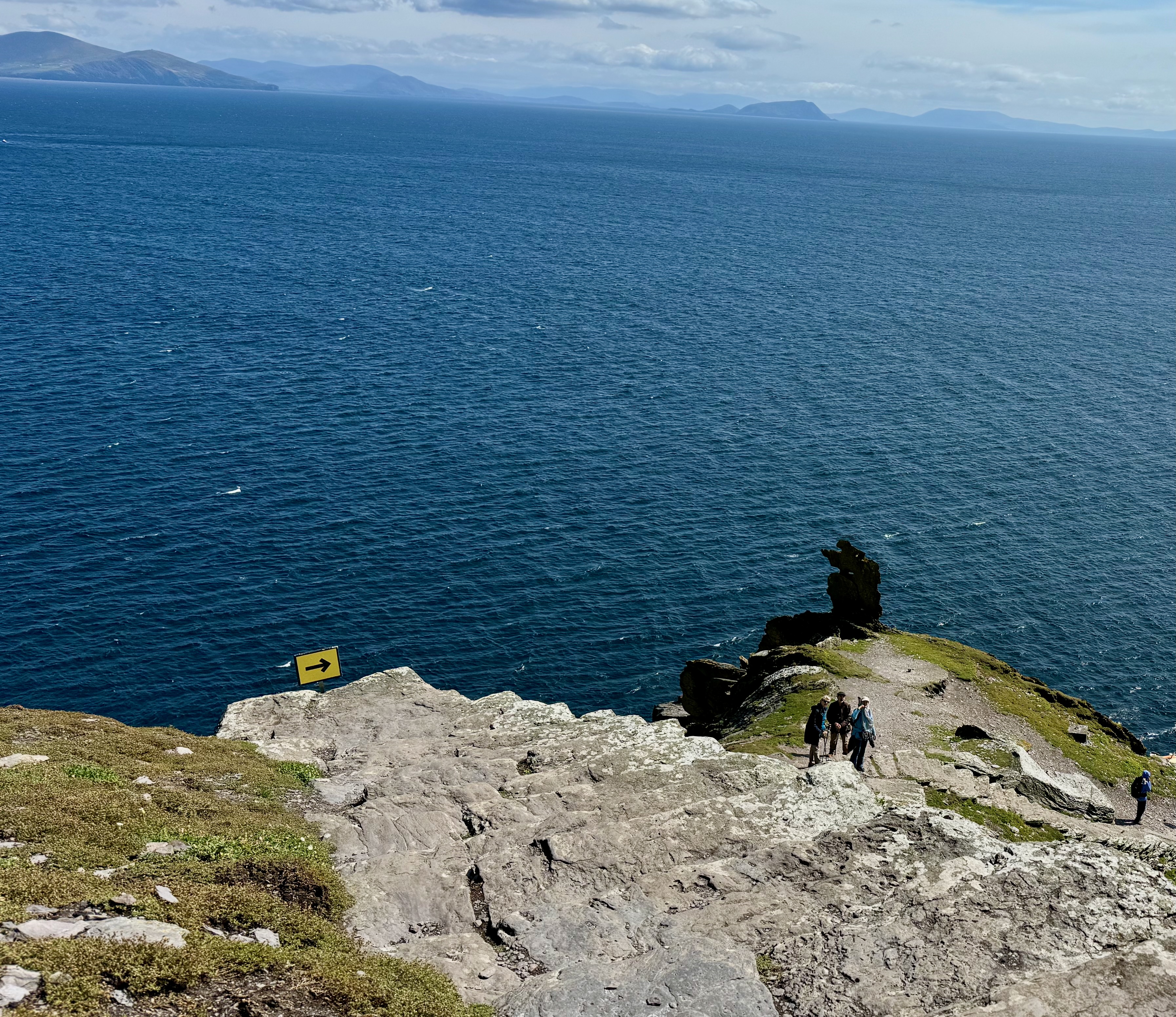
There were no guard rails. After last couple of Americans fell to their deaths, along the stretch below, the Irish government thought long and hard, but nixed the idea of safety railings. They did add that 12″ x 12″ warning sign.
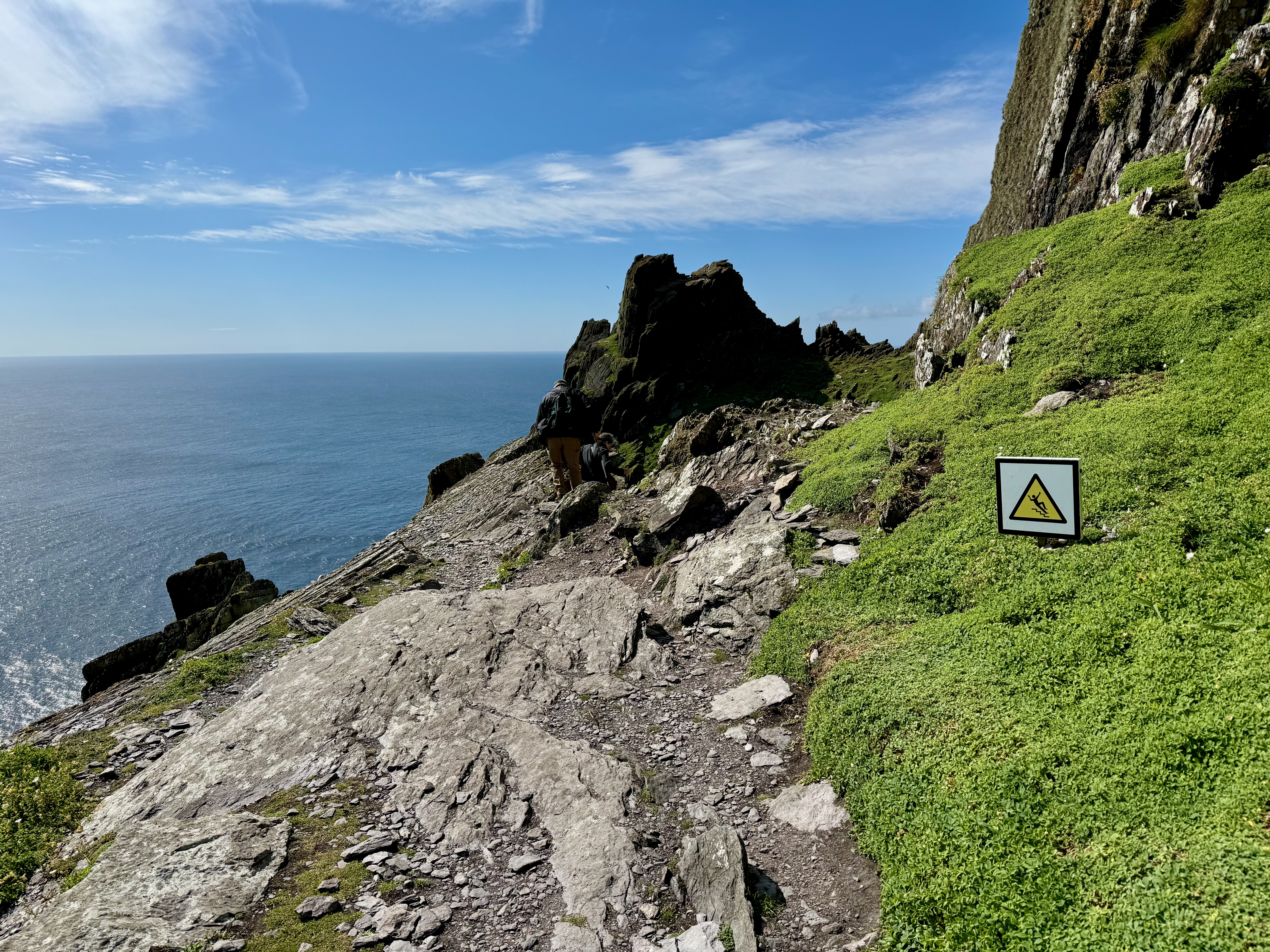
The logic being railings would give visitors:
“A false sense of security”
We did just fine. We’d seen far worse. Like Switzerland.
No trees. No shelter. An edge of the world experience.
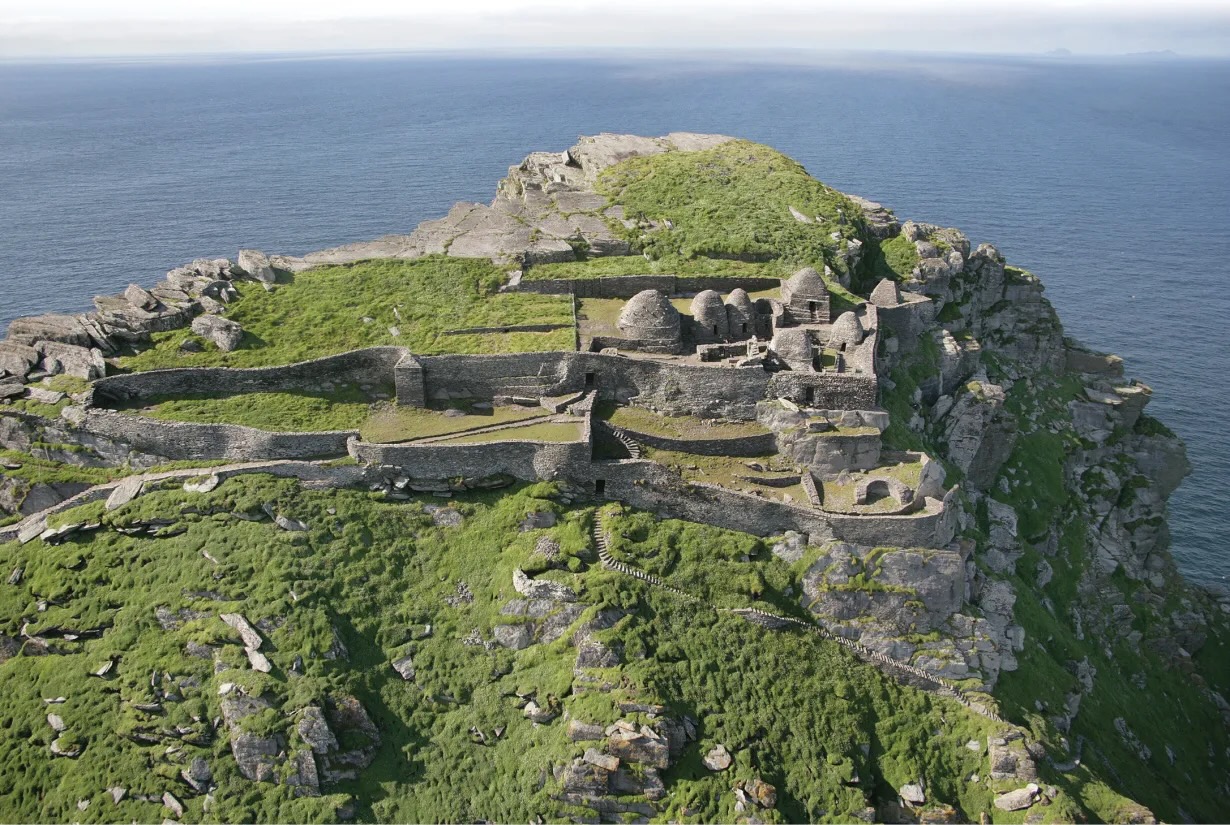
“An incredible, impossible, mad place…
I tell you the thing does
not belong to any world
that you and I have lived
and worked in: it is part of
our dream world.”
– George Bernard Shaw, from a 1910 letter.
Here is a short video – 7 minutes – of our visit to this tiny long-since abandoned monastic settlement.
There was a Christian pilgrimage group on the island at the same time as us.
They were thrilled, “We’ve been praying for good weather for a year. And look at today.”
Indeed, it was most pleasant, warm and sunny. The previous 4 weeks had been miserable. Only 2 days suitable for landings.
The next day our hard-nosed Irish taxi-driver guide Muiris asked us about our visit to Skellig Michael:
“Did you feel closer to God?”
Actually, Yes. Though I’m not exactly sure what that means.
Remarkable place. Shaw had it right. Part of our dream world.
The Kings of Corcu Duibne
The Dingle and Kerry Peninsulas were once the kingdom of the Corcu Duibne in prehistoric and medieval County Kerry. Say about from about the 5th to the 12th centuries.
Curiously our trip ended up being from the northern edge of their territories to the southern edge.
The Corcu Duibne were tough, and accomplished, which is what you’d expect from the sponsors of Skellig Michael.
These local Kings provided the skilled masons who built at least parts of the Machu Picchu-like dreamscape of Skellig Michael, its fantastic terraces and buildings. The Kings also provided some provisioning of food and mainland estates.
The Vikings plundered Skellig Michael and carried off the abbot Etgal, for ransom in 824. Etgal died and the kings of Corcu Duibne never forgot and exacted revenge, in due time.
****
Many think that the Corcu Duibne created the Irish Ogham alphabet. Over one third of all Irish Ogham inscriptions are found in what was their kingdom.
We never saw an Ogham stone. We got close though. Muiris explained that he couldn’t take us because the new owners of the property had cut off access. Here is a pic of the Ogham stone on the mainland opposite the Blasket Islands.
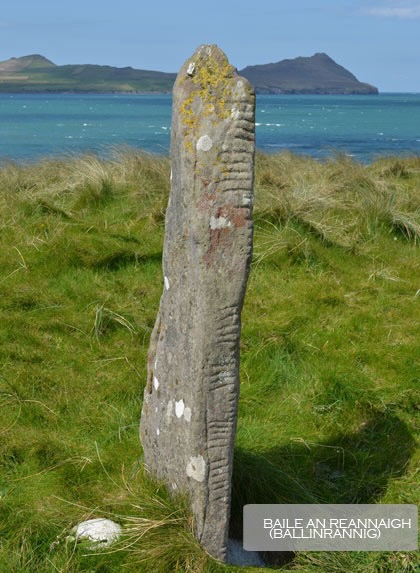
Translation is roughly: “Son of a Dog”. No doubt meant as a compliment.
We found Xmas cards for this year with “Merry Xmas” in Irish and Ogham.
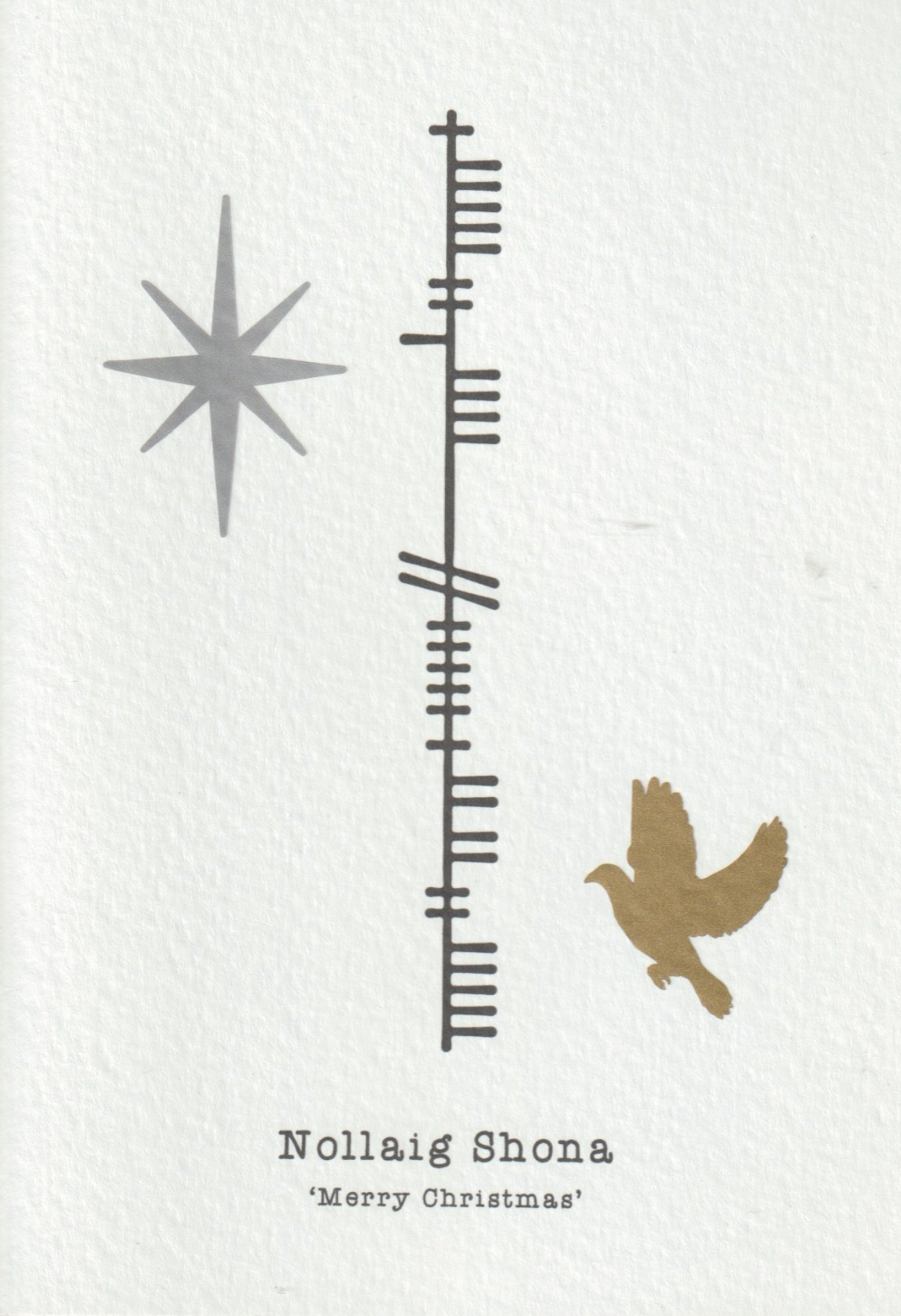
As we were exchanging Cuban Flan for the bestest Greek Pastries at John & Nicks Texaco, Sharon explained to Paul how to read the Ogham on our card. She knew the marks.
“From the bottom up. Like Japanese…”
He was delighted.
“We have lots of Irish customers. I’m going to test them”
Suspect the Corcu Duibne would be pleased.
Tiz your round Dan!
We had another pass to cross on our ride from Portmagee to Caherdaniel, but I wasn’t particularly worried. No where near as intimidating as Conor Pass.
The predicted high winds got my attention though.
Indeed they were gusting and swirling when we pulled out of town. When we made our turn onto the main road, it was clear we had lucked out. The winds were at our back. They pretty much blew us all the way to Caherdaniel.
The view from the pass was spectacular.
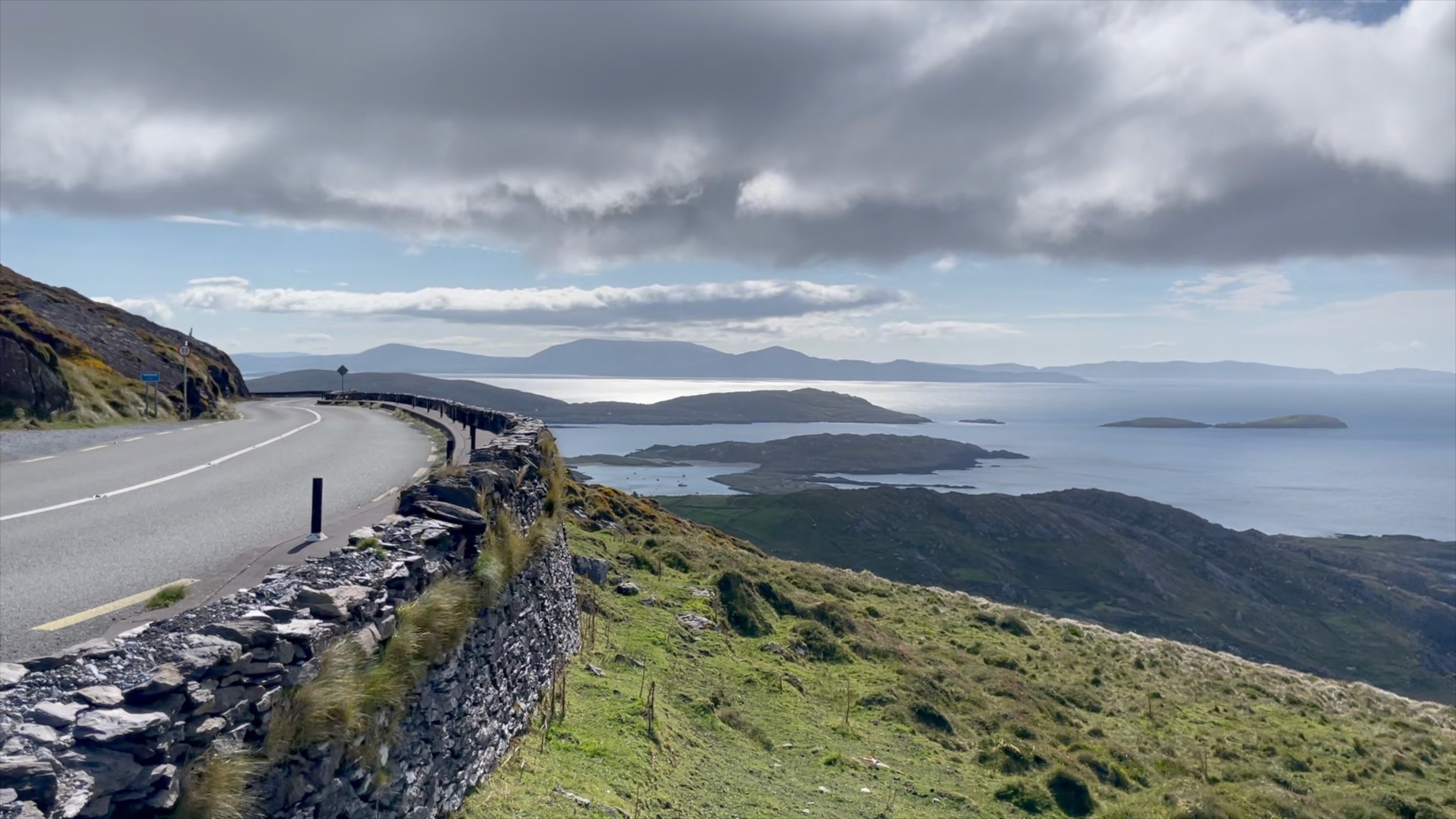
We pulled off for photos. It was tough to just hold the bike up. Small price to pay though, for the favor of the wind gods. We coasted into Caherdaniel ahead of schedule.
I had reserved a room for us months earlier at the Travellers Rest Tourist Hostel. The proprietress Olivia had 3 hard and fast rules:
1. Cash only
2. Reconfirm 48 hours prior to arrival
3. €3 extra if you want a towel.
No problem, and we went for the towels.
A charming place. A small house with a library complete with portraits of Beckett and Yeats. Curiously each and every of inns we stayed in, had libraries for guests. Major respect for the written word.
As this was a hostel, no meals were served. For dinner we walked over to the the Blind Piper, the only pub in town.
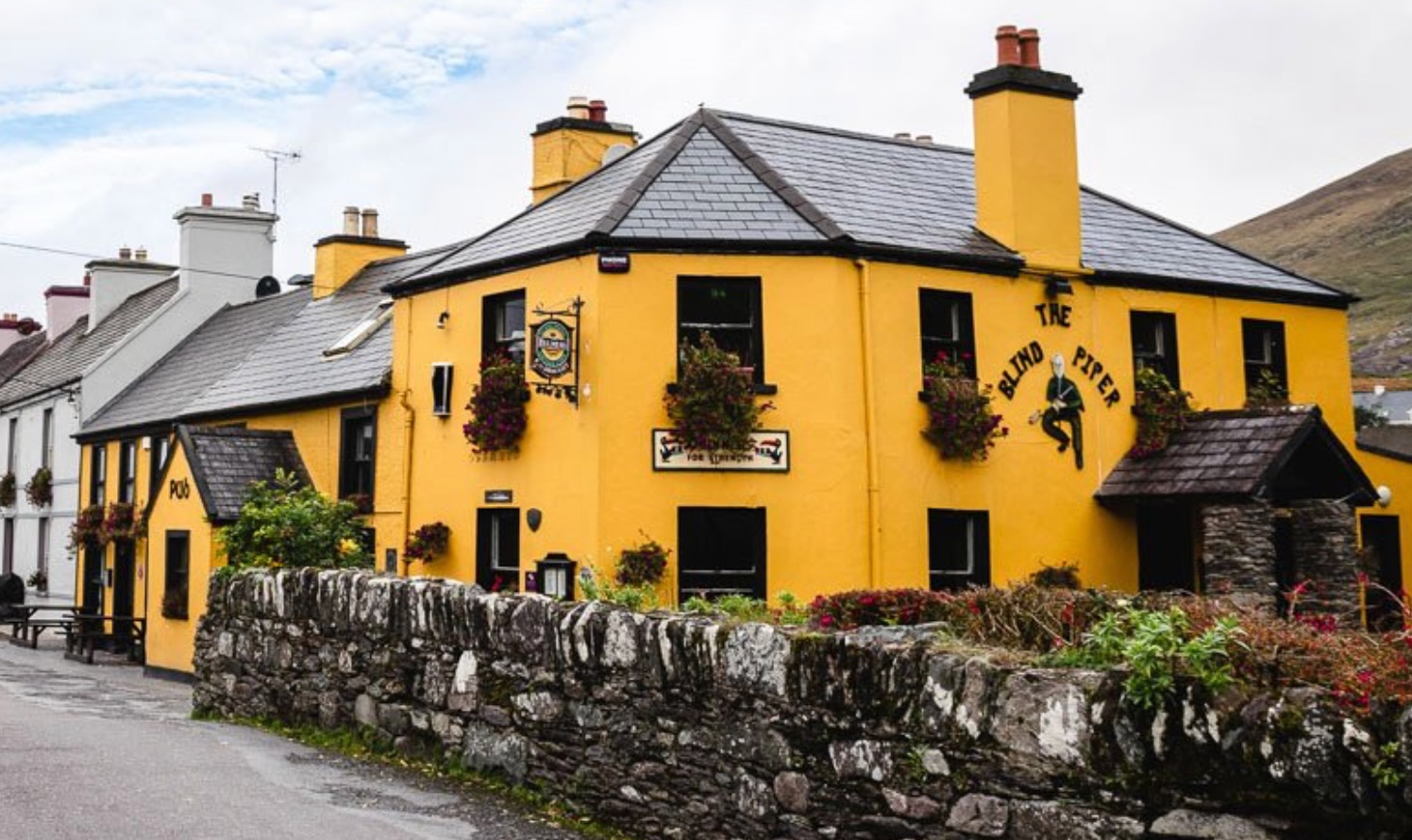
The pub was named after Mici Cumba O’Sullivan born about 1835 in Castlecove, Co, Kerry. He emigrated to Massachusetts early in life, where he lost most of his sight. Later in life he returned to Kerry, a whiz on the pipes.

We walked in a bit after 5, the bar and environs were full. We were directed to the empty dining room. Shortly thereafter we were joined by an American couple. Perhaps late 60s. They wanted hamburgers.
They looked right out of a John Denver sound track. Thought to myself ,
“Sheesh”
We struck up a conversation. First impressions can be misleading. They were long distance hikers, doing it on their own, their way. We laughed about friends and family who’d be far more comfortable with us all lazing around a nice safe resort pool.
We get it. So do the actuaries.
I tried to find insurance for our bike before this trip. Turns out we have aged out. Bicycling overseas is considered an extreme sport. Insurance is not available for the mid 70’s demographic. Extreme sports and senior citizens,
What could go wrong?
The photo below pretty much sums up The Blind Piper. I can identify.
Captioned from the Kerry News:
“Tiz your round Dan!… In Kerry an animal can be a man’s best friend and local Kerry farmer Dan Curran loves nothing better than to share a pint of plain with his horse following a hard days work in The Blind Piper Bar in Caherdaniel.”

No breakfast was available in Caherdaniel. Olivia recommended a coffee shop in Sneem up the road. It didn’t disappoint.
Sneem Rolls
Kelly’s Bakery in Sneem is about as good as it gets. Run by the same family since 1955.
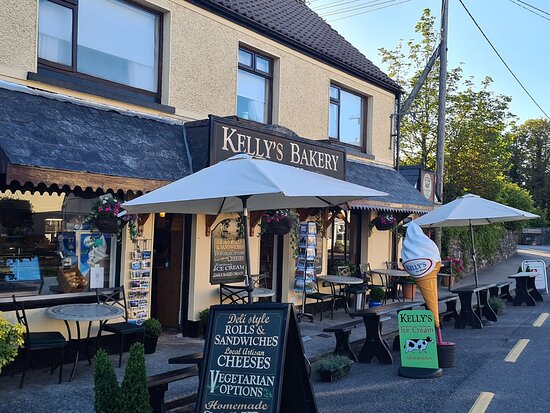
Third generation Donal behind the counter, tipped us off that there were still a couple of Sneem rolls left, if we were interested. That would be a Yes.
Turns out a Sneem roll is homemade blood sausage mixed with Pork in a flake pastry roll. Served with red onion chutney. 5 star.
Second generation, Pauline brought our order out. I’d guess 60s-ish. We hit it off.
“I was born in this bakery. Worked here my whole life. Next week I ‘m shutting down. Going to spend 4 months on the beach in the sun.”
We asked where she was headed.
“Mauritania, Azores, and Argentina.”
“It’s good to get [far] away, you know.”
Yep.
First generation Dan wasn’t around. Now in his 90s and purportedly still going strong. Bit of a temper though. Known to throw people out of the bakery if they rubbed him the wrong way.
“If you don’t like it, just get the [blank] out.”
To make it into your 90’s, a bit of an attitude seems to help.
The Fuchsia Coast and the Aos sí
I was vaguely aware that the Ireland’s climate was relatively mild, thanks to the Gulf Stream.
But the palm trees and hedgerows of fuchsia were definitely a surprise. A pleasant surprise.
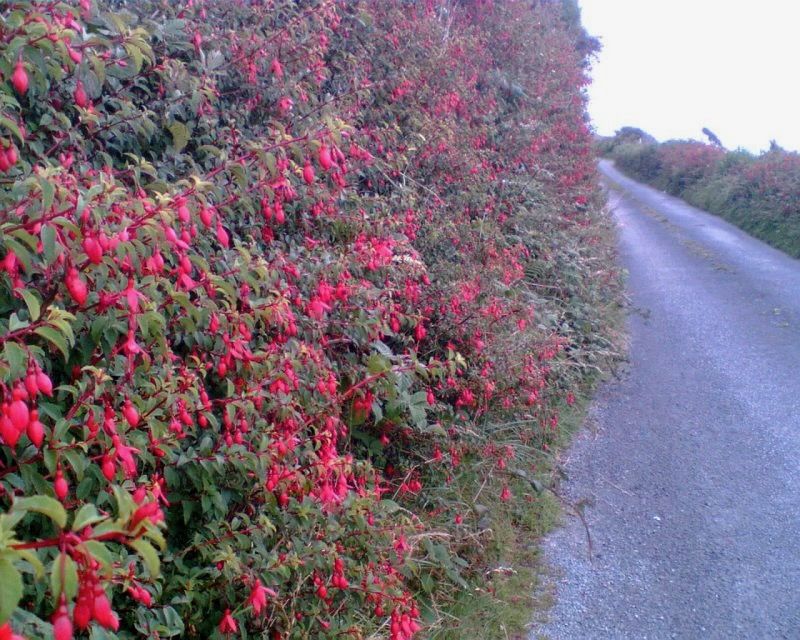
Thanks to that same Gulf Stream, Ireland is also wet. The not always so pleasant side of a warm maritime climate.
We pulled into Kenmare, just ahead of the rain. Our hotel was the Brooklane, big, pretty new and well respected.
The woman cleaning the windows directed us the the front desk.
The front desk tipped us off, that the window washer was Una, one of the owners of the hotel.
Una also worked as a server. Covered the front desk, and the bar at times. She never let on she owned the place. Preferring to see how her enterprise was running from the ground up.
Una runs the hotel while her husband Dermot works the farm, about a mile down the road. Dermot makes his own pork sausages. Best I’ve ever tasted. “Champion of Ireland” good.
Confirmed by the Fins Goustiers European Championships Certificate hanging in the hall.

After the win, Dermot explained, “We are situated two kilometres from the Atlantic, which gives our pork its unique flavour from the salt coming in off Kenmare Bay. The high salt levels and iodine-rich content of these plants and grasses that our pigs feed on make the muscle cells in the flesh retain more moisture so the meat is juicier and melt-in-the-mouth tender, a taste that has been largely forgotten in today’s mass produced pork.”
We looked for his sausages on the breakfast menu. They were there, but hidden away.
We learned that all you had to do was ask for them. Were they that good?
Yes.
Our second night at dinner at the Brooklane Hotel, we noticed Olivia from our hostel in Caherdaniel, dining off in a corner with a friend. We let her be.
Another couple were enjoying themselves at an adjacent table. About our age or a bit older. Clearly still into each other. On vacation from the middle of Ireland.
Yukking it up with their server. They wanted to change their sides around.
“No problem”
We added,
“Sometimes you just have to ask”
Laughter, And we got their story.
He’s English. She Irish. He moved to Ireland many moons ago for her. No regrets. They loved that we were bicycling.
“The best way to see this country.”
Down on holiday from Tullamore in central Ireland. Sharon piped up,
“Ah, the town were Tullamore DEW is made.”.
Tullamore is a small town of perhaps 13,000 folks. DEW is an Irish whiskey with a long and storied past.
How Sharon knew about Tullamore and the whiskey, I have no idea. But I’ve long since ceased being surprised.
****
There were a couple of ceramic lighthouse-like towers in the stairwell. They were talking to me. I asked Uma about them.
“If you like them, Make me an offer” Completely in character.
The artist was showing in a gallery in town.
The next day we walked over. Good Stuff.
Good but not great. And besides the crating and shipping would be more than the cost of the towers themselves, and no shipping guarantees.
Curiously a seed was planted for a trip to London next year. More on that Tower of Babel escapade later, if we go.
Our next stop was Kenmare’s stone circle. One of the largest Stone Circles in South West Ireland built during the Bronze Age (2,200 – 500 B.C).
Truth-be-told, we were underwhelmed. Compared to what we had seen in England last year, this stone circle felt under-energized and domesticated.
Like Vermont when you’re used to the Rocky Mountains.
It wasn’t the stones fault. The site had been tourist-ified. Once they stood on a knoll with a view.
Today views are blocked by a screen of trees and the stones sit on the flat. Grade has been raised for easier access from the adjacent parking lot.
A Hawthorne Faerie tree has been added. You can buy pre-printed wish tags for €2.50. I couldn’t bring myself to buy one and besides I didn’t have a pen. On hindsight, suspect I missed an opportunity, to amuse the Faeries.
My favorite tag:
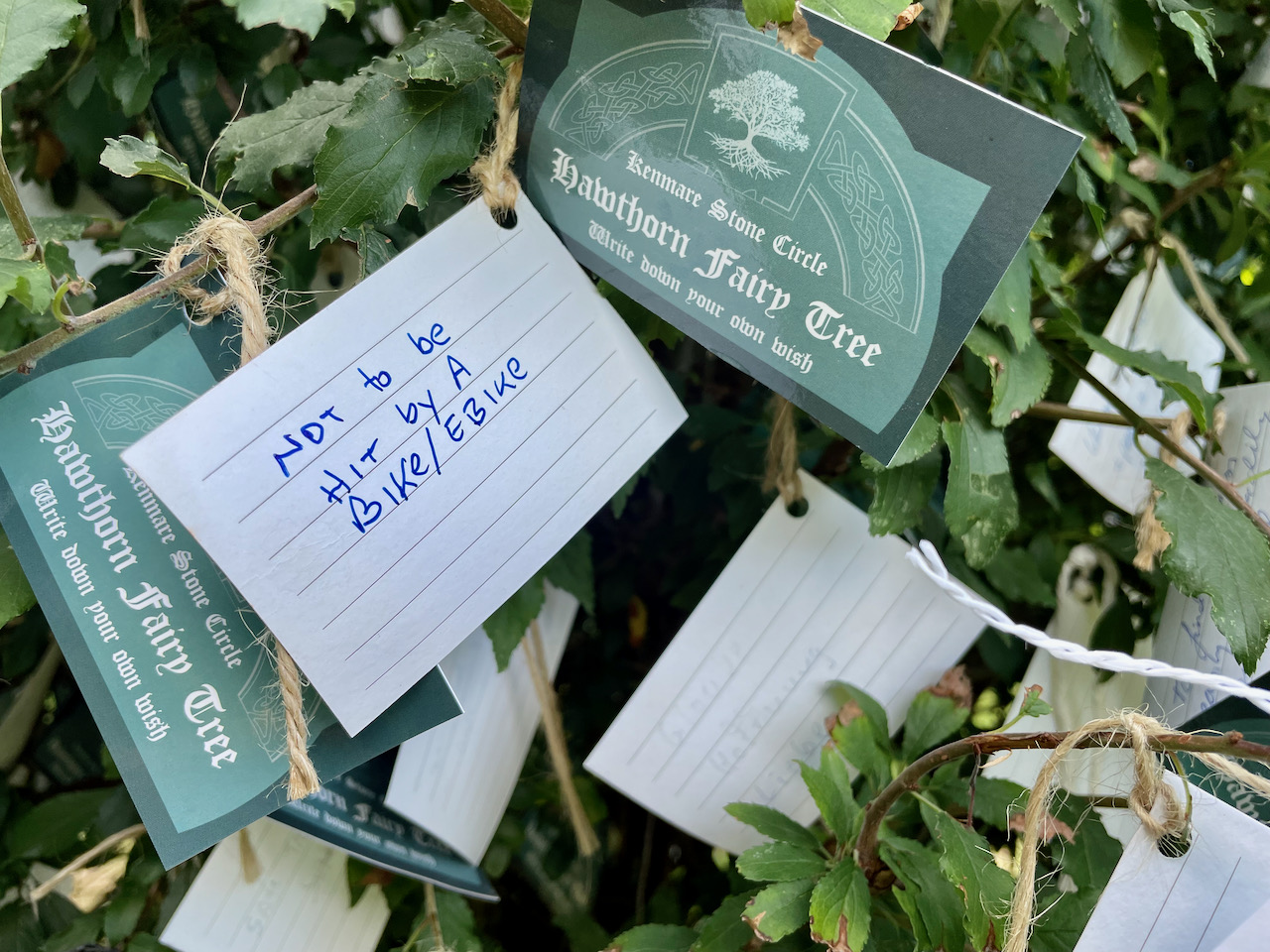
Suspect this tree is going to be here for a long time.
“Nobody cuts down a Hawthorn tree as it is believed that the tree represents a meeting place between worlds for mortals and that of the faeries in the other world. Indeed, many roads in Ireland have been diverted to avoid cutting one down.”
If I were to guess, I’d say the faeries, or more respectfully the Aos sí, find this 21st century dance of desires amusing.
Irish faeries ≠ Disney fairies. They are old Celtic Gods from way, way back. To be respected and feared. Aos sí are fierce guardians of their abodes. Hawthorne trees are their favorites.
The Aos sí are not to be messed around with. When crossed, they have been known to kidnap children, replacing them with changelings, and so forth. Dark, dark stuff.
Back to the Future, An Aos sí Hawthorne Tree Story
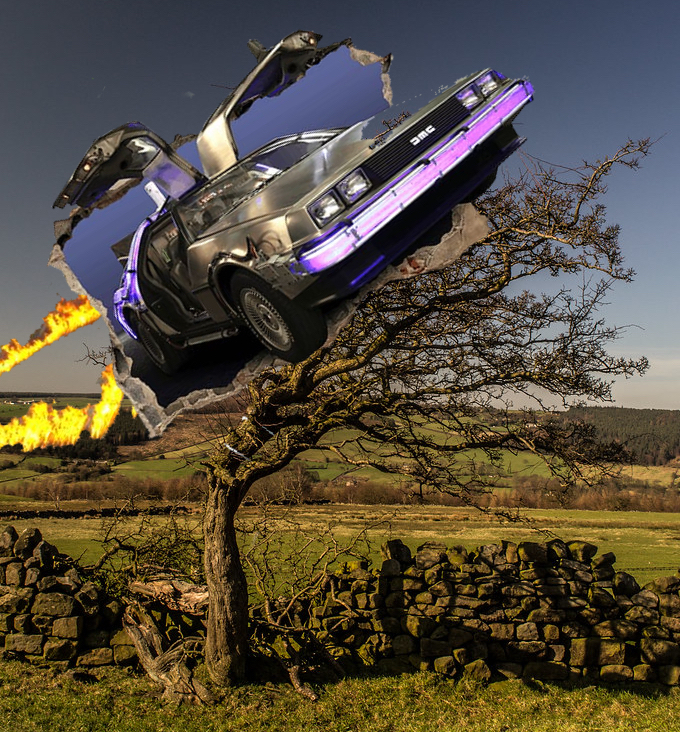
Once upon a time, in the early 1980s, there was a flamboyant self-absorbed American who dreamed of fame and fortune. His name was John De Lorean. He came to Ireland to build his dream car.
He raised the money, found a site for his car plant, and lined up contractors. Time came to break ground, but a fairie tree stood in the way. No Irishman would touch it and risk the faeries’ wrath.
Mr. Pompous-ass De Lorean, was not to be deterred and personally drove the bulldozer which took out the Aos sí’s tree.
Bad idea.
Shortly thereafter, his company went bankrupt. And he was busted in a $24 million drug deal gone bad.
Just to twist the knife, his car went on to be a movie star. Mr. De Lorean went on to ruin.
Don’t mess with old magic.
****
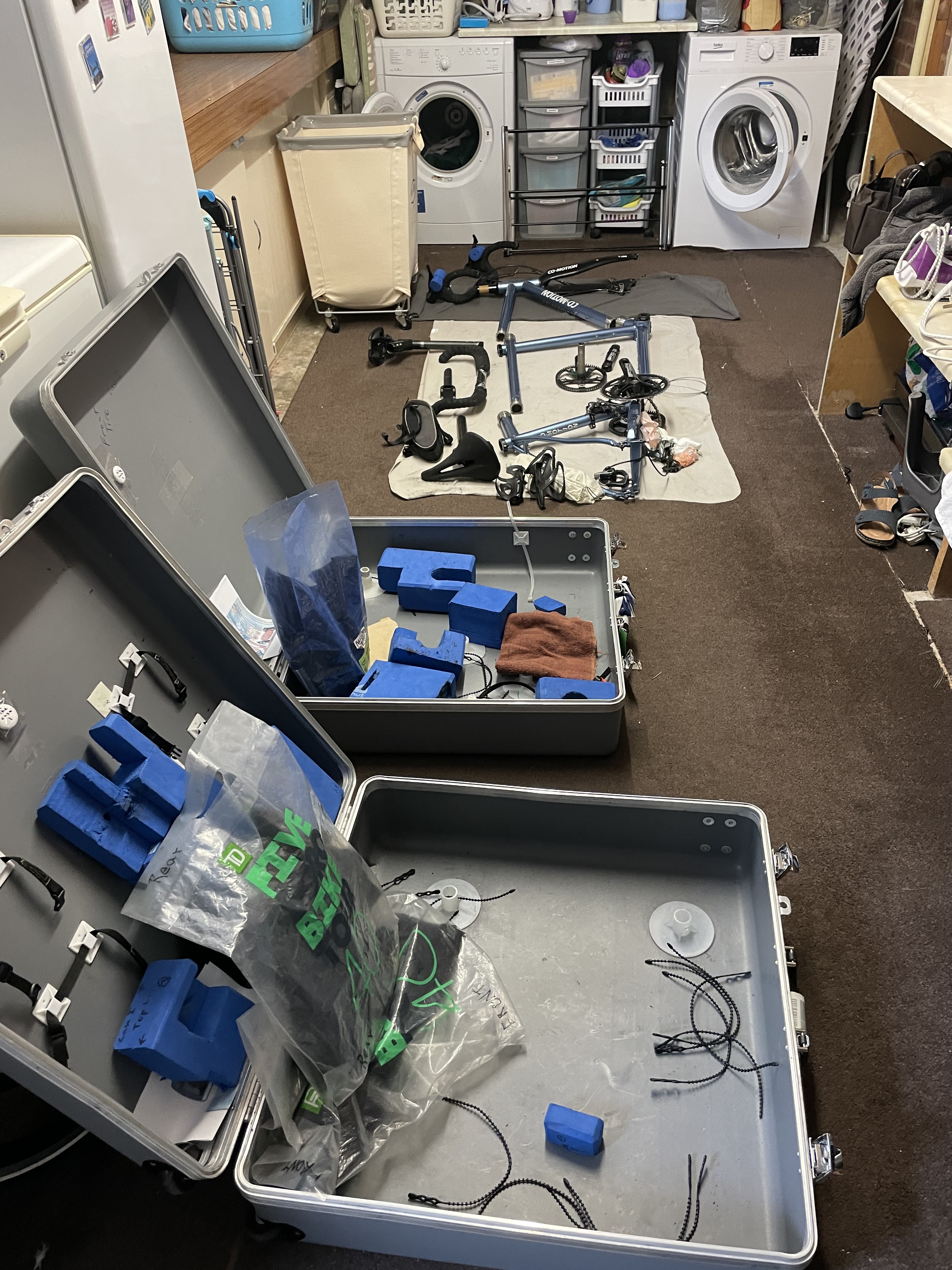
It was time to pack up the bike and head home. Our friends at the front desk said we could use the breakfast area once the space was free at 11:00 AM. It was a 2 Guinness job.
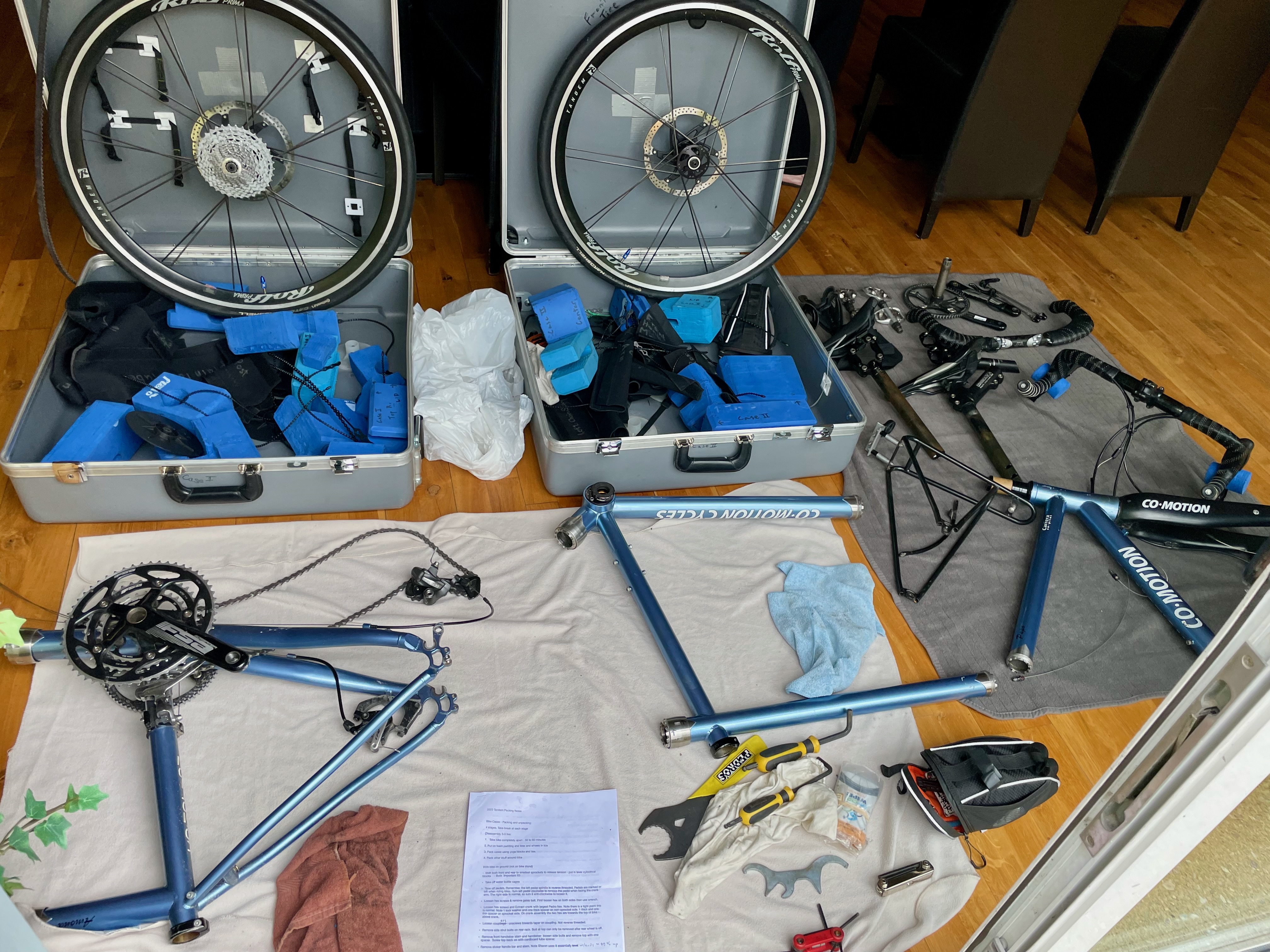
To make our flight home. We needed to leave before breakfast. We asked if we could have breakfast early. But of course. With sausages? But of course.
All we had to do was ask.
Sharon and I chatted about our friends from Tullamore. They were headed to Helen’s Bar in Tuosist on the adjoining Beara Peninsula. They were most enthusiastic and encouraging.
We could do another trip starting in Kenmare, cycling along the southernmost Fuchsia Coast to Cork. Our first nights stay would be in Helen’s Bar. We could track down some Ogham stones. Easy Peasy. We know the drill now.
But the world is a big place and we aren’t getting any younger. Next up will be London and Kyoto in 2025. Then likely San Gimignano in Tuscany and a Sharon Sicilian roots trip. Prince Edward’s Island is calling too.
Vamos a Ver. We shall see.






















































 Advencha before Dementia