2010 Everglades

The Everglades 2010

Everglades City is a bit off the beaten track.

Naples it’s not. No glorious beaches. No high end restaurants. No valet parking.

With a population of 500±, “City” is a misnomer. Some have described the town as nothing more than a few marinas and boat ramps – and these were the good reviews.

Everglades City has been a commercial fishing village since the 1930s and bills itself as the “Stone Crab Capital of the World.”

When Meredith told one of her colleagues at NYU that she was going to Everglades City over the holidays for a vacation, the woman did a double take.

Her comment:

“My car broke down there once.”
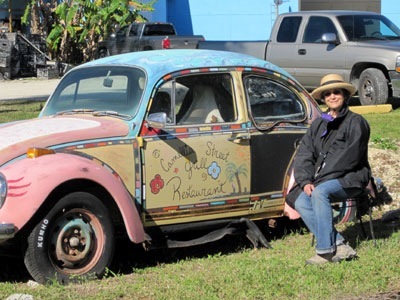
I took the photo to the left outside our favorite restaurant.

This is the Camellia Street Grill’s only sign.

On our last day, Taavo took another photo from a slightly different perspective- including the VW, but also 40+ Vultures picking over a dumpster- just out of frame here.

A charming hand painted VW bug sign with vultures snacking in a dumpster. Business as usual in Everglade’s City.

And just for the record, stone crabs are most tasty- a delicacy best eaten fresh and cold with mustard sauce.

Stone crabs in a restaurant means claws.

Stone crabs are not killed after being trapped. Fishermen clip the claws, and then throw the stone crabs back. The claws grow back in 6 months or so.

A curious cycle and a metaphor of sorts for Everglades City.

As our guide put it, “Every 10 years, the Feds swing through and haul off every male in Everglades City over 18.”

Drug smuggling.
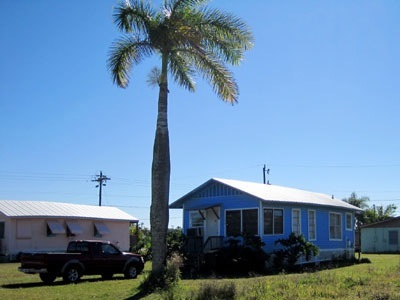
Sharon figures these guys do 5 years ± in prison. After another 5 years back home, they’re prime to be clipped again.

The running joke is- you know something’s up when you see a $10,000 house with a $50,000 pick-up truck parked out front.

On a recent overnight kayak outing from our Ivey House, the group was sitting silently in the dark, soaking up the mystery of the 10,000 islands, when right in front of them, out of the night, a water plane drops down, a boat slips up- and in a blink of an eye both are gone.

While Everglades City may be off the beaten track from a USA perspective, in a curious 21st century twist, its a destination for Europeans. Half the folks on our kayak trips were European, as were half the folks at breakfast at the Ivey House.

So what’s the draw for all these foreigners?

Everglades National Park and ecotourism. From one perspective Everglades City is the end of the road. From another its the northern, much less developed, gateway to Everglades National Park.

Everglades National Park at 1.5 million acres is the third largest national park in the lower 48 states, after Death Valley and Yellowstone. Its been designated a World Heritage Site, and an International Biosphere Reserve. Its the only subtropical preserve in North America, and the only ecosystem of its kind in the world.

In essence, the Everglades is a very wide, very shallow, very slow moving river. Its a sheet of water sliding slowly towards the Gulf of Mexico where it mixes with the salt water.

This mix, called brackish water, is where the magic takes place.

Most all of the fish and a big portion of the wildlife, especially the saltwater birds, do most of their breeding and feeding in this brackish water.

Although I had read all about the Everglades, I really didn’t get it until we got there, and even then it took a couple of days.

I was pleasantly surprised to find the water in Everglades to be crystal clear. I could look down out of the kayak and see the bottom.

Also for the most part, the Everglades are open and flat, flat flat. The Everglades is not a jungle. Its more like the Great Plains, but with mangroves, exotic birds and alligators.

And there’s water everywhere. Really.

On our third day we had a bit of time on our hands. I thought it would be a good time for short hike. Our local map showed trails taking off from the Visitor Center at Big Cypress National Reserve, just down the road.

So I stroll up to the counter and ask the ranger which trail would be nice and dry for a short hike.

She gives me this look and starts telling me about the boardwalks. I say we’ve done those, we just want a dry trail.

She shakes her head slowly- “This is the Everglades. There are no dry trails.” Trails in the Everglades are wet- by definition- at least at this time of year.

And this is not a bad thing.

Back to the beginning of this story.
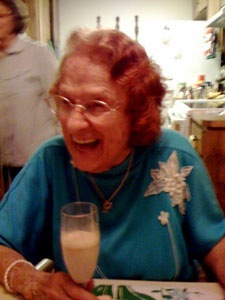
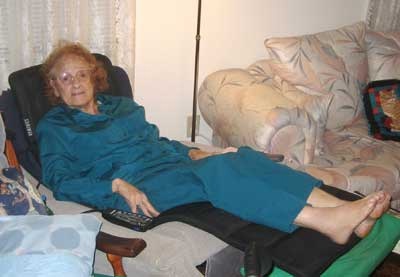
We celebrated New Year’s Eve with Sharon’s Mom, Rosita, in Tampa.

As it turned out, we all had a great time.

See photo to the left.

We started with Belgian beer, transitioned to champagne and capped the night off with eggnog. I probably should have called it a night at Belgian beer.

On New Year’s Day we rolled out of bed, a bit worse for wear- speaking for myself.

Fortified with grits and eggs courtesy of Taavo and Sharon, we hit the road.

Three hours later we were checking in at the Ivey House in Everglades City. It was unseasonably cold (40s°F) and rainy. Some Swede’s were splashing around in the outdoor pool.

We ended up at the Ivey House, because it was the top rated Inn in Everglades City. It also didn’t hurt that they’ve been running their own eco-kayak tours for 30 years.

Given the weather, we decided to schedule our first kayak trip in the middle of the following day. Good decision. The rain cleared off.

The next day at 1:00 in the afternoon we were off for the Turner River. Our van held two Australians, three Germans, a couple from Fort Meyers, our guide and us.

We paddled for 3 hours or so, covering roughly 3 miles. First we headed up the gently winding river across some largish ponds through some sawgrass and into the edge of a bald cypress forest.

Gators were scarce, because of the cold temps, though we did pass one big guy up on the bank 40 feet ± away, mostly hidden.

Lots of birds though: anhingas, kingfishers, ospreys, moorhens and coots.

Woodstorks, Cigüeña Americanas, too. These birds are big. Rare, too.

We were all starting to get the hang of our tandem kayaks through trial and error.

I aspire to kayak lessons someday, so I’ll be better prepared. There were times when paddling in tandem felt almost effortless.

Such synchronicity pays big dividends. A lesson there.

Then there were times when Sharon and I seemed to be working at cross purposes.

Another lesson.

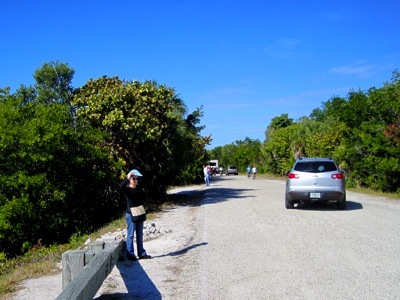
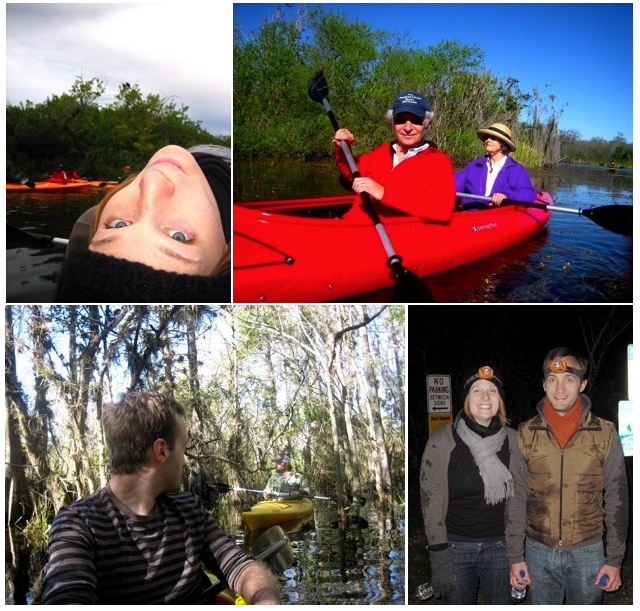
After the cypress forest, it was back and under Hwy 41- Photo to right – and on to the red mangrove tunnels.

Our water route gradually began closing in as we approached. At about 8 feet wide our guide pulled up and showed us how to pull our kayak paddles apart.
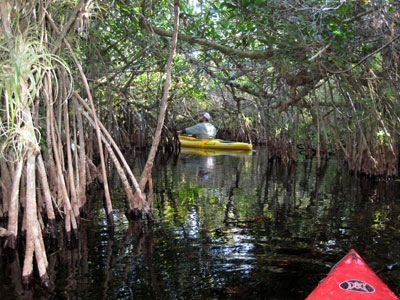
We stowed one half in our kayaks and used the other half to paddle canoe-style.

When things got really tight, we’d reach out and pull ourselves along using the mangrove branches.

Orchids and bromeliads were growing on the mangroves.

It would have been nice to see the orchids in bloom.

On the other hand, as our guide explained, if we wanted to come back in the right season for orchid flowers- summer- we’d have to wear a full body-bug suit with foam spacers.

No thanks.

Its pretty hard to tip a kayak over- especially the extra-wide models we were paddling. Hard, but not impossible.

On exiting the mangrove tunnels on the return leg, word filtered up that one of the Germans had taken the plunge. She was last in the single file. Nature was calling. She dropped back and apparently, all did not go according to plan.

To her credit, when she emerged from the tunnel- in boat- she was wet, but unbowed.

Our guide just shrugged, and muttered underneath his breath, “First of the year.”

There was something odd about the other American couple on our first day’s kayak trip.

They were nice enough. He was a classic Florida good old white boy around 50 – in good trim & over 6 feet, a hunter and fisherman; Owned his own air-boat; Drove a late model big American pickup truck. Am guessing though, not the sort typically found on an eco-kayaking trip.

She would be lucky to hit 5’- 4” in heels. 30s-ish; Darkish complexion; Short braided pigtails.

Privately Sharon and I referred to her as eco-girl.

The two were always holding hands. Even at trip orientation. Even in the shuttle van. That said, their banter could be peppery.

On the water they’d paddle like crazy in one direction and then another. Often disappearing for 5-10 minutes at a time.

The next morning on my second coffee, it hit me.

They were having an affair.

This was their private weekend. No one would know them in Everglades City.

I asked Sharon what she thought. Yep. I asked Taavo and Meredith. Yep & yep.

Taavo clinched it. He remembered the initial group orientation/ introductions where Doug was introduced as “William.”

“No. I’m Doug. William is only the name on the credit card.”

Moving on to alligators.

Taavo, Sharon and I had made our peace with Florida gators on the Hillsborough River, outside of Tampa.

The folks running our canoe trips said they have had no alligator problems- since they’ve been in business- decades.

Lots of gators on the Hillsborough too.
To me the gators felt like big, uninterested lizards. As we paddled by- nary a response.

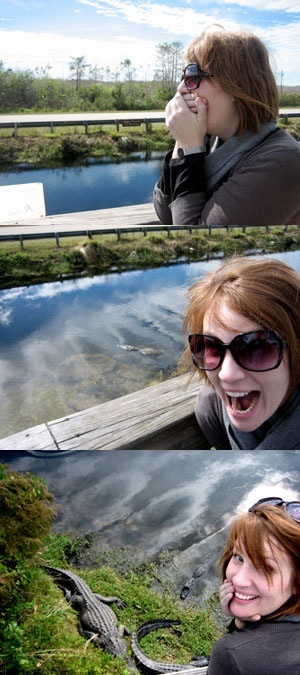
Meredith had her real introduction outside the Visitor Center at Big Cypress National Reserve.

The three photos to the left tell the story.

As our  guide book put it though, it’s still smart to play it safe:

“Do not, under any circumstances, feed the alligators, even if it is entertaining. It teaches them bad habits. You don’t want to see an alligator get up and beg.”

Our second kayak trip- down Halfway Creek- was our most ambitious. Paddling-wise it was about the same as Turner River- a shade over 3 hours. The twist was that half would be in the dark.

And dark it was. No moon and overcast. Cold, too- 40s°F. We were all comfortable-ish.

Paddling kept us warm.

Meredith said she had on 6 shirts and two pairs of pants. She also borrowed a knit cap and gloves from Taavo.

The Photo to the right was just before dusk.

Dusk was the best. Birds were getting ready to settle down for the night.

First they had to have a wild rumpus. And a wild rumpus it was. Huge birds swarming like bats. Squawking up a storm.

In the fading light our guide passed out headlamps at the turn-around point. “Just don’t look anyone in the face. You’ll blind them.”

Five minutes later I looked around for our guide. I found- and blinded him. He just groaned a most-expressive groan. The trick for looking for someone is to look above them. I caught on eventually.

We had already tied glow-sticks to the front of our kayaks. And off we went back into the black.

For the first stretch, Sharon and I were right behind our guide who was setting a healthy pace.

This was a workout.

Waterways broke off right and left. And it was pitch black.

Hard to stay oriented, apparently even for guides.

After a bit, our guide told us to hold up while he reconnoitered.

He never admitted it, but Sharon and I could tell that he was lost, albeit briefly.

As we paddled on furiously through the night, our guide would point out alligators.  All we could see were their luminescent eyes- which seemed to glow as if lit up inside. Sharon says it was reflections off their retinas. In any case, a rather remarkable effect.

As we were checking out from the Ivey House the next morning. I asked about a fitting encore for the next trip, should there be a next time.

“An overnight kayak trip to the 10,000 islands.”

The Everglades proper is on the mainland. The 10,000 islands are uninhabited mangrove islands extending northward from the northwest corner of the Everglades. Close by to Everglades City and home to lots of birds, beautiful beaches, black starry nights, gorgeous sunsets and drug drops.

We can handle it.

I think.
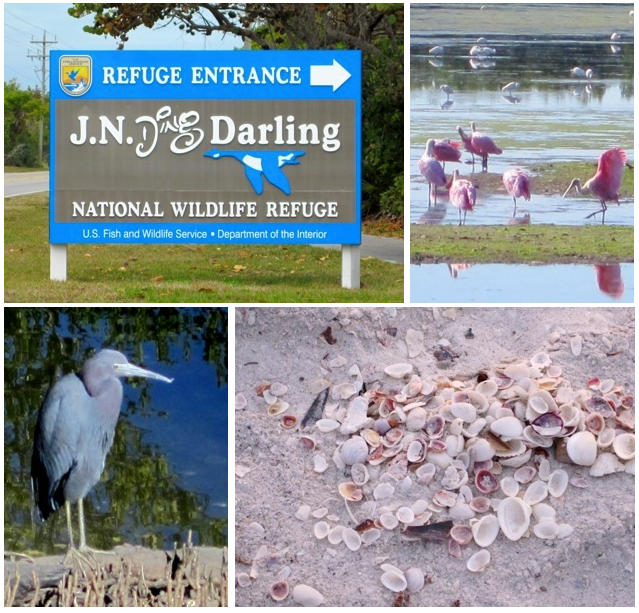
2010 Ding Darling


In the fall of 2010, Sharon and I were sitting in our favorite Cambridge café down the hill, when the owner discretely asked if we could move a table over. No problem.

Another regular and his girlfriend needed our table. Both were blind and needed a bit more room for their service dogs.

We struck up a conversation. Curiously he was a kayaker/ fisherman and spent a big chunk of each year in the Tampa area. “As a computer programmer I can live where I want to.”

He knew Canoe Escapes, our favorite Tampa area Hillsborough river canoe/kayak rental company. I carry my Canoe Escapes VIP, “Very Important Paddler”, card every day in my wallet.

It humors me.

And besides with three more stamps, I’ll get a free rental.

Our friend noted that Canoe Escapes had recently changed ownership. He went boating regularly with a couple of Tampa Buccaneer pro-football players. The stories went on and on.

I started to get suspicious as each one-upped the one before.

His female companion was cute. 10:30 AM on a Saturday. Couples, the night after? Early in the relationship? Could be boasting time.

She was pretty, quiet, and a nice person.

Her dog was great too. She let us pet him. Not by the book for a service dog. We offered our bacon. She politely declined on behalf of Mr. Dog.

“Not healthy, though he loves it.”

You could tell by Mr. Dog’s body language that he was disappointed. He clearly understood the word “bacon”  and the offer.

Sharon and I made it through our Everglades stories. Our human male companion at the next table had one better at every turn.

Then we got to our last visit to Sanibel.

He scowled, “You must have a lot more money than me.”

I pointed out that rooms could be had at reasonable rates with care. To no avail.

Clearly I had struck a nerve. “You’d be better off at Honeymoon Island near Brandenton or Anna Maria Island North of Sanibel.” Maybe he considered Sanibel elitist or a tourist trap or simply had been trying to impress his girlfriend. Maybe just different tastes. Sharon and I never figured it out.

I thought of our blind outdoorsman friend 6 weeks later at Sanibel.

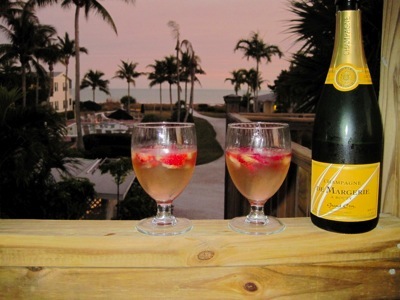
After popping the champagne, I sat back and looked out over the Gulf of Mexico.

Above, the clouds were starting turn pink with the arrival of evening. Palms framed the scene.

No people in sight. No cars. No street lights. No hustle. No bustle. Velvety quiet.

Our kind of place.

I had checked out Honeymoon Island and Anna Maria Island. We probably could have saved $50 a night.

But at a cost- crowds, traffic, big developments, and night sky light pollution. To each their own I guess.

To my mind our extra $100 was well spent.

One of my favorite Spanish slogans goes:

“No sabía divertirme, pero estoy tratando a aprender.”

“I didn’t know how to have fun, but I’m trying to learn.”

Score one for the home team.

****

Our working plan for the 2010 New Year’s holiday had been to return to Everglades City and do an overnight kayak trip to the 10,000 islands- after visiting Sharon’s Mom, Rosita, in Tampa. We had hoped that Taavo and his girlfriend Meredith would be able to join us.

It just wasn’t meant to be.

Meredith ended up spending the Xmas holidays with her parents, and her sister and her husband in Naples Florida. Taavo received an invite.

Between the two families we worked out a plan whereby Taavo could visit his grandmother in Tampa and still join the Gliddens in Naples. And Sharon and I could get a Tampa break and time for ourselves on Sanibel.

The key was that Naples is just down the road from Sanibel and both are an easy 3 hour drive from Tampa.

The plan worked like a charm.

All had a great time.

Naples has more millionaires per capita than any other city in the USA. Snowmaking machines are set up in the palm trees downtown, for Xmas. Naples is that kind of place.

The Gliddens were staying in a beautiful condo tower at water’s edge.

This December 29 photo of Taavo and Meredith to the right, sums Naples up pretty well.

After a fun lunch with the Gliddens in the heart of Naples, Sharon and I said our goodbyes and an hour later were checking in at the Seaside Inn on Sanibel Island. This is the same resort Sharon, Taavo, Meredith and I stayed at in 2009.

I had tried to find somewhere new, but my other choices were all booked. As it turned out, I doubt we could have done better.

Our room felt a bit like a tree house. We were up a floor, one of two, looking out over the Gulf. Back a bit, with two walls of windows and priced right.

We had two nights and one full day to ourselves.

I knew exactly what I wanted to do, and Sharon humored me. I wanted to walk Wildlife Drive in Ding Darling National Wildlife Refuge.

Sanibel has many charms including miles of beaches, great restaurants and world class shelling. That said, it’s the Ding Darling Wildlife Refuge which does it for me.

Ding Darling takes up nearly half of Sanibel Island. At 6,354 acres of preserved subtropical barrier island habitat, it is part of the largest undeveloped mangrove ecosystem in the country.

Wildlife Drive runs right through the heart of the mangrove ecosystem and is a birder’s paradise.

Its almost too easy. An embarrassment of riches: white ibis, egrets, herons, pelicans, cormorants, ospreys, anhingas, roseate spoonbills, eagles. Check, check and check.

There are so many beautiful exotic birds, so exposed, that Fridays the Refuge is closed, just to give the birds a day off from people. Truth-be-told, the birds don’t seem to care one way or the other.

On our last visit in 2009, my rhythm had been off.

I drove right by the Visitor’s Center hitting Wildlife Drive before I was oriented. As we drove along, I kept wondering when we’d get there. Eventually, I did figure out my conceptual failure, though it took a while.

We were there already. A many-faceted moral.

This time, I figured that by parking at the Visitor’s Center and then walking Wildlife Drive we couldn’t miss. Mostly true.

Unfortunately I had neglected to share my walking plan with Sharon, so she didn’t dress accordingly.

After 8 miles on the hardest of the hard-paved of rocky roads in clogs, Sharon said that this was far worse than 15 miles at Glacier. Every joint from her waist down hurt.

And I didn’t bring my hiking shoes either. That road was tough! Sharp-edged rocks up to 2” set in a tarmac base. Next time its going to be bikes.

Still we had a great time. Great birds. Great weather. Great Landscape. Great people watching.

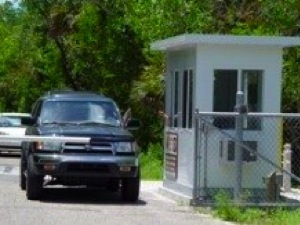
There is a toll booth at the beginning of Wildlife Drive. Entrance fees vary: car, bike or pedestrian.

This was our first opportunity to try out Sharon’s new senior pass for Federal Recreational Lands.

We walk up to the window. Sharon flashes her pass. The woman nods.

So far so good. But will it cover me? After all we weren’t together in a car. I pop the question.

“Only if she claims you.”

The woman then turns to Sharon with her best cold bureaucratic look.

Without missing a beat, Sharon responds in kind, after the slightest of pauses, “I claim him.”

Even in the briefest of fleeting moments, volumes can be written. This marriage thing has its twists and turns- even after decades.

We laughed all around. Knowingly.

I could pass without forking over a buck. And I am still claimed.

It was only on this trip that I caught on to the irony, or incongruity, of Wildlife Drive.

There’s nothing subtle about it.

It’s a freeway running through the heart of a pristine mangrove ecosystem.

Convenient? Yes.

Environmentally sensitive? No, No and No.

The road doesn’t appear to serve any purpose other than accommodating bird voyeurism.

It doesn’t go anywhere, other than loop back to main island artery. And it looks new.

If this weren’t enough, for much of its 5 miles, there was no there there, when it was built. Tons and tons of fill had to be trucked in to lift the road above the shallow tidal waters.

As it turns out, not surprisingly, it wasn’t about the birds at all. It was about the mosquitos.

Wildlife Drive is an upgraded service road built on top of a series of dikes constructed in the 1960s in an ill conceived and misguided effort at mosquito control.  Today’s fantastic bird watching and paved eco-experience is just a happy twist of fate.

I think of the Drive as an extra-wide hiking/biking/driving path. Kind-of like the paved trails in National Parks, where there is so much traffic that paving is the right thing.

No harm, no foul. Nice when it works out.

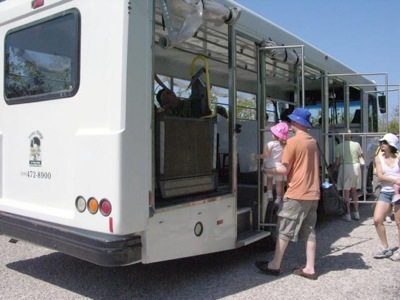
Sharon and I were a mile or so in when we caught up with the tram tour. Borrowed photo to the left.

The guide had lots of interesting things to say.

We were free to listen in as we walked along. The tram rolled slowly, windows were open and the guide was sensitively amplified.

The guide pointed out an Eagles’ nest in the distance, Anhingas drying their wings, and a solitary Ibis waiting patiently for lunch.

I was impressed. This guide really knew his stuff. Nice professional manner too. I thought- maybe a PhD in the natural sciences. He talked like a kindly knowledgeable professor.

The tram rolled up to the Mangrove Overlook Boardwalk. Everyone piled out, as the talk continued. We mixed in.

Mangrove trees are curious life forms.

The Red Mangrove, photo to the right, has tall arching roots  called prop roots, that supply air to the underlying roots and provide support and stability.

They trap the mud and silt that flows with the tide, thus gradually increasing the soil around them.

Red Mangroves have a high salt tolerance and produce tons of leaf litter per year which benefit estuarine food chains.

The guide pointed out that there are three mangroves found in Florida: Red, Black and White.

The talk went on. I wandered off up the road as Sharon worked her way to the front of the group. I was soaking up some sun when Sharon caught up. Apparently she had been an active participant in the naturalist-led discussion. No surprise there.

As everyone was getting back on the tram, she had asked the guide where he was from. There was something about his accent. “Can you guess?”

I couldn’t.

“Brooklyn.”

Not to take anything away from Brooklyn, but a hotbed of naturalists it’s not.

The light went on.

This guide was likely a retiree living in the area picking up a few extra bucks: Nice guy and all, and masterful at the guide schtick, but probably no background in natural history- that had been my invention.

He was a grey-haired performance artist in khakis.

This was pretty much confirmed a short time later on the boardwalk through the shell mounds, when we came across a sign which read:

“There are four mangroves found in Florida: Red, Black, White and Buttonwood.”

I found the shell mounds poignant. At one time the Calusa Indians controlled most of south Florida.

They were a fierce and war-like people. They traveled in dug out canoes, wreaking havoc far and wide.

Even the Spanish had to be careful, in not anchoring too close to shore.

The Calusa depended on the sea for their food and tools.

The Calusa were gone by the late 1700s. Victims of disease, warfare and changing times.

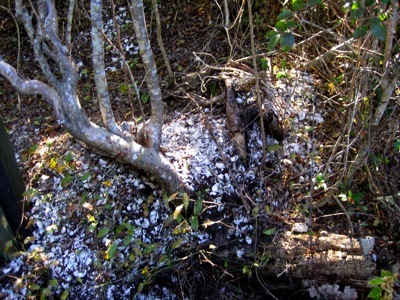
All that is left are their garbage dumps, known as shell mounds.

The mounds on Wildlife Drive don’t look like much: shells scattered on the ground. The rest of the mounds- all shells- aren’t visible. They’re embedded in the ground.

Interesting metaphor.

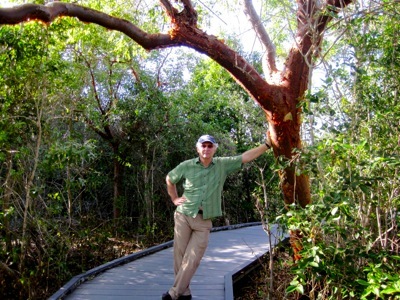
It was also on this boardwalk through the shell mounds that I finally noticed and came to appreciate the gumbo-limbo tree. It is fast growing, tolerant of salt and calcareous soils and has a shiny red exfoliating bark.

In South Florida, the gumbo-limbo is known as the tourist tree because of its red, flaking skin. Photo to the left with my new-found friend.

Haitians purportedly make drums from the trunk of the gumbo-limbo. A resin obtained from the trunk and bark is called chibou, cachibou or gomart in the West Indies, and is used to make glue, varnish, water repellent coatings and incense.

But it’s the name that I love most of all.

“Gumbo-Limbo.”

After the shell mounds, we turned around and headed back, walking against traffic. Wildlife Drive is one way for all but pedestrians. Traffic was light, but every now and then we’d hit an impatient and frustrated driver rolling his or her eyes at the slow pace on the Drive.

I recognized the look. It was me last time around. I repeated to myself, “Slow down. You’re there already.” I’d look out across the reserve. Shadows were getting long. The water was quiet. The birds were getting ready to call it a day.

Time to wrap this one up.

I’m going to skip the story about the coolest bird in Ding Darling. Suffice it to say that if you want to impress the birders, just mention the Mangrove Cuckoo.

I’m also going to skip the story about the birder with the biggest and lightest lens. Suffice it to say that cameras are a big deal on Wildlife Drive.

We were back at our car by 4:30 PM. Next stop dinner. I suggested stopping somewhere convenient on the way back to the Seaside Inn.

Sharon lobbied for the Lighthouse Cafe. Not as convenient, but our favorite from our last trip.

I resisted for a few minutes, but to my credit, I came around.

The food and service was as good as we had remembered. Quiet too. The evening crowd hadn’t arrived.

As I was paying our bill, I told the young woman about our day and how happy I was that we had driven the extra mile to get to this restaurant. Our classy take-home desserts were on the counter.

I explained that I had a special bottle of Champagne cooling which would be the perfect complement.

Sharon and I were going to watch the night roll-in from our deck and toast the end of the day in style.

“What you need are some strawberries for the Champagne. I can get you some from the kitchen.”

I started off with my usual response, “Nah, don’t bother.”

Then I slowed down and thought again. “Yeah, that’s a great idea.”

She laughed and headed off to the kitchen.

2009 Yosemite

The last time I saw Yosemite was 1972. I was in college in Stockton California- only a few hours drive away. For some curious reason it took 37 years to make it back to the park. I loved the Park then, and it turns out, not surprisingly, I still do.

Growing up in the SF Bay area, my Mom and I visited many times when I was little. I still treasure those memories. Even diving down to flip on the extra gas tank on our VW, while winding up Tioga Pass.

In High School, I hitchhiked to Tuolumne and hiked down to the valley solo. I envisioned a journey of self-discovery. What I got was a bear and a rattlesnake.

No harm, no foul. They didn’t bother with me- for which I’m still grateful- and I didn’t bother them. When it came down to it, the 3 day hike itself was just a hike, though on the lonely side. A moral there.

I made several trips to Yosemite in my college years. I remember the spontaneity of youth- skinny dipping in the Merced River and hiking falls by moonlight.

This trip was a bit different- as befits the near elderly. No sleeping bags or campsites this time around. It was clean sheets and good food all the way. And we had a 10 day plan- in 4 parts.

First up was South Yosemite- Wawona, the Mariposa Sequoia Grove and Glacier Point. Then came Yosemite Valley, with its glories and crowds. As a counterpoint, followed Tuolumne Meadows, which at 8600 feet is the gateway to Yosemite’s High Sierra. As a final act, Sharon and I came back to Yosemite Valley for a night at the fabled Ahwahnee Hotel where we celebrated our 31st wedding anniversary.

Our good friends Susan and David joined us in Yosemite Valley and Tuolumne Meadows.

I am happy to report that there is something to be said for the wisdom of acquired years and $$$$ well spent. This was my best Yosemite trip ever.

South Yosemite

South Yosemite is a bit off the beaten track as these things go. I must admit that when we pulled up to the hotel, I had misgivings. I suppose it was the golf course and the pool. My first impression was:

“Tourist Trap.”

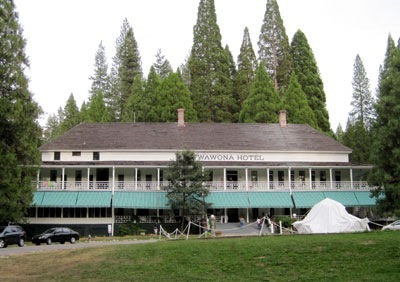
Once we got inside, those fears evaporated. The historic Wawona Hotel, built in 1872, oozed Victorian charm. Wawona staff were suitably laid back and friendly. As the lady cleaning our room enthused,”Wawona is great. You can have the valley crowds. This is so much more relaxed.”

With that we dropped our bags and rushed off to catch the shuttle to Mariposa Grove, 6 miles down the road.

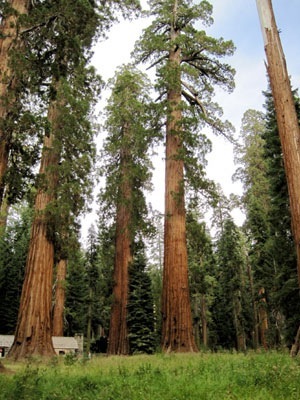
The Mariposa Grove has over 500 giant sequoias spread over 250 acres. The most famous is the 2,700 year old Grizzly Giant, over 20 stories high with a base 96 feet around. Mass-wise, it’s the fifth largest organism on the planet.

None of my pictures do the Grizzly Giant justice. Scale is hard to capture. We did make it up to the site of Galen Clark’s cabin though, and here the sheer size of these Sequoias can’t be missed. Photo to the right.

These are really big trees.

As we were riding in on the shuttle, the driver announced that the last shuttle out left at 6:00PM. As he put it, “You don’t want to miss it. If you do, I can pick you up at 9:00-AM-tomorrow.” Yuk, yuk.

I checked my watch- pushing 3:30PM. Plenty of time.

We figured we’d just stroll up the 4 mile loop a bit and then turn around when time warranted. I suppose, in hindsight, the scenario as played out, was entirely predictable.

At each famous tree we figured we had time for one more. After the Grizzley Giant came the California Tunnel Tree, followed by the Faithful Couple and then the Clothespin Tree. Finally we reached the log cabin, where we lingered about 3 minutes before high-tailing it back down.

We caught the 5:30 shuttle, dusty and out of breath, having hiked the full loop with its 1000 vertical foot climb and descent.

By 6:30 we were sitting in the Wawona dining room, showered and refreshed. Over dinner, we decided to hike Glacier Point the next day- on our way to Yosemite Valley. Good decision.

One hike in particular caught our eye- the Sentinel Dome/ Taft Point Loop. Although the Dome tops out at 8122 feet, the trailhead starts at 7600 feet. The loop itself looked to be 5.5 miles±. It looked just right for a second day- and it was.

The bonus was that large sections of the trail were along the top of cliffs dropping away to Yosemite Valley 3500 feet below.

Remarkable views. I do fine as long as I’m not too close to the edge.

Beforehand, just looking at pictures of Taft Point gave me vertigo. When we got there, it was indeed the real deal. 3500 feet straight down. Sharon didn’t seem at all concerned. See the photo to the left.

I was far more timid, edging up to the edge.

The next day when I was describing our Taft Point experience to David, he told me of the memorable time, many years gone by, when the Yosemite search and rescue team he was studying decided he should prove his job commitment by dangling off Taft Point on ropes.

After all this was their world. If he wanted in, even intellectually, he had to ante up. David did the deed. As he put it, “What choice did I have.” A guy thing. Kudos.

Yosemite Valley

I’ve had a chip on my shoulder about Yosemite Valley for as long as I can remember. Sure its got three thousand foot towering cliffs and sparkling granite domes and a picture-perfect layout. It’s also home to four of the world’s ten tallest waterfalls.

But Yosemite Valley’s also got the crowds that go with such world class scenery.

After our Sentinel Dome/ Taft Point Loop, Sharon and I drove down to the valley and checked into the Yosemite Valley Lodge- late afternoon. David and Susan were already up from Berkeley.

After settling into our room, we all went looking for food. First stop was the Food Court. We all ventured in, but I turned on my heels, Food Court- Bah. While David, Susan and Sharon poked around, I sat outside.

We knocked around the Valley’s food establishments before settling on an adequate grill a couple of miles away.

After a night’s rest, Sharon and I, headed over to that very same Food Court for breakfast. Curiously in the morning light everything was great. Fresh, well-cooked food, entertaining folks behind the counters and that very early morning crowd seemed just right- a happy balance of park employees and hardcore hikers.

I don’t know if it was the water, the coffee, the bed, or just Yosemite magic, but the chip on my shoulder was gone. The Food Court became one of my favorite places- and Yosemite Valley too.

After breakfast, we jumped on the shuttle to Happy Isles, the shuttle stop for the Mist Trail. The Mist Trail is reputedly the most popular trail in the valley. For good reason. It includes two waterfalls- 317-foot Vernal Fall and 594-foot Nevada Fall.

During Spring melt, the trail is drenched in mist from the falls. Mid-September, the trail was dry. We were happy to have any water at all. Yosemite Falls and Bridalveil Fall were both dry.

The picture to the right was taken the day before from Glacier Point. Both Falls on our trail are visible. We came up the left side and down on the right. The total hike was on the order of 6.5 miles and 2000 feet vertical.

All did fine. It is pretty steep going up. Going back down on the horse trail was a saving grace. It was longer, but less steep which translated into far fewer stairs- and less pounding on the knees.

On the way up we soon settled into our comfortable order- David #1, Susan #2, Sharon #3 with yours truly bringing up the rear.

As the last, I could linger taking pictures and chat comfortably with folks on the trail.

Sharon claims I must have had a personality transplant sometime in this last few years. Chatting? Out of character not that long ago. Personally, I think its the Latin influence. In any case, folks out and about in interesting places, not surprisingly, tend to be interesting.

We were on the trail relatively early- before 9:00AM. I struck up a conversation with a 50ish fellow heading back down. Question: “So when did you start out?” Answer: “2:00AM [pause] I did Half Dome.”

This was around 11:00AM.

Half Dome is the most fabled hike in the Park. Round trip is 17 miles with an elevation gain/descent of 4,800 feet. Strong hikers can make it in 12 hours.

This guy was on track to do it in 10. Mild-mannered guy too. Suspect near-elderly extreme hikers tend to come in this flavor.

The pic to the right is on our way up the last stretch to the top of Nevada Fall.

The next day was an official day off. Each couple went their own way. Sharon and I decided to hike on the valley floor. I suppose it was predictable, but one trail led into another and when all was accounted for we had racked up another 10+miles.

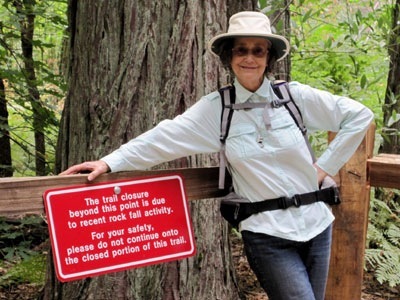
Twice our trails were closed due to recent rockfall activity. The first time was behind Mirror Lake- better described as Mirror Meadow at this time of the year.

Since we had come this far, we at least wanted to see the havoc and destruction- so we ducked the barricade and walked on.

The rockfall was impressive- big trees snapped like toothpicks. The trail was long gone. After suitable contemplation we turned around.

Later we read that this event registered on seismometers around California as a magnitude 2.5 earthquake.

Behind the Ahwahnee Hotel we came upon our second trail closing though, at first we didn’t know it was due to a rockfall.

Yellow tape with “Police Line Do Not Cross” printed in large letters was stretched across the trail. We weren’t about to wander through a crime scene. Then, on the ground, Sharon noticed a rock fall warning sign which had fallen down. Particulars read, “On August 26, 2009, approximately 3,200 tons of granite fell from the cliff behind The Ahwahnee. No additional rockfalls have occurred in this area since August 26; however, be aware that rockfalls can occur at anytime.”

That sounded pretty generic. We scampered across the 75 feet to the next yellow tape stretched across the trail- without incident.

That night I was sitting on a stool in the Yosemite Lodge Sports Bar nursing a beer while watching the New England Patriots barely pull out a win, when the guy sitting next to me turns and says,”Did you hear that BOOM this afternoon? We heard it from across the valley. Another rockfall behind the Ahwahnee.”

2 hours after we’d sauntered through.

Tuolumne Meadows

The next day we drove up the Tioga Road to Tuolumne Meadows, which at 8600 feet is the gateway to Yosemite’s High Sierra.

I have to admit that when making Yosemite reservations, Tuolumne Meadows’ Lodge had me at- “tent cabins with wood stoves.”

Apparently I wasn’t the only one so enamored. Back in December 2008 when I was trying to work out this trip’s logistics, the first three night block available was mid-September, the last week of the 2009 season.

We grabbed the reservation and organized the rest of the trip from there.

Just to be sure I called from Berkeley, before our drive over to Yosemite. Yes our tent cabin would have sheets and blankets, and firewood was provided too.

Nights were cold- low 30s. As luck would have it our cabin was the closest to the wood storage. While others grumbled about running out of wood, we simply helped ourselves. Our tent was toasty all night- every night, thanks to an endless supply of wood, a great little stove and a light-sleeping, firebug of a wife.

Bears are taken very seriously in Tuolumne. All food and scented items such as toothpaste must be kept in bear bins- Not in the car, not in the tent.

I wasn’t sure what a bear bin was before this trip. I know now.

A bear bin, at least at Tuolumne, is a front loading steel-plate box 33” deep x 45” wide x 18” tall. At Tuolumne Lodge, the bear bins are lined up along one side of the parking lot and shared communally- no locks allowed. They look easy enough to open, but are curiously counter-intuitive.

And the two step latch can stick before fully engaging.

This is not lost on the bears, who apparently run down the string of lockers giving each a good bang. Stuck latches pop open- and a bear party ensues. As to how bears get into cars, the joke goes, “They use the keyless entry system.”

They tear the door off.

We had no bear encounters. Not that Sharon wasn’t ready. Every day she wore her bear whistle. She was also packing a laser pointer. I never got the full explanation behind that one, but I have not doubt that there’s a story there.

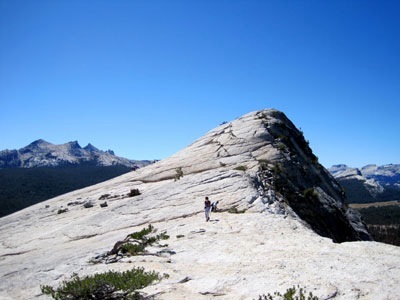
After we had checked in at Tuolumne, found our tent and figured out the bear bins, Sharon and I struck out for Lembert Dome (photo above) and Dog Lake. 6 miles and another 1000 vertical feet later, we were back- another hike in the bag.

While Sharon unpacked, I headed for the Lodge and a beer well earned. The Lodge was also a charming hybrid-tent structure.

In a curious and most welcome twist, powers-that-be in Yosemite fix beer prices. The Lodge reception area is considered a store and as such a cold Anchor Steam is pegged at $1.67.

The folks behind the desk will even open the bottle for you.

This write-up is getting pretty long, so I’m going to skip over the details of our next day at Mono Lake, a short drive down the far side of the Sierras.

Mono Lake is an alkaline Lake in the desert to the east of Yosemite. Rather remarkable country and a favorite of David and Susan’s. The tufa towers were grand. My favorite photo is Sharon tasting kutsavi, a Mono Indian delicacy. Call it what you may. It’s still alkali fly larvae to me.

Our last full day of hiking was 20 Lake’s Basin outside Yosemite to the east, which hand’s down was our longest and highest hike at over 12+ miles above 10,000 feet. We even did a bit off-trail which earned us a bit of respect at the lodge.

When we were heading out of Boston at 6:00 AM or so, I pulled out my Yosemite hiking guide at the JetBlue gate to pass some time, before we boarded.

Next thing I know, this wiry 30s-ish guy jumps over next to me. “Are you going hiking in Yosemite?

We are too!”

He was clearly a reserved guy, articulate and thoughtful, likely not the sort to enthusiastically chat up strangers at airline gates at 6:00AM. All became clear with the backstory.

Honeymoon.

He and his is wife of two days, also a naturalist from Western Massachusetts, were celebrating with 5 days of hiking in remote Yosemite. She was glowing too- and at 6:00 AM.

Wished them the best as we boarded, figuring chances of another meeting were remote at best given our itineraries and the size of Yosemite.

8 days later, Sharon and I were just sitting down to dinner in Tuolumne Lodge’s Dining Room, when who should be sitting at the next table- The Newlyweds.

And I thought they were happy before. The glow factor had cranked up several notches.

He confided out of earshot of his wife, “I missed our one week anniversary.” I answered, “I suspect you’ll have a few more (weekly anniversaries) when you can make it up to her.” We both laughed.

Although the road for a happy marriage can be long and twisted, I’ll give these two far better than even odds.

David and Susan headed back to Berkeley, a day before us.

Next up for Sharon and me was the Ahwahnee Hotel in Yosemite Valley, and our 31st wedding anniversary. Time has a way of slipping away. Personally, I find it rather curious that I’ve been married this long. Seems like no time at all.

The Ahwahnee

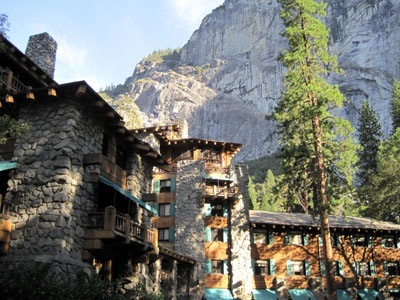
Lots of good things have been written about the Ahwahnee. Many consider it the finest lodge in America.

I’m not going to argue, though it might take a few more trips to be sure.

The Ahwahnee experience doesn’t come cheap however. Kind of like lighting a match to a very, very large pile of ten dollar bills.

In itself this is not necessarily a bad thing- if there’s value and the occasion warrants.

The value was in the fun, and the occasion warranted. If not on your 31st wedding anniversary, then when?

Sharon and I have neglected years of anniversaries. As I look at it, we now have carte blanche to make up for lost time. Maybe this is a rationalization, but it’s my rationalization and I’m sticking to it.

If its going to be saltines in the rest home. So be it.

We arrived at the Ahwahnee, dusty and tired, having logged another 5+ miles of steep hiking in the Tuolumne and Merced Sequoia Groves after our drive down from Tuolumne Meadows. We were dragging our sorry selves through the Ahwahnee Porte Cochere, packs, tattered grocery bags and all, when three brand new red Ferrari’s pull up- polished and dust free.

Three drivers get out, strut around, then toss keys to the valet parking guys one after another. Driver #1 looks like an Italian male model, leather jacket, ferrari emblems and all. #2 looked like he wanted to be #1, though had passed his prime. #3 had brought his wife and had come to terms that he would never look like #1.

Just another day at the Ahwahnee.

Very entertaining. Even when you’re dusty, dirty and trail-tired.

While dinner at the Ahwahnee was great, breakfast was my favorite.

At dinner, we were seated away from the windows, back towards the serving stations.

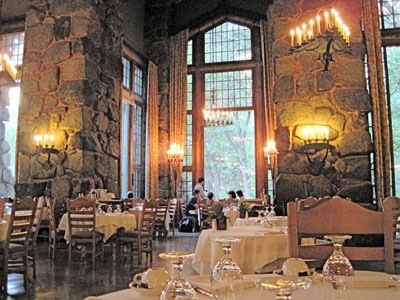
I politely asked how one moves up, say into that most exquisite alcove at the end of the grand dining room?

The predictable answer was: “You have to ask. And it wouldn’t hurt if you said it was your anniversary.”

I can learn. At breakfast, I led off with, “Can we have a window, and its our anniversary.”

That little head in the alcove on the left next to the window is Sharon.

We talked about coming back to Yosemite in July of 2011 at the height of the wildflower season with all the waterfalls at their peak. Such reservations need to be made one year in advance- July 2010.

Not too far off.

2009 Sanibel

Every year after Xmas we’ve headed down to Florida to visit Sharon’s Mom, Rosita. Tampa’s OK, but what about the rest of the Gulf Coast?

This year we decided to push our Floridian envelope.

A three hour drive south lies Sanibel Island. Nearly half of the island is a wildlife refuge- a preserved subtropical barrier island habitat and part of the largest undeveloped mangrove ecosystem in the country.

Sanibel also has world-class shelling, old florida charisma and kayak trails through the mangroves. Sounded good. Now could we get reservations?

My first choice was the SeaSide Inn- Ranked #1 of the 31 hotels on the island by TripAdvisor. I called the Inn in June, and nothing was available after Xmas and before the New Year, but on January 1, their only three bedroom suite could be ours.

I took it.

2009 seemed a long ways off at the time, but time has a way of passing. The original concept was one bedroom for Rosita and her boyfriend, one bedroom for Taavo and his girlfriend Meredith, and the last for Sharon and me.

Rosita fell and broke her hip in November. Given the chaos such eventualities precipitate, we flew off after Xmas not knowing what was possible. Taavo came with us from Cambridge. Meredith joined us from Kansas City on New Year’s Eve.

Fireworks are legal in Florida. This never meant much to me.

It does now.

Rosita lives in the heart of a very Latin neighborhood. Sharon and I drifted off to sleep a bit after ten on New Year’s Eve. We woke up just before midnight in the middle of the Revolutionary War.

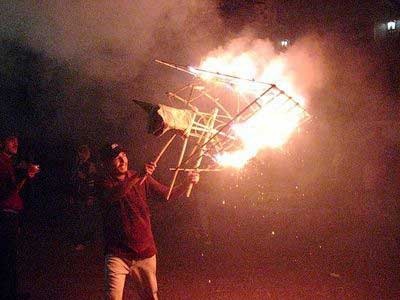
My business partner JP took the picture to the right at a Fiesta in Mexico.

It could have been taken from Rosita’s backyard at midnight.

The smoke and smell of gunpowder was so thick I thought Rosita’s smoke alarms were going to go off any second. Sharon rolled out of bed and pulled back the curtains. I could hear the rockets whistling as multi-colored flashes lit up the bedroom. Sharon’s typically dry running commentary had to do with the quality, quantity and creativity of the display roaring throughout the neighborhood.

Rosita is 87 and 100% Latina.

One night 25 years or so into our relationship she turned to me and said something to the effect that for the longest time she thought I was just this stiff white guy, but she was pleased to find that I was OK and had a sense of humor.

Curiously I can relate to that.

Rosita didn’t feel up for the trip to Sanibel. To her credit she didn’t stand in the way of other’s fun. She sent us off on our way.

As we backed out of her driveway on New Year’s day, in her bright red Dodge muscle car, the neighborhood looked curiously innocent.

Before leaving Cambridge in preparation for our drive to Sanibel, I printed Google Map directions. I needn’t have. Both Taavo and Meredith brought iPhones which could tell us not only where we wanted to go, but also where we were at any time. Fun technology.

Sanibel is an island, but today you drive all the way- thanks to to a recently improved 3 mile causeway.

Sanibel is billed as a place to kick back and relax. No buildings are allowed higher than palm trees and there are no traffic lights.

That said, while there may be  no traffic lights, that doesn’t mean they couldn’t use them at times. The Sanibel alternative is the traffic cop standing in the center of the intersection directing traffic.

Suppose it’s more personal that way. To each their own.

In any case we didn’t have any problems with traffic. The key is to just avoid Periwinkle way. At least it worked for us.

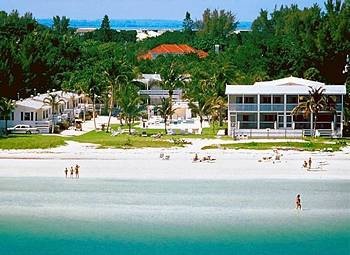
The SeaSide Inn glam picture to the right, must have been taken by a pro hovering in a helicopter.

No matter, this is how it looked in my mind’s eye when we pulled up.

When we left Boston, it was below freezing and overcast. Here, palms were swaying gently in 80° breezes.

It took about 30 seconds to get used to.

Our first beach walk became a regular. The SeaSide Inn is on the west side of Sanibel looking out onto the Gulf of Mexico. Head to the beach and take a left and in a mile or so is the lighthouse. A most pleasant stroll along the wide white-sand beach. Lots of birds and lots of shells along the way.

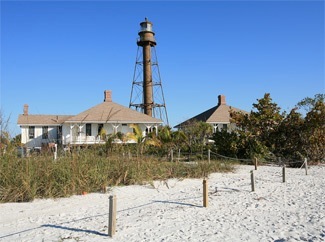
On the first evening as Sharon and I reached the lighthouse (borrowed pic to the left) we noticed a water hawk almost motionless about 30 feet out over the water.

The next moment it plunged feet first into the rolling waves, emerging with a large fish in its talons. Without a moment’s pause it turned and flew off inland towards the lighthouse- both hawk and struggling fish silhouetted against the evening sky.

My favorite time for the lighthouse walk was just before dawn. As we’d reach the water’s edge, invariably a kindred soul would emerge out of the darkness. With one eye on the surf edge where the new shells glistened, we’d pass with nary a word. Not a chatty time. Not much to say.

As the sky lightened, the motley promenade would pick up– a curious combination of shellers, joggers, serious runners and other early risers out to pay their respects to the first rays of the day.

Another category anted up as well– the all-nighters. Not too hard to spot. The slacks, evening dresses and rings-under-the-eyes were all tell-tale give-aways.

Sand Sculpture was big. The fine white sand would hold a shape and the shells could add another layer of decoration.

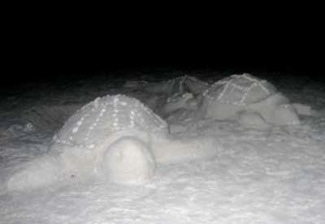
In the darkness, Sharon cried out “Sea Turtles.” I spun around and headed back. It seemed the wrong season, but hey – what do I know.

Sure enough there they were-  headed down to the surf. On the large side too–about five feet across.

The wildlife refuge is closed on Fridays to give the birds a day off. So we headed off to Bowman’s beach for our first full day. More shells, sun, sand, birds and Gulf ambiance.

Most pleasant.

Here’s a pic of Meredith on the boardwalk to the beach.

I was thinking of including the swimming advisory/ shark sighting sign, but I’m going to skip that for now.

It was a small sign and apparently it was a small shark– and we all went swimming anyway.

But it did cross my mind as I waded out. Something about sharks is a bit unnerving.

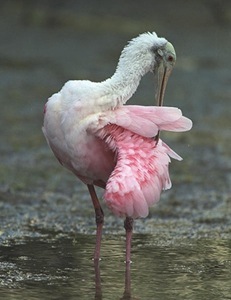
“Ding” Darling National Wildlife Refuge is a birder’s paradise. The birds in my pictures were all either blurred or too far off to be recognizable.

So I borrowed this pic taken in the refuge as representative of the amazing species out and around on the day of our visit. This is a Roseate Spoonbill, or Espátula Rosada, for those like myself who do their birds in Spanish.

Three flew by about 40 feet from our observation platform. My pic shows three pink blurs.

They do look like dinosaurs. ¿No?

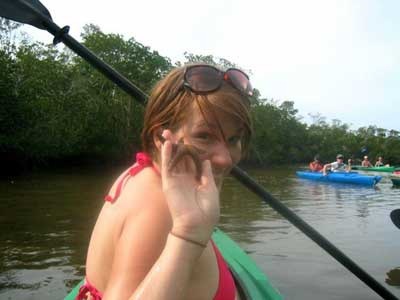
None of us had ever been kayaking. Sanibel and the wildlife refuge seemed like a great place to start. We signed up for the 1.5 hour naturalist-guided kayak trail tour through the red-mangrove forest.

During the orientation our slightly goofy naturalist Lewis pointed out across Tarpon Bay and said, “If for some reason you should tip over, remember to — Stand Up.

The water is less than 3 feet deep.”

At our second or third stop up the Commodore Creek water trail, Lewis stuck his hand down into the water and came up with a living starfish.

After a brief and loving description  of the starfish and its role in this delicate ecosystem, he lights up: “Anyone want to mess with him?”

Meredith on cue: “Yeah!” Without missing a beat, he side-arms Mr. Starfish at Meredith, who deftly plucks him from the water

Two stops later our guide was in the middle of another exposition  when he looks down at his watch and stops in mid-sentence.

“Oh no, I’m late for my boat tour.”

With that he pivots his kayak and paddles off. Shouting over his shoulder as he disappears around the bend,

“Don’t worry. You’ll be fine– Just follow the signs.”

That was the last we saw of him.

2008 Zion

This trip was something of a follow-on to last year’s Grand Canyon jaunt. Originally we had hoped to combine both canyons into one trip. After all the Grand Canyon is only 162 miles down the road from Zion.

After a bit of reflection though, we decided the wiser course would be to make two trips, and thereby give ourselves time to linger. No regrets.

Sharon and I were able to nab a historic cabin in the heart of Zion. The trick is to reserve way ahead of time. As it turned out, 6 months in advance was cutting it close. Few cabins were to be had, but we got ours.

It turns out that each cabin has two double beds. We only needed one.  Why not invite our friends David and Susan?

Buena idea.

The closest major airport to Zion is in Las Vegas, Nevada and only a 2.5 hour drive.

After a careful review of rental car options, Sharon and I went with an Alamo compact.  No need to get fancy. Best to save the pennies for other indulgences.

On arrival in Vegas we checked in with the Alamo desk. Yes, we did get the weekly 20% discount and all. Paperwork in hand, we made our bleary way to the car pick-up.

A couple of rather dubious looking Hispanic Alamo employees seemed to be in charge. Off-handedly, they pointed us to an aisle and said, “Take any car you want.”

I was stunned by the first big white snazzy car in the lane- which clearly wasn’t a compact. Went back and asked again if we could take any car. Got the same response, but this time with the added “ Yeah, we gave you a complimentary upgrade.”

Who were we to argue.

To Sharon’s credit, she wasn’t dazzled by numero uno, but had noticed the next car- a black Prius. Well they did say, “Any car.”  This would do and promised to be very entertaining- if we could figure out how to turn it on.

With some help from the guys I got the car “started.” For those of you who have never driven a Prius, “started” isn’t the same as with a gas-only vehicle. No reassuring motor sound. The dash simply lights up and that’s it. No key, per se, either.

And we were off to Whole Foods Las Vegas to shop for trail food. We watch a lot of CSI Las Vegas, and they didn’t show these particular neighborhoods passed through en route.

Un-synced traffic lights give one  time to contemplate the stores delivering rubber, leather, sex toys, for all persuasions and– at best prices in a strip-mall setting.

In any case it wasn’t long before we hit the walled country club section of Vegas-  Whole Foods wasn’t far off.

I had imagined what Whole Foods Las Vegas might be like. It was all that and more. Big, clean, new and stocked to the rafters with wholesome treats. People-watching was pretty good too. Lots of successful monied Vegas types in street clothes. I had a great time shopping. Am not so sure about Sharon.

As we drove out of Vegas into the desert in our new Prius, nibbling Whole Foods sushi, we got our second wind. Cambridge was fading.

Private vehicles are no longer allowed in the heart of Zion. Shuttle busses provide access. There is an exception though. Those staying in cabins or the lodge get a red pass providing special vehicular access and special parking privileges.

On the way into Zion, we picked up our red pass at the Zion Visitor’s Center and then proceeded to drive on in, feeling like a VIPs. Not surprisingly there was virtually no vehicular traffic in the Park and plenty of parking when we got to the lodge.

When we walked into the lodge, it was really dark. All of southern Utah was experiencing a power outage. Staff was on manual and more than a bit stressed – computers were down.

As we headed out of the lodge, the lights came back on. Folks clapped.

Luck of the power-outage draw had given us cabin #514, which, as it turned out, was just about perfect.

One of our many mistakes at the Grand Canyon had been tackling the toughest hike on our first day before our bodies had acclimatized to the elevation. This time we were wiser. Hiking at 4000 to 6500 feet above sea level is best approached slowly, particularly when you live at sea level.

On our first full day Sharon and I took it easy with shortish hikes- the Emerald Pools and   Riverside. We also explored the Visitor’s Center and the Human History Museum.

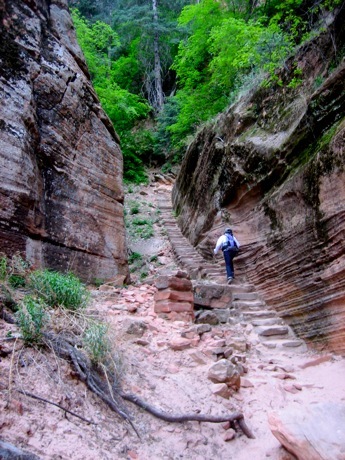
We got more serious on our second day. By 8:00 AM we were climbing up to Hidden Canyon- 850 feet above the valley floor. The trail climbs quickly through a series of switchbacks and staired sections, then across the face of cliffs where the trail has been cut from solid stone with long drop-offs. A chain has been installed to help where the trail narrows to a few feet. This was serious. I didn’t look down. The trail guide notes: “long drop-offs. Not for anyone fearful of heights.” No argument there.

The official trail ends at the beginning of Hidden Canyon. We didn’t stop, but continued up canyon looking for the mini free standing arch we had read about. We met another near elderly guy who had just turned back when faced with a short free boulder climb. He was a photographer disappointed by the morning light.

We climbed the section that had intimidated him, but not before some reflection on our limits. Then a bit further we had another climb and another moment of reflection.

As we ventured further up the canyon, the climbs became progressively more challenging, until we hit one which was a bit much. To our (Sharon’s) credit we turned back.

We soon met a 30-something-ish couple coming up the canyon. It was clear to me that these two were the real canyoneering deal. My intuition was confirmed when they launched into technical climbing speak when asked about how the canyon could connect with other trails on the upper plateau.

I explained that the free-climbing had been a bit challenging for us: “Sharon didn’t like it, but she did it anyway.” The woman lit up and laughed and gave Sharon a knuckle-to-knuckle, woman-to-woman punch greeting, and said, “I hated it too the first time. But I did it… and now I’m addicted.”

She liked Sharon’s attitude. As we continued down the canyon, I could hear her knowing laughter echoing back.

At this point the sunlight broke down through the canyon, washing the carved multi-colored sandstone walls. The photographer need only have waited another 45 minutes or so.

Back at the cabin in the afternoon, Sharon and I were bathed and presentable when a knock on the door announced the arrival of David and Susan. Great to see old friends. Doubly so in such environs.

Whereas Sharon and I are confirmed empty nesters, David and Susan are not. They had to leave a couple of teenagers at home on their own. All rose to the challenge. And challenges there were. This might have been the trip of the infamous party reported by the neighbors. I’ll leave it at that.

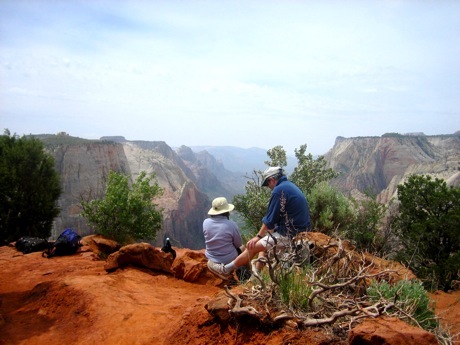
Consensus was Observation Point was the appropriate hike for the new group’s first full day. Round trip mileage- 8 miles. Elevation gain 2150 feet (655 meters). A strenuous hike of 7 hours round trip. Worth the effort. Great views.

Good cell phone reception too from Observation Point, which is a bit ironic because in the heart of the Park reception is lousy.  So there we sat, way and gone, while David and Susan phoned home.

We shared Observation Point with a dozen or so other hikers. The most memorable of which was “Mr. Tight Pants.”  This guy had the tightest spandex hiking shorts imaginable. Little was left to the imagination from front or back. And he strutted when he walked.

Our party was split as to whether he was the Gay Uncle or European. Personally, I think European- with no hint or clue of the image he was projecting. In any case, he clearly felt very good about himself and his physique.

Our other two long hikes were in the Zion Kolub canyons- Gorgeous, creek-side hikes through rolling riparian flood plains, surrounded by huge cottonwood trees and towering walls of red sandstone.

The Lee Pass to Kolub Arch Trail was the most challenging: 14 miles/ 8 hours. Kolub Arch is billed as “Possibly the world’s largest freestanding arch.”

It’s big, but curiously it’s not obvious when you get there. The trail ends with a sign, “Further Travel Not Recommended. Please Help Prevent Erosion and Vegetation Destruction.”

Someone had scratched below “Arch” with an arrow. Someone else in tiny letters had noted “Look Up”- which worked perfectly. Very very funny when standing there wondering where was the world’s largest arch?

“Look Up”

Our second Kolub hike was Taylor Creek: 5 miles/ 4 hours. This was all fun. Easy going, scenic and we saw some Eagles too.

I had visited Zion twice in the late 1950s with my mother when I was 8 and 10 years old or so.  We stayed in the near-by town of Mt. Carmel. My Mom had an older arty friend Edith (Hamlin) Dale. I knew her as Edie.

She lived in San Francisco on top of a hill. I remember visiting and looking through her painting rack off the living room. Mostly Maynard Dixon, Edie’s second husband. Big paintings. Even as a kid I knew I was looking at the real deal.

My Mom would say, “Edie is Maynard’s biggest booster. If he becomes famous, she’ll profit big time.”

Home of the Desert Rat – Maynard Dixon

These paintings now hang in museums. The man had talent, as did Edie. A story for another time.

Edie summered in Mt. Carmel and had invited us to stay at her place.

Edie at the cabin’s front door

Edie and Maynard Dixon built the Mt. Carmel place as a summer retreat. It was great- funky and arty- complete with a log cabin, guest house and art studio.

The main room of the cabin held a remarkable collection of Indian artifacts. Headdresses, spears and so forth. Maynard was friends with lots of native folk. I think I have a photo somewhere, I need to dig it out.

A couple of years ago I was fantasizing about owning property in the Utah Canyonlands. What ever happened to that great little property? It took me about 3 minutes on the internet to find out.

In the last 50 years, Maynard had indeed become famous and his property as well.

Maynard had run with the Ansel Adams/ Imogene Cunningham crowd in San Francisco. The Modernist Bohemians of the day.

Maynards wife before Edie had been Dorothea Lange. Dorothea was probably not the best of matches for Maynard, but by all accounts, Edie was.

In any case I thought it would be fun to see the Mt. Carmel place again since we were going to be in the area, so I dropped the Thunderbird Foundation, which now owns the property, an email. One thing led to another.

My Mom had some (what are now) historic photos of our time in Mt.Carmel, which led to some most interesting conversations and ultimately a dinner invitation and an invitation to visit Edie’s place in Mt. Carmel.

It was most curious to re-visit after almost 50 years. Paul and Susan Bingham of the Thunderbird Foundation were most gracious hosts and generous with their time and energy.

I shared my favorite story which curiously they hadn’t heard. Vladimir Nabokov had written parts of “Lolita” in the house, which he had rented from Eddie in 1948 or thereabouts. He was in Utah with his wife Vera collecting butterflies.

Vera was quite the character. Not only did she edit and type Nabokov’s manuscripts, she served as his chauffeur, and body guard. She carried a gun.

I have been trying to reconstruct how my Mom met Edie. I know it was in Santa Barbara. I think my recently-separated Mom was dating Edies’ third ex-husband, Frank Dale, who was a musician/composer. Suspect a modernist, but that’s only a guess.

In any case my Mom met Edie and they hit it off. Soon thereafter we headed north to San Francisco, and Edie put us up for a bit at her place. Curious how the world works.

On our last day on the Zion trails, Sharon and I found ourselves behind a Spanish speaker. Sharon struck up a very Latin conversation.

Afterwards Sharon explained that he was from Quito Ecuador. He had said we should come see him.

Although a joke, it got us thinking again about Quito and the Galapagos. ¿Por qué no?

Our test of a good vacation is whether we want to go back. The answer for Zion is a resounding Yes, but our list is long, and life is short.

Vamos a ver. We shall see.

Zion Narrows, the grandfather of all slot canyons, has been talking to me. A world class canyon hike following the Virgin River. We had hoped to venture in on this trip, but the river wasn’t cooperating.

Flow was up at 250 CFS. Access is allowed at 140 CFS or so. Ideal conditions are under 70 CFS. Talking it over with Park Rangers, late September looks like the best bet. This year is out, 2009 or 2010 looks doable.

After the Narrows, the Subway is #2. The Subway is also a slot canyon but located in the Kolob Terrace section of Zion. A permit and some orienteering skills are required. Maybe we should take that canyoneering course?