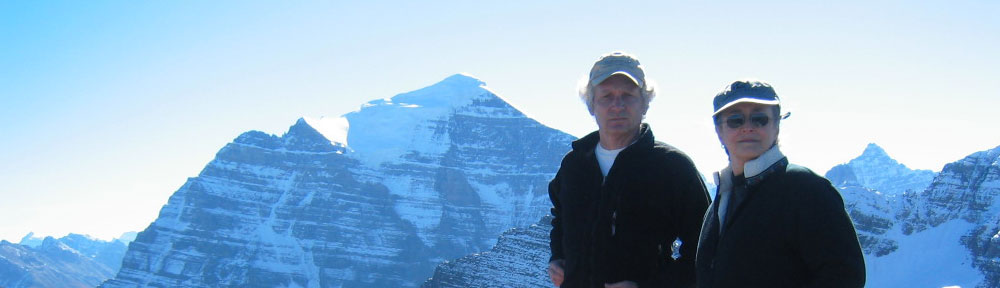
Usually we spend Thanksgiving with our son and his family. This year they made other plans. We had been cut loose. So what should we do?
It took about 15 minutes to figure it out.
Maybe go out to a restaurant? Better than moping around at home.
Or Perhaps, we should drive up the coast to Portland and stay at a B&B for a couple of days. Had to be good restaurants there. Quaint coiffed Portland looked like a fun town, when we’d bicycled through.
Then again as long we were heading north, why stop there? Montreal beckoned.
Montreal is the real deal.
Sharon ever the practical one, “Montreal, late November. No thanks. Too cold”
Hmmm. This can be solved. Wrong direction.
****
It was pushing 90 degrees when we landed a few weeks later in Key West. We had our sunglasses on when we walked from our plane to the terminal.
This was the end of the line. As far south as you can get in the USA.

An island 100 miles out in Gulf of Mexico. Today connected by bridges to the mainland, but it wasn’t always so. Nor was it always the party town it is today. Lots of history beneath today’s picturesquely vulgar veneer.
But you wouldn’t know it, waiting for your luggage in Key West International Airport, next to the Jimmy Buffett-esque rum bar.
Curry Mansion
A short taxi ride later we were standing out front of the Curry Mansion. Our home away from home for the next 5 days.

A piece of Key West History listed on the National Register of Historic Places.
A mail-order Georgian Revival mansion built in the early 1900s by Milton Curry on a site homesteaded by his father William Curry in the mid 1800s.
William Curry was born in the Bahamas to parents of Scottish descent. Which made him a Conch, or white Bahamian immigrant when he arrived in Key West as a penniless 15 old. He died, a patriarch, fabulously wealthy, the richest man in Florida.

William Curry had two homes on the site. His son Milton, one.
The first building on the site was William Curry’s homestead, which was completely carried off to the sea in the Hurricane of 1846. This was one bad-assed hurricane, Category 5, as nasty as they come. 150+ mph winds and a storm surge to match.
The winds were so strong that the ground in the public cemetery blew away, along with the bodies that had been buried there. One witness described the scene: “The dead were scattered through the forest, many of them lodged in trees.”
As the storm surge swept though the town, folks were forced to swim through flying debris and floodwaters to make their way to what higher ground there was. Even there at 17 feet above sea level, waves threatened to push them off.
No one knows how William Curry survived the hurricane but he did. No doubt it didn’t hurt to be a street smart guy who knew the sea.
Judging by the mansion that replaced the homestead, Curry’s business interests not only survived the hurricane, but flourished. Curry’s empire was built on merchandising, wrecking, and shipbuilding.
Boatloads of stuff needed to replaced. Curry owned the stores that sold them.
Ships had been wrecked. Curry owned the salvage companies.
The lost ships needed to be replaced. Curry owned the shipyards.
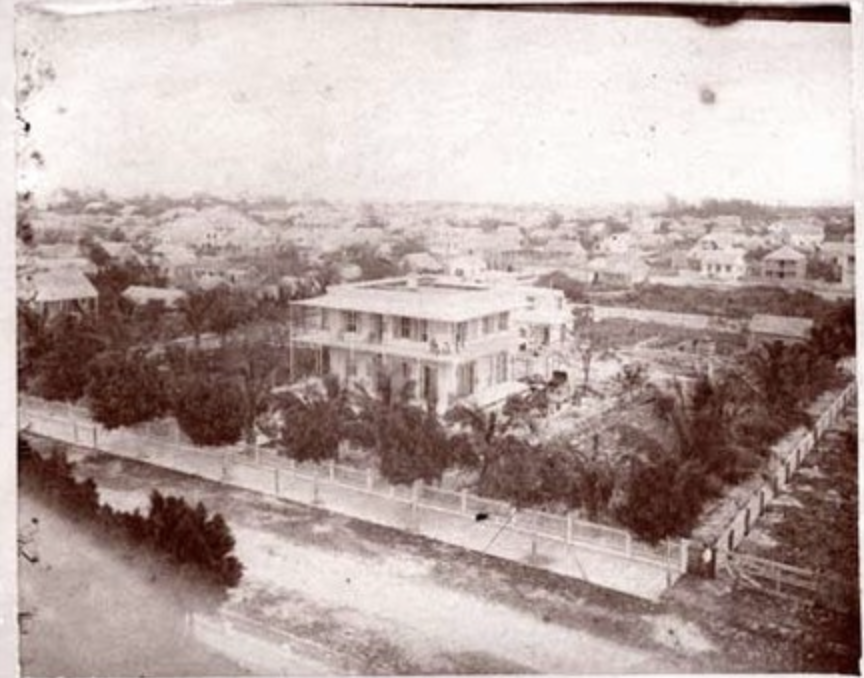
After the hurricane, the Curry homestead was replaced by a mansion. Photo below
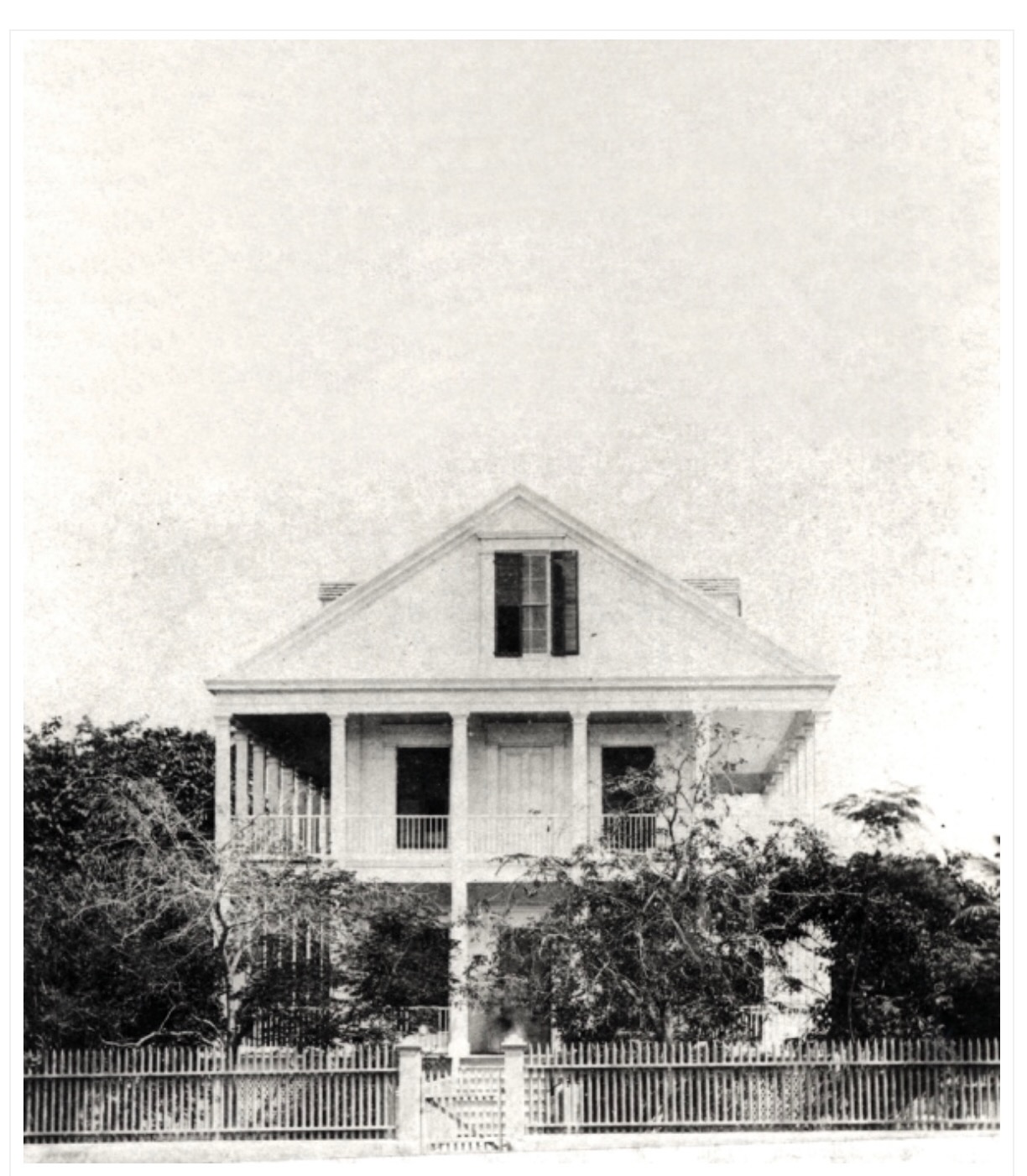
W. Curry died in 1896, and left each of his 7 surviving children the $$ to build their own mansions. All of which survive to this day.
He left his son Milton his home. Which in short order Milton tore down for his own mansion, which over time has morphed into the Amsterdam Curry Inn of 2022.
The house had fallen on hard times when the Amsterdams rescued it in 1973 and began their labor-of-love restoration.
Today it has the look and feel of a home of the Key West upper crust of over a century ago with furnishings to match.

Not bad, with lavish detailing, ornate fireplaces, a carved wood staircase, and a Tiffany window. But truth-be-told, I might just prefer the house Milton tore down.
To Milton Curry’s credit he integrated the his father’s cook hearth into his home design.
I got a close look at this hearth on my way back from the walk-in cooler at happy hour by the pool. Beer on tap was Budweiser, a bit generic for my tastes. Sympathy got me a Founders from the stash of beer left behind by other guests.
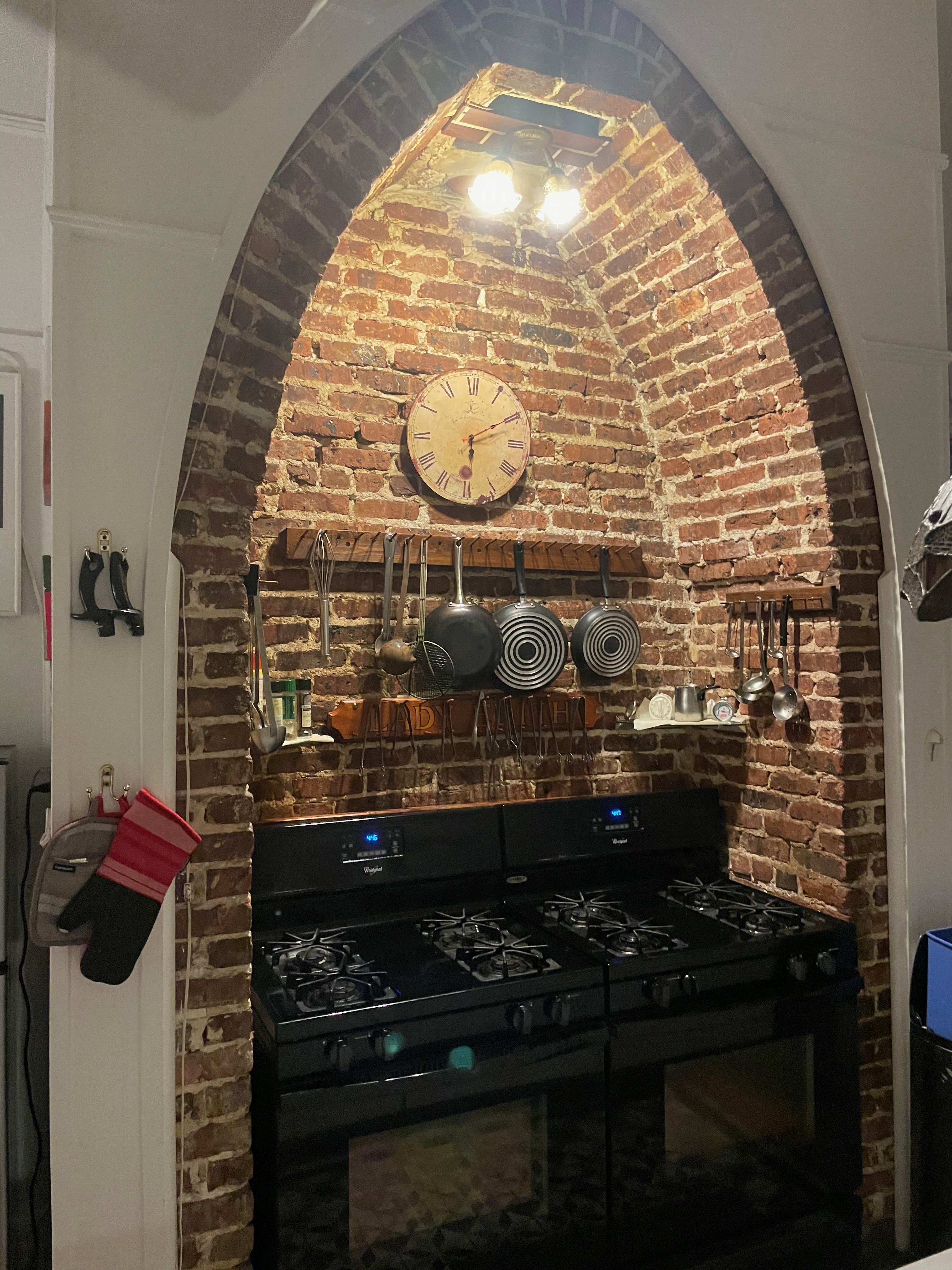
Purportedly at this hearth Key Lime Pie was invented, by either a cook named Sally or an in-law named Sally. Who according according to the Key West Ghost tours, still walks these Halls.
We never saw Sally, but then again, these days we turn in early.
Founders in hand, I headed back to the pool. A guitarist was tuning up. A pro’s pro. Studio musician who had travelled the world. Tonight working poolside for tips. He started covering Key West standards, but soon grew bored and asked for requests.
Sharon’s eyes twinkled. She asked if he knew any Django Reinhardt. His eyes twinkled and after a bit of back and forth he launched into Limehouse Blues. Next Sharon asked for Stevie Ray Vaughan, then Robert Johnson, and finally Tampa Red.
As he was packing up his amp, the musician turned to Sharon and said, “I’d like to see your record collection. Most interesting requests I’ve ever had here.”
Note to self: Might be time to haul up Sharon’s boxes and boxes of Vinyl.
Music runs in Sharon’s family and her family runs through Key West. Her great grandfather Florencio was a piano teacher here, who along with her great grandmother Josefa, had emigrated to Key West from Spain in the 1870s.
Who knows, perhaps Florencio taught piano to to William Curry’s kids in mansion #1. Not that much of a stretch. No doubt the Mansion had a music room with a piano. Mansions in those days invariably did. The media room of the 1800s.
And, how many piano teachers could have there been in the Wild West South of Key West in the 1880s? Population 10,000. Pirates, a dime a dozen.
Piano teachers. Rare birds.
Florencio and Josefa Aguirre
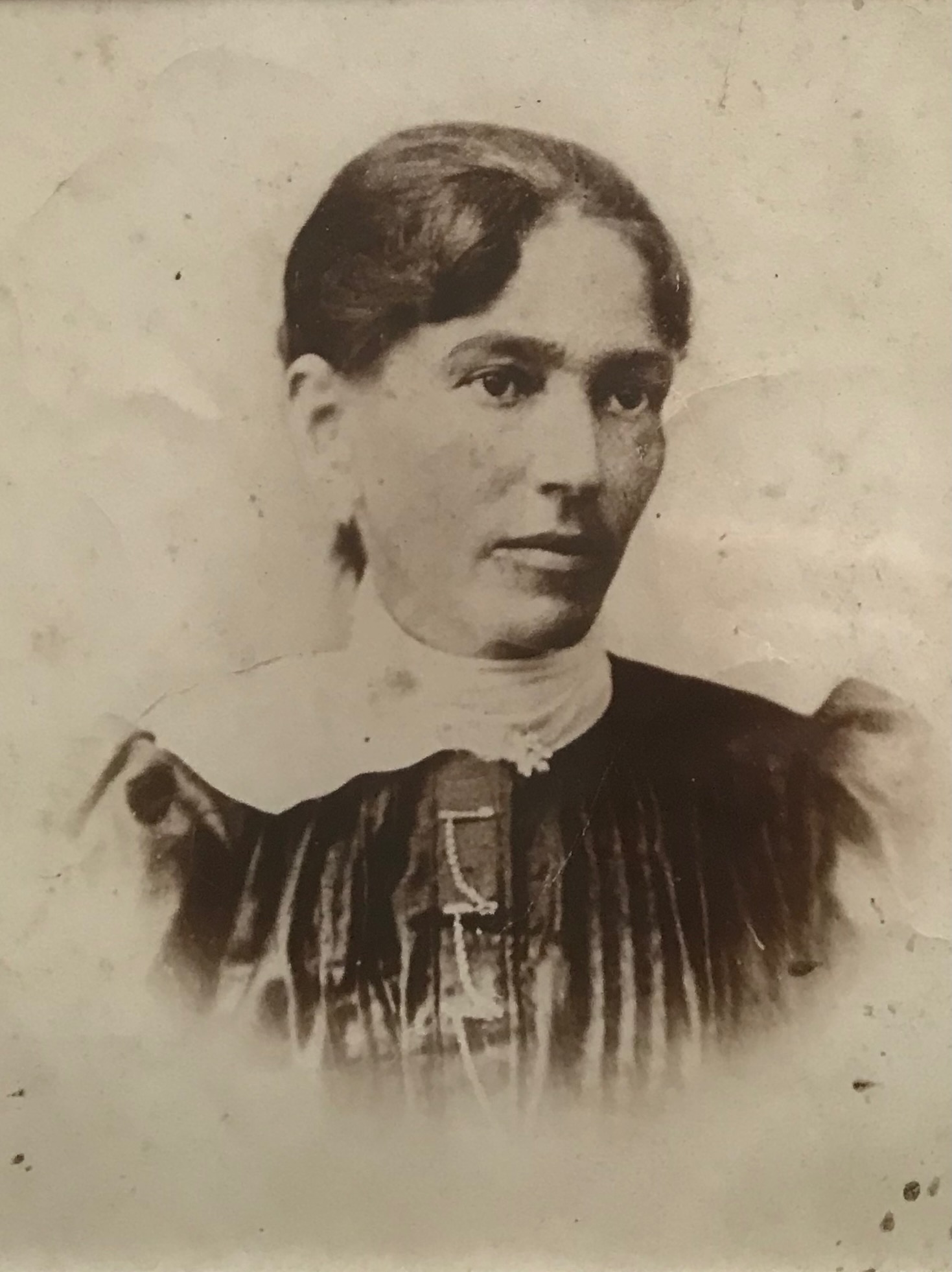
Not much is known of Florencio or Josefa. Civil records were lost when yet another hurricane took out the Key West Courthouse. We do have a picture of Josefa. Josefa’s maiden name was Josefa Betancourt. Betancourt is a French surname.
Curiously Florencio’s Key West naturalization papers survived through the years and today are hanging in our entryway, a bit worse for wear. Photo below.

Florencio became a citizen of the USA on November 15, 1882. His naturalization papers say he had been in the USA for 5 years and that he came from Spain.
So Florencio arrived in the USA, no later than 1877. As we know he was born in 1857, that makes him only 20 when he and Josefa stepped off the boat. Kids washed up in a strange land.
Family stories say they came from the Basque Country in Northern Spain. Likely, as the name Aguirre is quintessentially Basque.
The Basque character is notoriously blunt and independent. With attitude.
My favorite Basque character sketch:
So this lost city slicker pulls off to the side of the road on seeing a Basque farmer
“Hi friend, nice bull you’ve got there. Is this the way to Madrid?”
Farmer: “This is not the way to Madrid. This isn’t a bull. And I am not your friend.”
In the mood, Sharon to a T.
Florencio and Josefa had 14 children. One of whom was Sharon’s grandmother Inez.

Inez grew up in Key West. Florencio used to drag her around to piano lessons. And thus she learned to play piano. And as stories have it, she played quite well.
As a child Sharon shared a small bedroom with Inez in Tampa. Inez kept to herself, never sharing stories of her life. Sharon says they weren’t close.
That said, Inez would send a 6 year Sharon to the corner store for Kool Menthol cigarettes.
To this day, Sharon’s Mom Rosita, who ran a tight household, claims her mother Inez, never smoked. Inez never let on. Sharon neither.
All very Basque.
As a child, Sharon dreamt of having a piano. Stories have it that she would linger at neighbors’ pianos patiently sounding out melodies all by herself. The rest of her family long gone.
In a cruel-ish ironic twist that life often takes, Sharon’s Mom Rosita bought Sharon an accordion. Sharon could eventually play Bach, but on an accordion it just wasn’t the same.
Sharon never heard Inez play piano. Personally I suspect Inez never played after she was married at age 20, except in stolen moments with piano access.
Poverty, 14 children and the death of your husband in the middle of a Great Depression could squeeze piano time.
No one knows what happened to Florencio or his wife Josefa. No civil records or family stories survive. I am inclined to believe they both passed away in Key West. If they had made the move to Tampa, I suspect the Tampa generations would know.
Chickens and Conch Fritters
We spent the first couple of days wandering around and lazing around, which is our wont. The Key West Museum of Art and History is pretty great.
Whereas Cambridge Massachusetts has wild turkeys wandering the streets, Key West has chickens. Just about everywhere. Beautiful birds, protected by law and they know it.
Tourists love them. Locals, well not so much. There can be too much of a good thing. About how I feel about Turkeys.
Back in 2004, the gypsy chicken population was estimated to be 2000, and rising. Key West City officials decided enough was enough and hired an official chicken catcher, Armando Parra. Armando would use humane traps and then relocate the birds to a 400-acre farm in Miami-Dade County, where they would live out their days.
The idea seemed sensible enough, but it didn’t work out. Armando quit within a year and his job eliminated.
Far too many in Key West sided with the birds
“Historic, colorful, sort of wild, a little noisy and occasionally annoying.” Unspoken,
“Just like us”
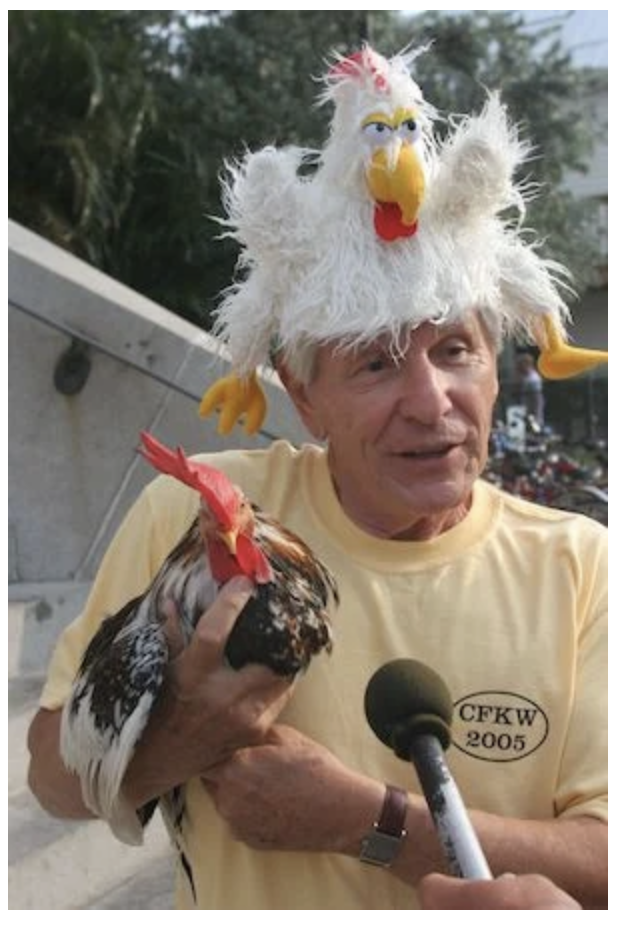
There have always been chickens in Key West. Part of the Cuban culture of the place. Food and Cock Fighting. In the 1970’s, cock fighting was made illegal and those high end, beautiful, carefully-bred birds were released onto the streets.
Sharon’s cousin-in law in Tampa bred these same birds. My favorite Dickie story is Havana during the Cuban revolution. He just happened to be visiting. Dickie is the nicest of guys. Not a drop of Spanish blood, but he looks the part. As the revolution swept through the streets his friend gave him some advice,
“Just keep your head down and don’t open your mouth.”
Good advice, which goes far in this life.
Key West is also known for its conch fritters, fritters made with conch meat and minced vegetables in a batter. A conch is an edible sea snail, native to the Bahamas and the Gulf of Mexico. Again we asked our bar friend for advice,
“There’s this little place, the Conch Shack, really close, on Duval Street”
Yep. Tiny. Cash only. looked like a Cuban guy running the show. He put my change directly into his tip jar, without a word or eye contact. As for the conch fritters… Okay, I guess, for what they were. Deep fried ground up snail. Bland and rubbery.

Feeding the roosters, though, was very entertaining. Illegal since 2021, but they weren’t worried. Neither was I.

Where the Weird Turn Pro
Turn one of those cocks into a man. Hang lots of gold chains around his neck. Have him drive around in a lime green Cadillac, make him an easy going fire chief dealing drugs out of the Key West firehouse and you’d have Bum Farto, circa 1974.
There’s weird and then there’s really weird. Bum was professional grade weird, and it didn’t seem to bother anyone. Kind of like the chickens.
Odd ball misfits, peculiar, strange folks, have for the most part always found a home in Key West. The 1970s might have been the golden age.
The big tourist money hadn’t arrived, though the drugs had. Lots of artistic types with lots of drugs with lots of time on their hands, hanging out in a town full of renegades at the end of the world, far from the establishment mainstream. Kind of a perfect wave.
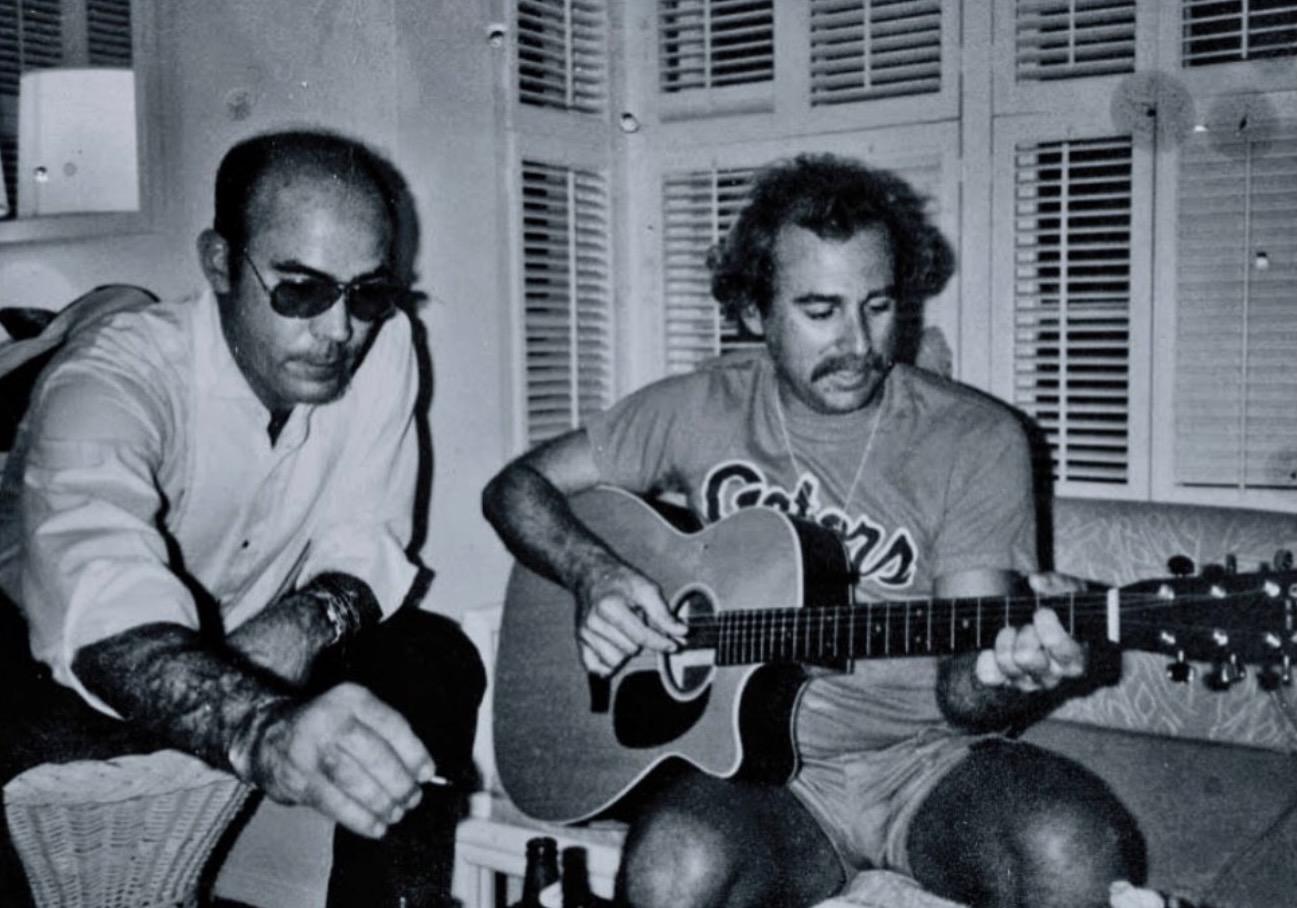
It didn’t last long, but it was the real deal. The kind of time, when Hunter S. Thompson, famous father of Gonzo journalism, could hide out from fame and his ex-wife, and no one cared. His antics were par for the course.
He sublet Jimmy Buffett’s place. The hard-partying, over-the-line Jimmy Buffett, before he morphed into the Mayor of Margaritaville. Curiously they became and stayed great friends. More weirdness. Photo below.
In his 1974 masterpiece of weirdness, “Fear and Loathing in Las Vegas”, Hunter Thompson summed up way over the line.
“”When the going gets weird the weird turn pro.”
In those days, lots of pro’s were living in Key West.
Those days are gone now.
Jimmy Buffet has become a brand.
Hunter Thompson’s ashes have been blasted out of a cannon.
And Bum Farto disappeared without a trace in 1976, never to be seen again. Legend has it that he either took off for South America or was killed by the Tampa mob or the Columbian cartels.
While Bum might be gone, he’s not forgotten. Commemorative T-shirts are more popular now than ever.
The original was printed in 1976, shortly after his disappearance.
Perhaps tasteless, but certainly humorous in a twisted kind of way. Pic of from the Firehouse Museum below.
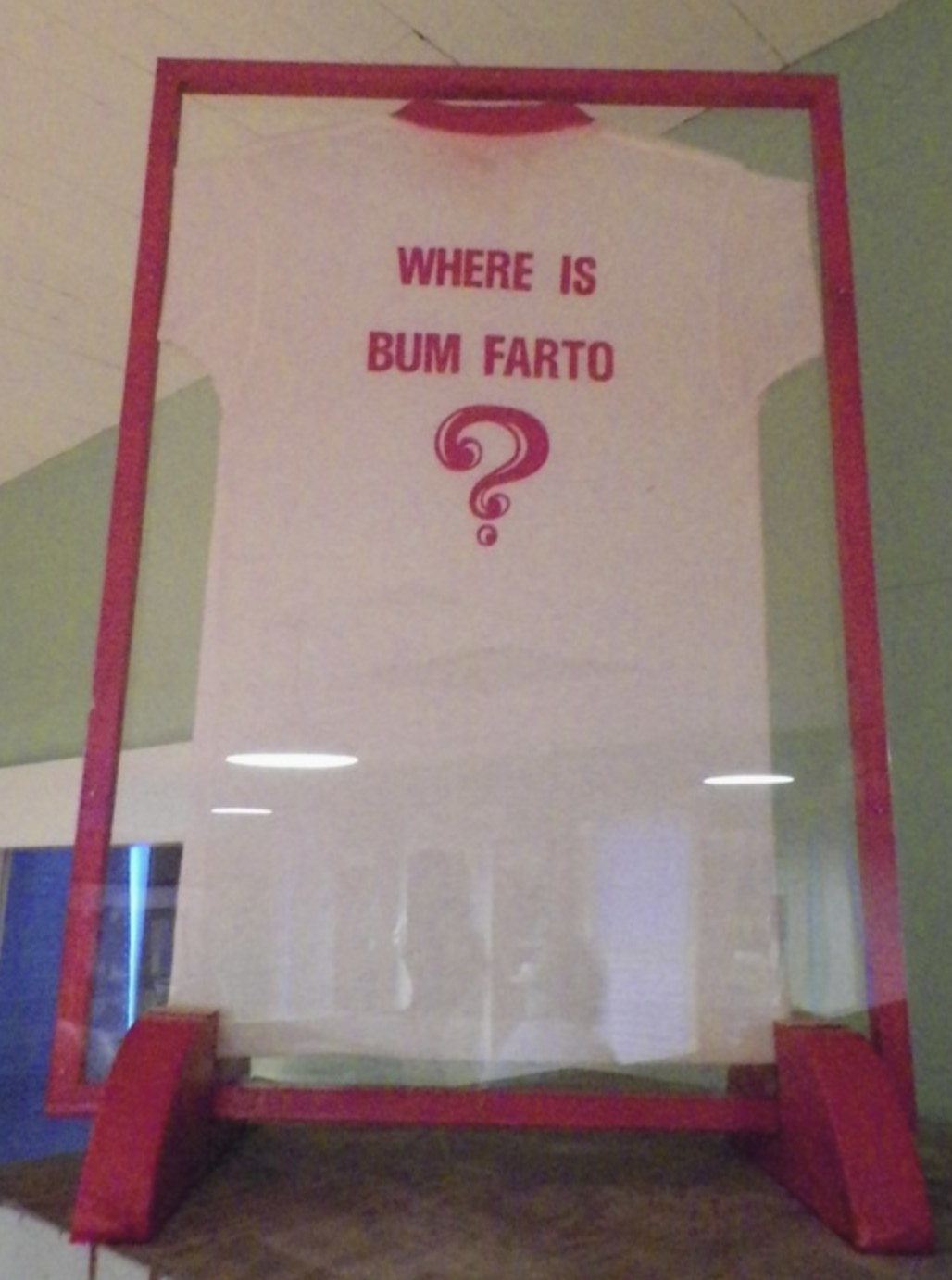
Those that survive are collector’s items today. I might just get myself a knock-off. But the ones I’ve seen don’t have that red crew neck or “El Jefe” printed on the back.
At Key West high school baseball games Bum would park his Cadillac by the outfield fence and light a red candle on the green fender for a Conchs victory. Santeria or Cuban Voodoo stuff. Extra weird – Yes. Boring – No.
Bicycling in Key West
We set aside one day for bicycling.
Key West is a small island, only 4 miles long and 1 mile wide. We weren’t going to be doing a lot of riding. So no need to bring our tandem. We could rent. But we did bring our trusty helmets.
We reserved our tandem online. At the shop, our kid rolled the bike out. It was a clunker. Heavy, 1 speed, with a coaster brake on the rear wheel and a hand brake for the front. The chain was a bit rusty. But it would do.
We got the rehearsed send off speech on bicycling in Key West. It was short. We could ride on sidewalks, just not on Duval Street. And we shouldn’t drink [pause] too much, along the way. I don’t remember if our bike had cup holders. But it could have.
We saw lots of folks bicycling one handed. That is with only one hand on the handlebar. The other held a drink. And Bike Helmets, few and far between.
We had a plan:
Swing through the meticulously groomed Truman Annex neighborhood to Old Town South where we had 4 stops. Blue Heaven for the best Key Lime Merengue Pie in town, the historic lighthouse, the butterfly conservatory, and the southernmost point of the continental USA Landmark.
Then around through the Casa Marina neighborhood to one of the last surviving Cuban Cigar factory buildings. A turn back to the Ocean would take us to Mid-Town South and the White Street Pier.
Then on to Midtown West and back up through the working neighborhoods to the bike shop.
****
Duval Street is party central for Key West. The highest per capita of bars in the country. Known as “the longest street in the world” because it runs from the Gulf of Mexico to the Atlantic Ocean.

The Party starts early and runs late. I got enthusiastic alcohol-soaked applause for my Grandpa Pig T-Shirt at 11 AM.
For all its famous purported no-holds-barred craziness, Duval Street felt a bit soulless. A Disneyland of Bacchanalia. But then again Bacchus could have just been sleeping in.
Duval Street’s mirror image is the Truman Annex neighborhood. Curiously juxtaposed only a couple of blocks away. Another Disneyland. Though this time a fantasy of Key West without Bacchus.
Truman Annex is a gated community of luxury homes, townhouses and condominiums designed to capture the sanitized “historic essence” of Key West.
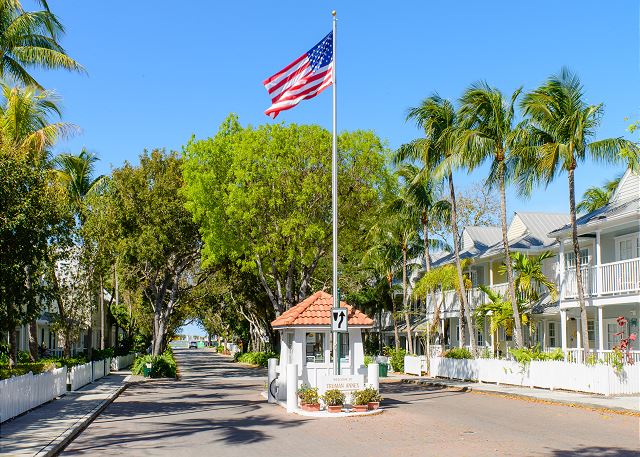
It looks great. Not a blade of grass out out of place. A 21st century stage set. The cops ride bicycles in pressed shirts. And don’t even try to hang your towels on the railings or they’ll getcha before the towels even dry.
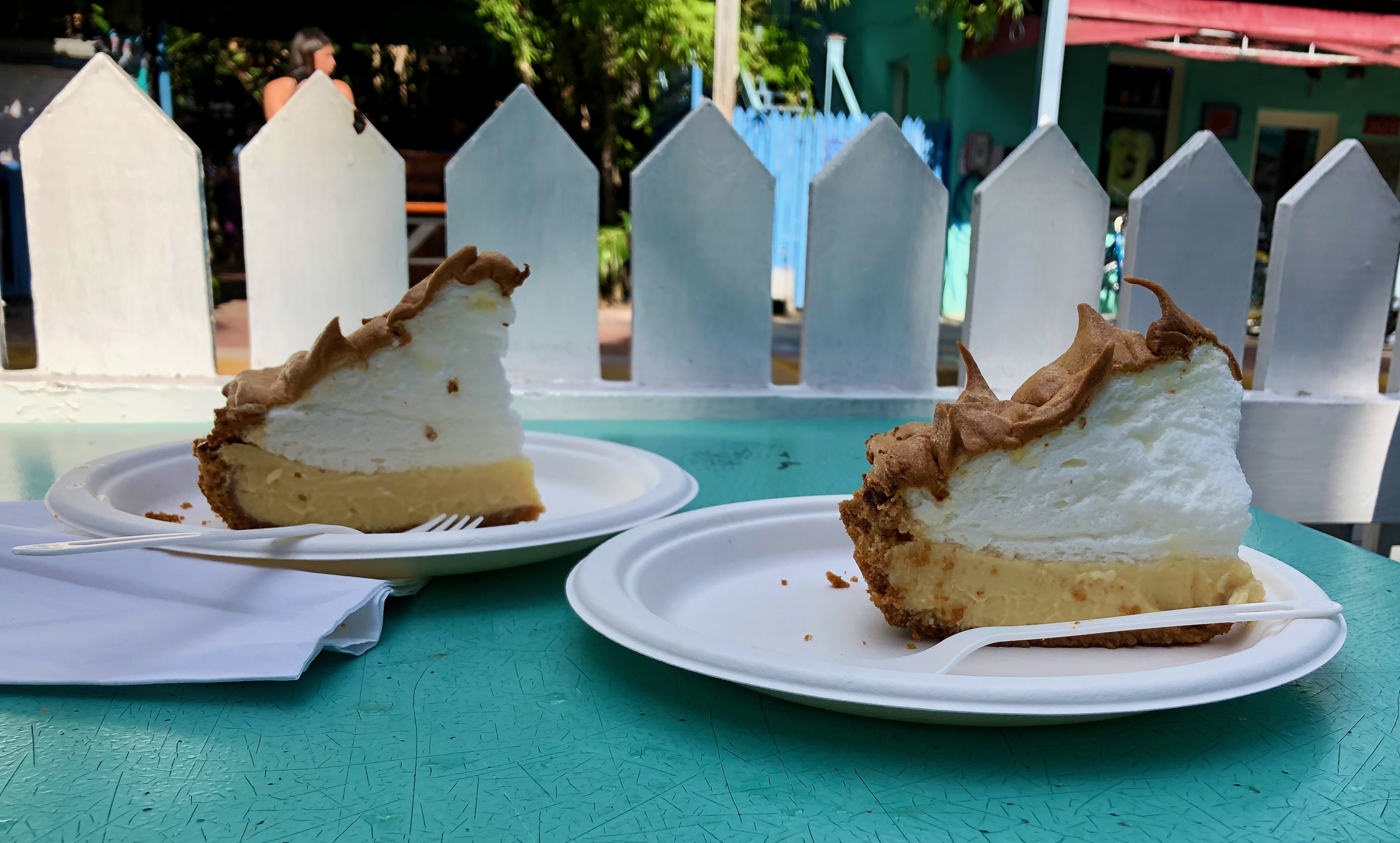
We asked the local behind the bar at the Mansion about Key Lime Pie. She recommended two places. Kermit’s for the graham cracker crust and and Blue Heaven for meringue. We visited Kermit’s on our first day walks. Fine in a high volume way, but far too sweet.
The pie at Blue Heaven had far more meringue, but again too sweet for our tastes.
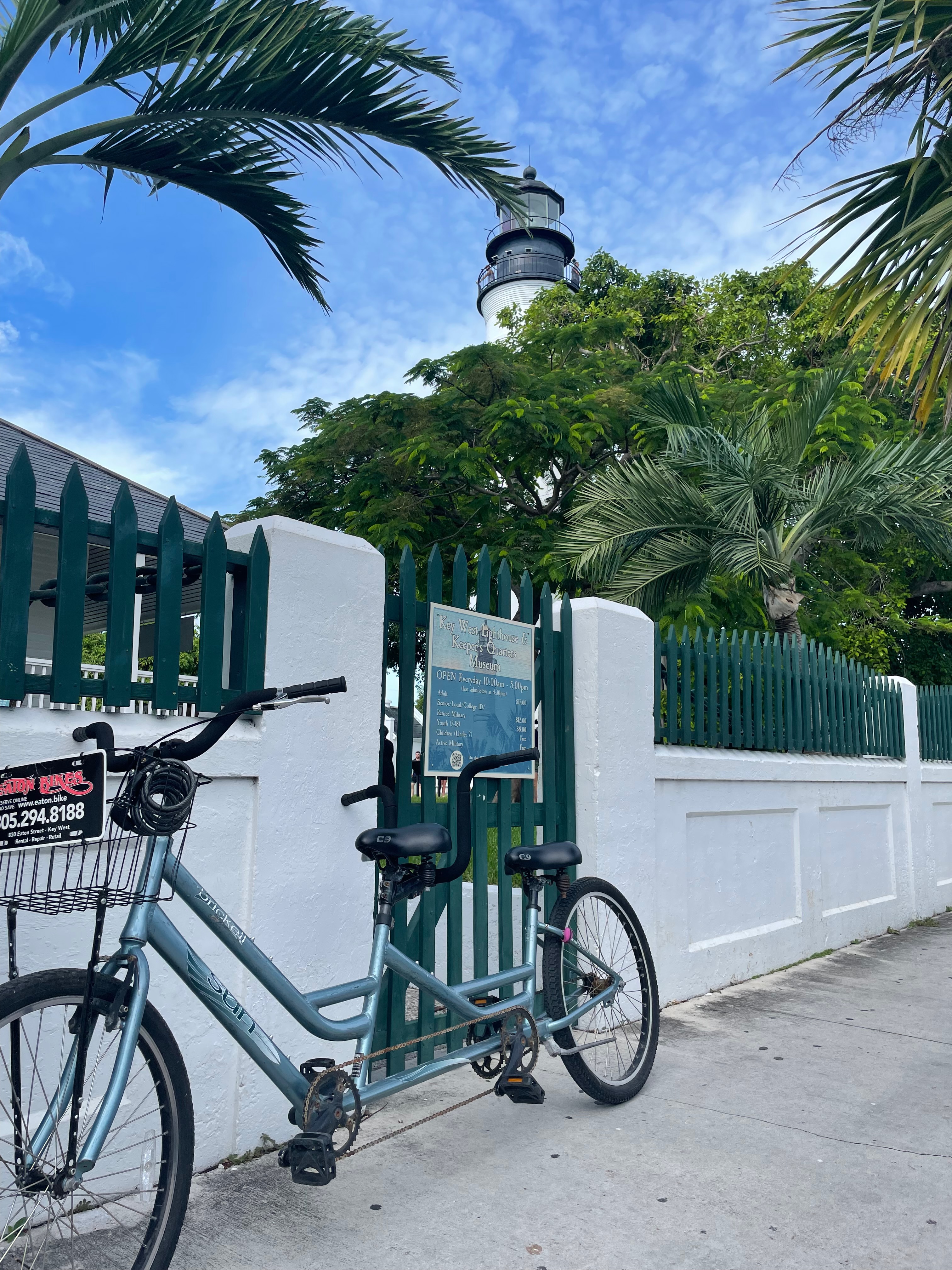
The historic lighthouse was on Whitehead St. A Block over from Duval St. Seven blocks up from the water’s edge in the middle of town. Which seemed a bit odd.
But completely understandable once you know the first lighthouse on the water’s edge washed away in the Hurricane of 1846.
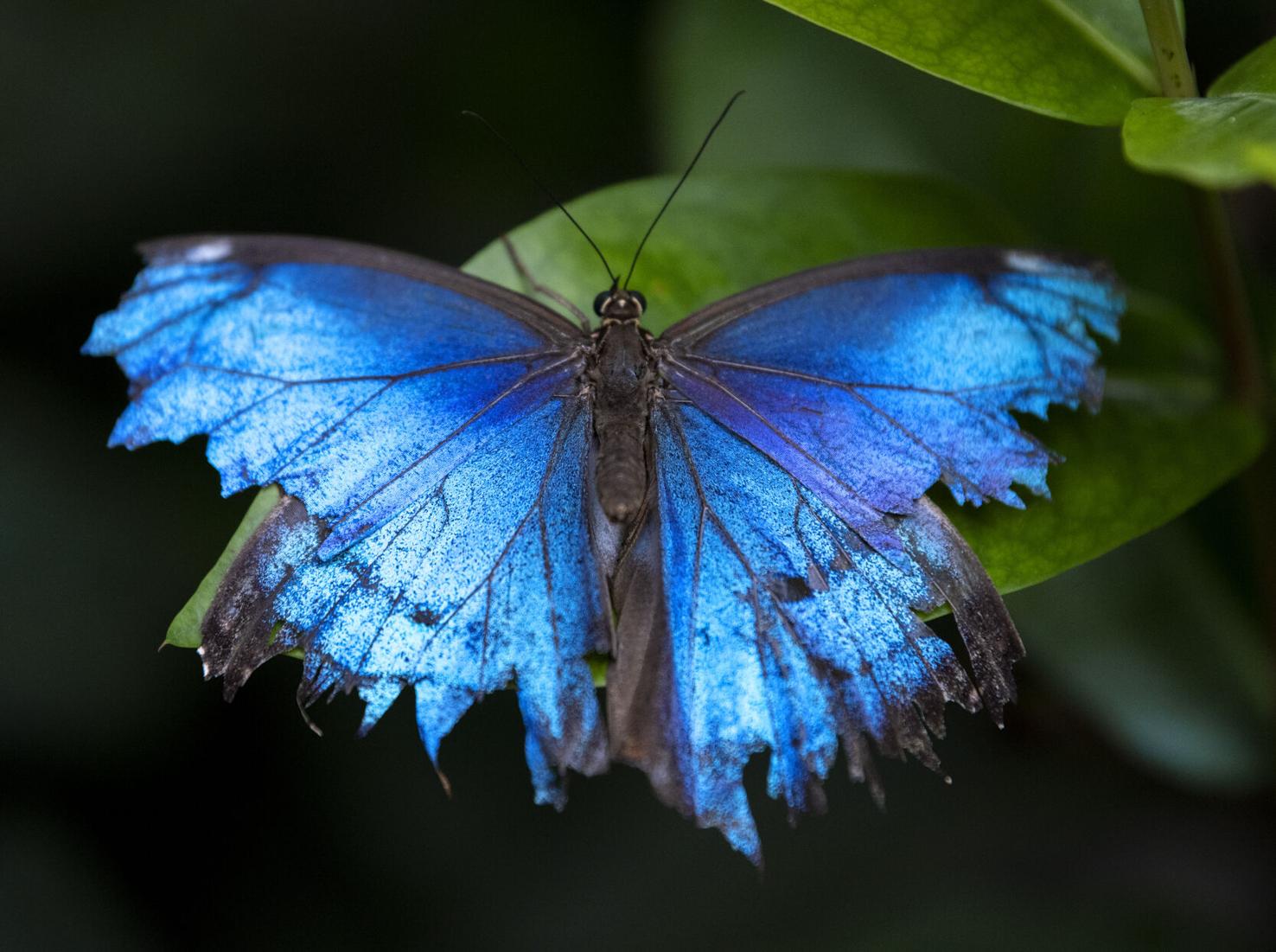
The next stop was the Key West Butterfly and Nature Conservatory, a glass domed free-flying butterfly habitat. We are suckers for this stuff, doubly so if there are Blue Morphos. Memories of our Mexico Monarch escapade.
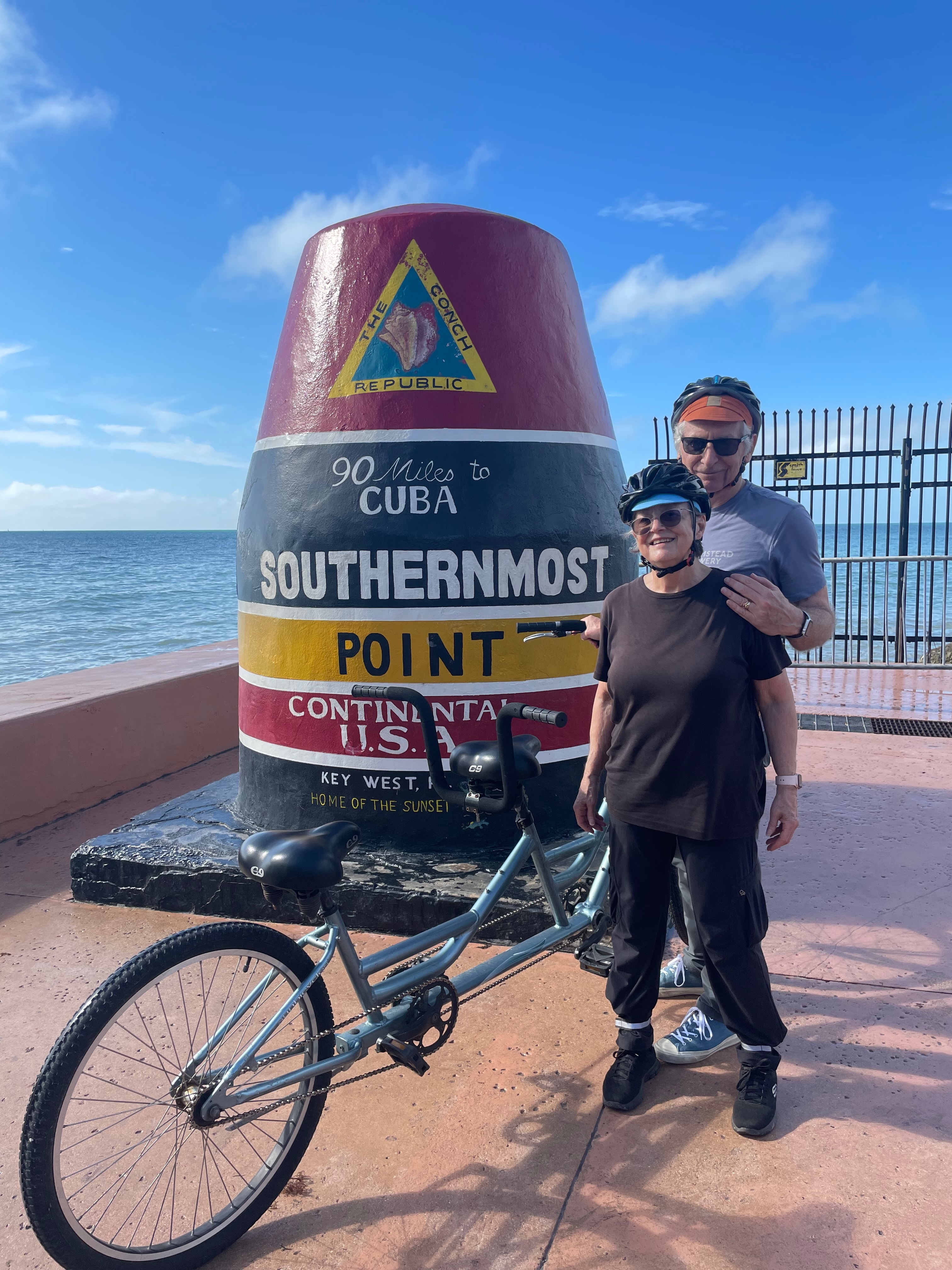
The southernmost point of the continental USA Landmark was erected in 1983. It is a 12 foot tall painted concrete replica of a buoy. A pretty great photo op.
And the perfect solution to the disappearing wooden sign problem Key West previously had on their hands. No one’s going to walk away with this big boy.
Our final stop was one of the last surviving Cuban Cigar factory buildings from the 1800s. Today a storage warehouse. In 1894 it was one of the largest cigar factories in Key West, and Key West was the cigar capital of the world. Producing a million cigars a year.
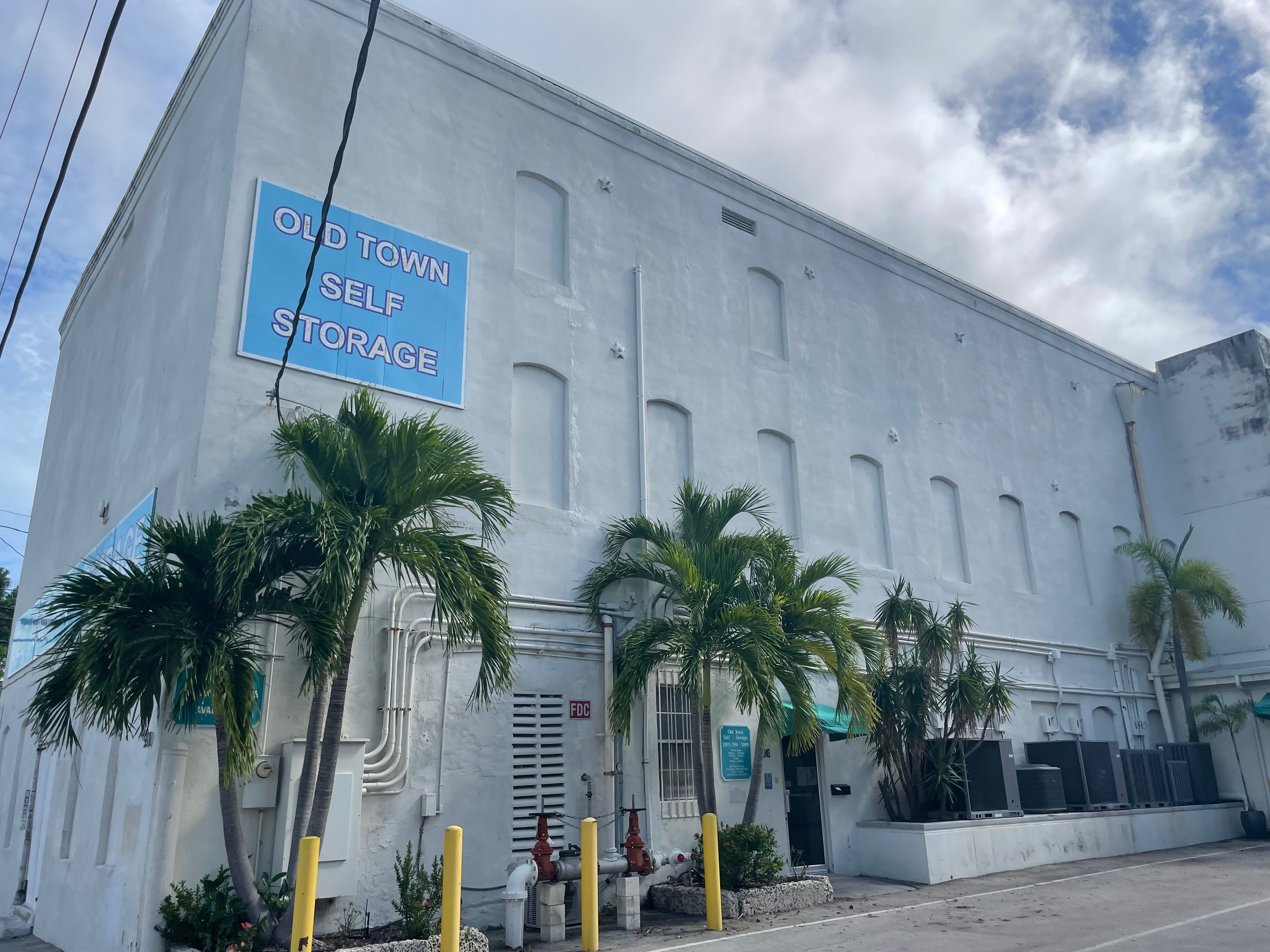
Sharon’s grandmother Inez married a Cuban cigar roller, Joaquin Ayala when she was 20.

Joaquin died young, 45 years old. The cigar dust killed him. He went back to Cuba to die, leaving Inez to raise her 14 children on her own in Tampa.
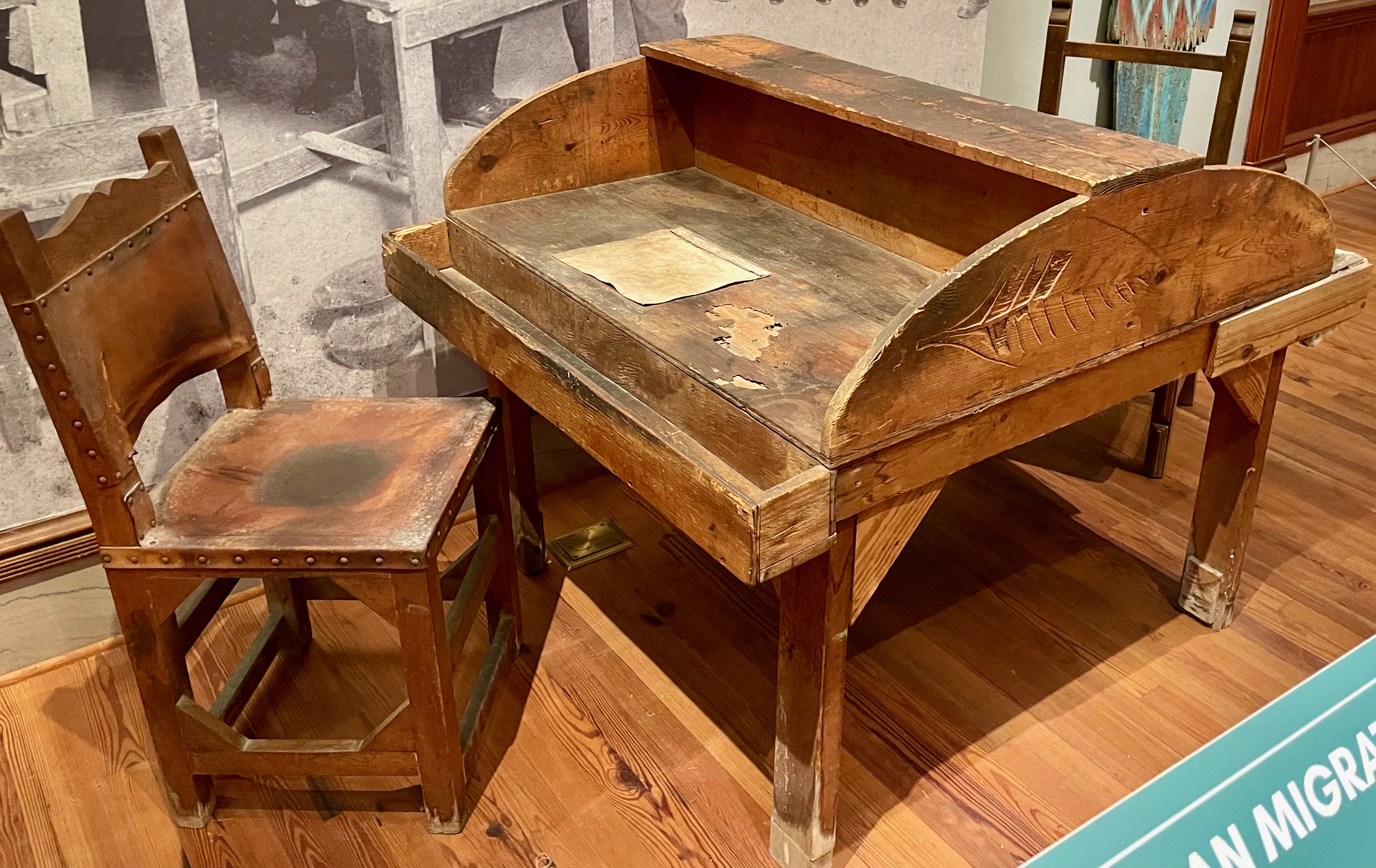
Story has it that there was a scrapbook with Joaquin’s Cuban story. It was lent to a family member who visited Cuba and lost it. And with it all links to Sharon’s Cuban family there.
That said, Joaquin’s Cuban Spanish lives on in the family. Sharon’s got it down. Slur those consonants, add a dose of Cuban slang, and some most expressive body language, and you are there. Ecuadorian checkers at Whole Foods will offer you their earrings.
Seamlessly this coldest of intellectuals morphs into a street Latina. Each and every time I am stunned.
Sharon was totally at home in the real deal Key West Cuban Coffee Shop. Me, well, I was with her.
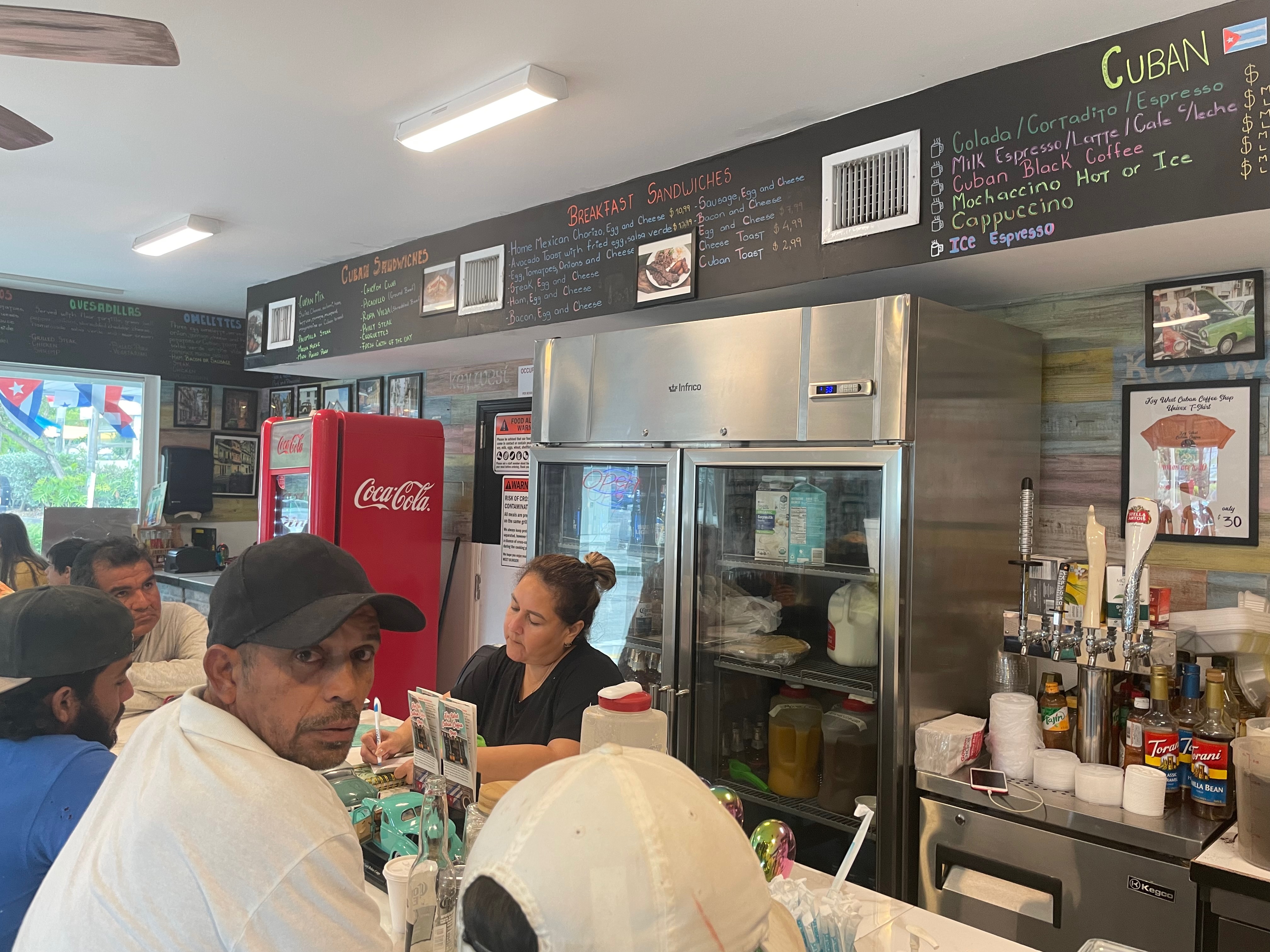
Florencio and Josefa spoke Castilian Spanish, the Spanish of Northern Spain. A dialect very different from Cuban Spanish. A different grammar, with a different lispy sound.
No doubt Inez was comfortable with both Cuban and Castilian Spanish, as is her daughter Rosita, Sharon’s Mom. For better or worse, the Castilian Spanish in the family ended with Rosita.
Who had an ironclad rule, no Spanish was to be spoken in her home. So Sharon never heard Castellano growing up. Sharon learned her Spanish on the streets of her neighborhood, in little Havana, in Tampa. Cuban Spanish, all the way down.
That said, I don’t doubt for a moment that Sharon, in a pinch, with say a day or two in the Castellano world, could morph. Just because.
Back at the Bike Shop, I asked the wired mother of the pretty slick shop, if they were really open tomorrow on Thanksgiving.
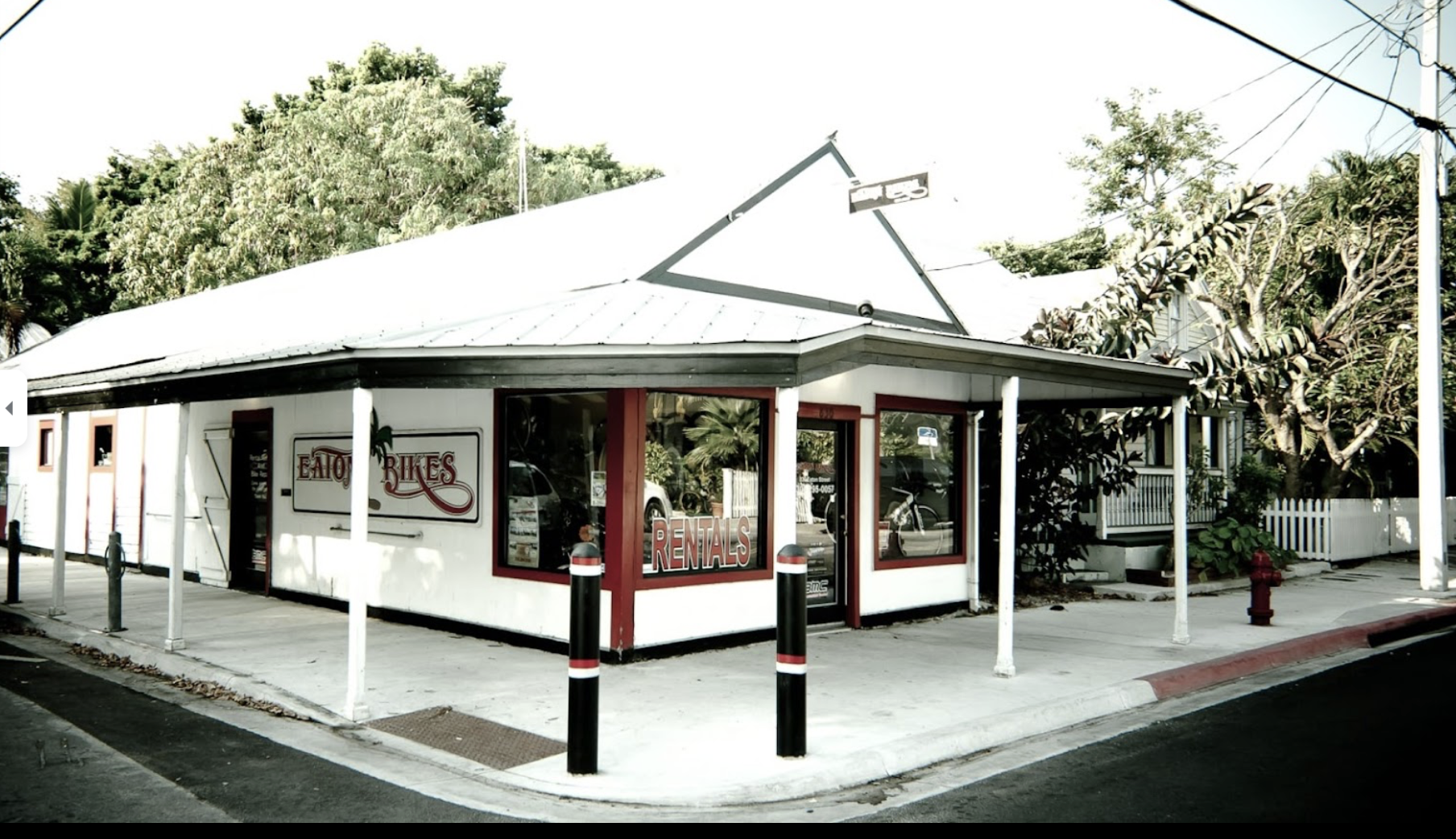
“Of course, This is Key West. We never close”.
Thanksgiving in Key West
We hadn’t made it to Ernest Hemingway’s House yet. Our morning was free. Would the house be open on Thanksgiving? But of course. Open 365 days a year. Cash only. On the way over we stopped at the ATM.
Cash only, is very Key West. It’s all a bit of a hustle. A bit outside the rules. I get that, but a Museum?
Yes, a Museum, kind of, but no board of directors. No statement of purpose. No non profit status. This museum is a privately owned and operated business.
But I figured somehow it was supported or at least had some connection to the Hemingway Family.
Wrong.
I asked the guy in the ticket booth how the house became a Museum.
He shrugged. “After Hemingway died, folks kept coming by, so it was turned into a museum.”
Lots left out there.
Turns out, the Hemingway family sold the house, furnishings and all in a blind auction in the 1960s. The winner with a bid of $80,000 was Bernice Dixon, owner of the Duval St. Beachcomber Jewelry Store.
Bernice moved in and soon realized there was money to be made off the Hemingway story. Far, far more money, than running a Jewelry Store. She was right, eventually retiring rather comfortably, in the lower Keys.
Her heirs run the enterprise today. $17 entrance fee. 500 people a day. 365 days a year. Cash only. You do the math.

Everyone seems to know the story of Hemingway’s six toed cats. Around 60 such polydactyl cats live on the grounds today, purportedly descendants of “Snowball” a six toed cat given to Ernest by a ship’s captain.
It’s a great story, but just that, a story. A Bernice created narrative, that has taken on a life of its own over the years. And yes, she used to sell “Hemingway” cats mail order.
The cats are everywhere on the property. Tourists love them. Well cared for. Spoiled rotten.
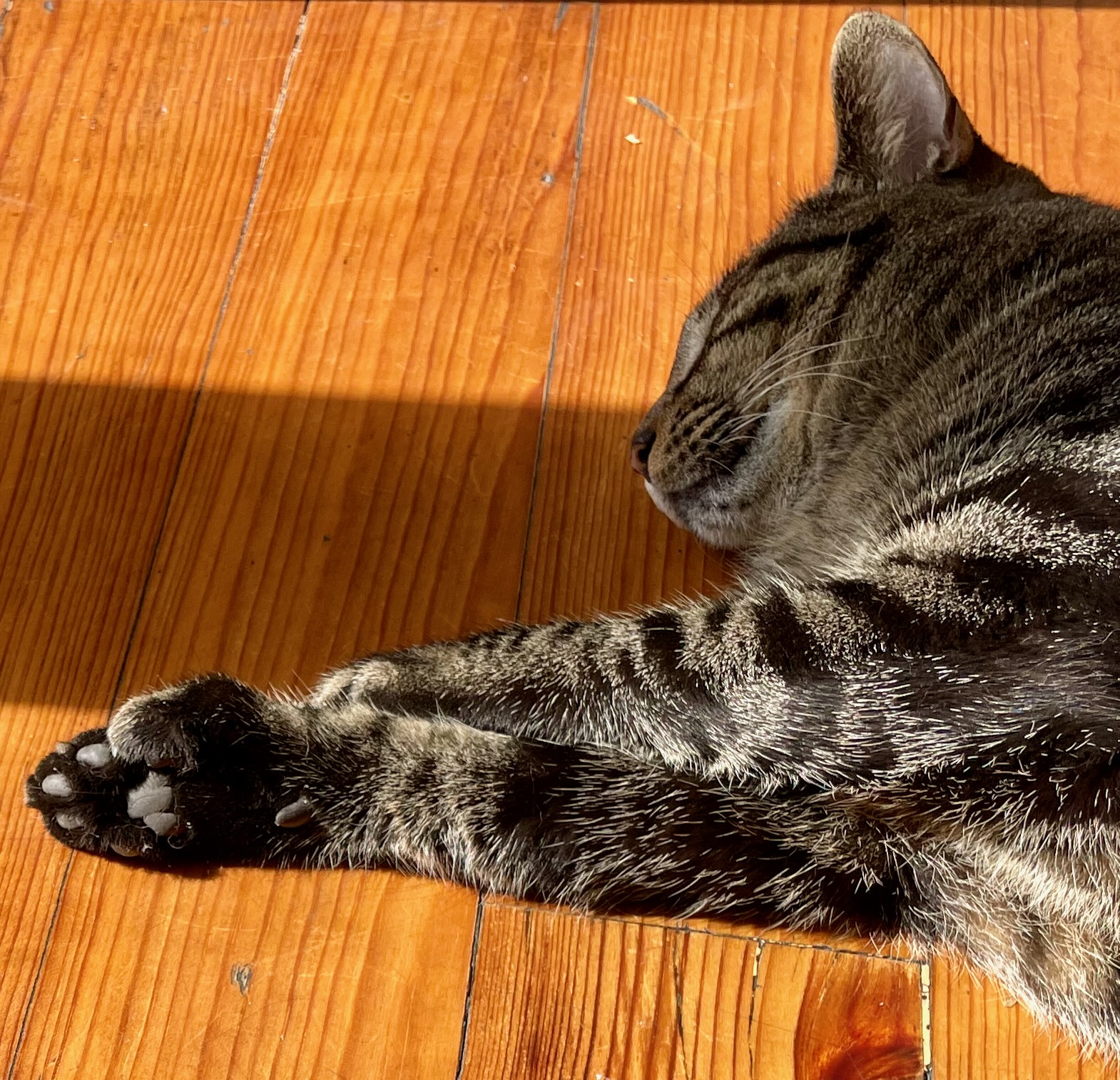
Waiting for Sharon on the front porch, one cat was lapping water from a crystal chalice with ice.
Which isn’t to say that Ernest didn’t love cats. He did. It was his wife at the time, #2 of 4, who didn’t. Coming from money, Pauline paid the bills. Ernest and sons had to make do with the local cats, neighbors’ and strays. No shortage there.
Key West in the 1930s had a rat problem, and therefore, lots of cats, many of which were six toed.
****
The house itself has its own story, pre Hemingway. Built in 1851 by Asa Tift, a wealthy marine architect and salvage wrecker from Groton, Connecticut. Clearly a smart guy with a good eye.
The French Colonial style perfectly suits Key West and Asa sited his home on one of the highest spots in Key West. Not only that, but he built his home with 18” thick limestone blocks, quarried from from what would become his home’s basement.
Remarkably the basement has never flooded nor have the walls blown in. Hurricanes and all. Well done Asa.
****
We made our Thanksgiving dinner reservations at the same time as we bought our plane tickets a few weeks before.
Since the driving idea of this trip was to trade Turkey for Red Snapper, it didn’t take long to narrow down the list of restaurants. It was kind of obvious. The small, within walking distance unpretentious, 5 star local fresh seafood restaurant was The Red Shoe Island Bistro.
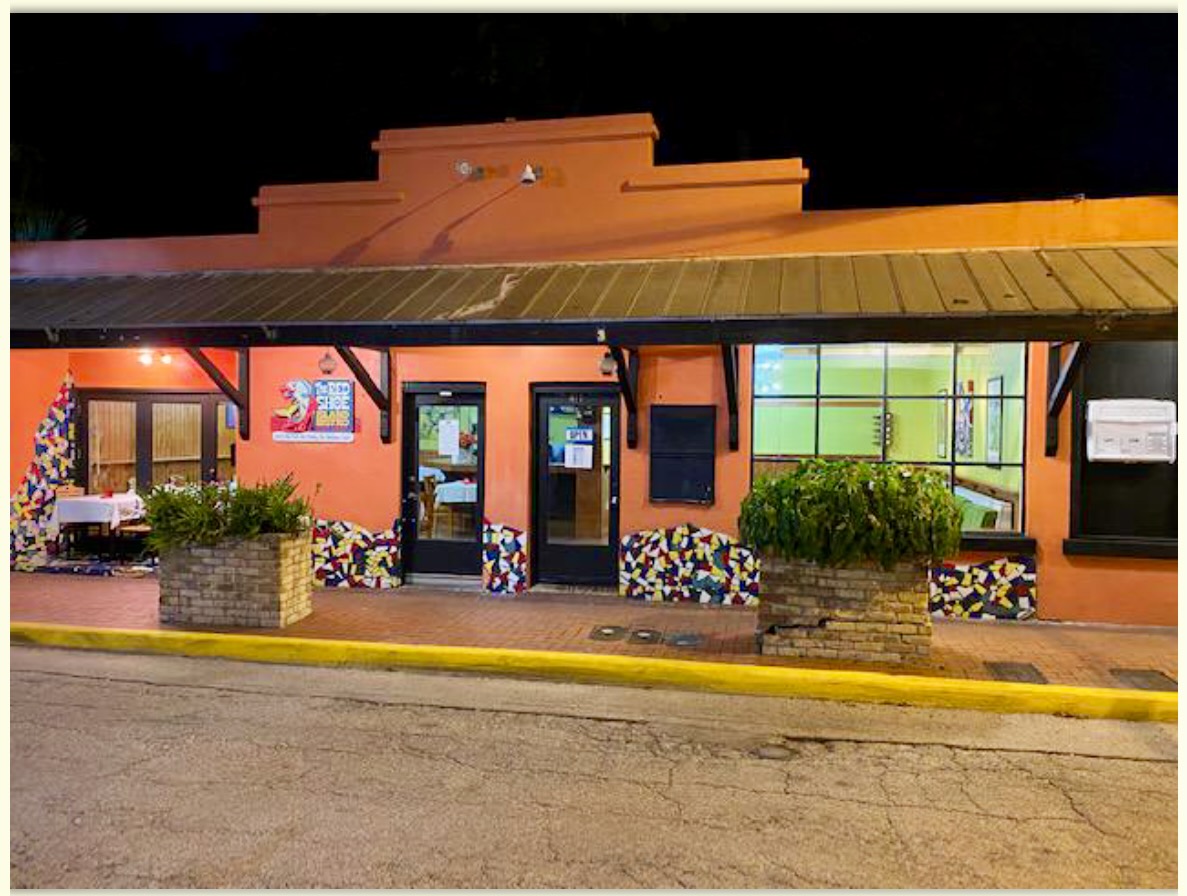
We picked first seating. The place was full. Our waiter was from up North. Nice guy. Early 40s. A bit goofy. Heavy set. Kept almost running into other waiters around blind corners. He had studied Spanish in graduate school. Had his Spanish helped him here in the world of dropped consonants and Cuban slang? No, not really.
Shrug.
We ordered our Red Snapper. Our waiter noted, “You’re lucky. We only only have two today.”
Then Sharon ordered a Roquefort salad, and asked for the cheese on the side. She’s not a big fan of Roquefort, but knows I am.
As our waiter set the salad down on the table, it hit him, he froze in panic and started profusely apologizing. “I’m so so sorry, I forgot to tell the kitchen about the cheese on the side.”
“Not a problem, we’ll deal with it”
Pause. We all looked at the salad. No cheese on the salad. The kitchen had forgotten to add the cheese. Two negatives can equal a positive.
Our waiter was stunned. Then we all laughed. Pause. And laughed again.
In Japan after our pilgrimage, we learned about the principle of Goen from a French filmmaker. It means both fate and chance. Two sides of the same coin. Always in the moment.
Roquefort cheese. No. Yes. No. Laughter. Very Goen.
How did we end up in Key West? A whim and a push, if you will.
I’d venture that family connectedness played its part too, in this roll of the dice. Sharon recently passed along an article on the physics behind last years Nobel Prize. It was all about Entanglement. My new favorite word for Connectedness. Far less baggage, far more expressive of the experience.
The concept is called “quantum entanglement” and most simply put, suggests the fabric of the universe is more interconnected than we think.
Einstein referred to the idea as “spooky action at a distance.” Sounds about right.
 Advencha before Dementia