2019 Shikoku Pilgrimage: Back Story

We stumbled onto the Shikoku pilgrimage late 2018, researching a bicycle ride south from Kyoto.  

It was love at first sight. That said, in hindsight,  it had been waiting for us for a long time. 

The first thing to know about the Shikoku Pilgrimage is that it is Buddhist. And not just any garden-variety Buddhist, but esoteric Shingon Buddhist.

The second thing to know is that the pilgrimage revolves around Kukai or Kobo Daishi, the father of Shingon. (774 – 835)
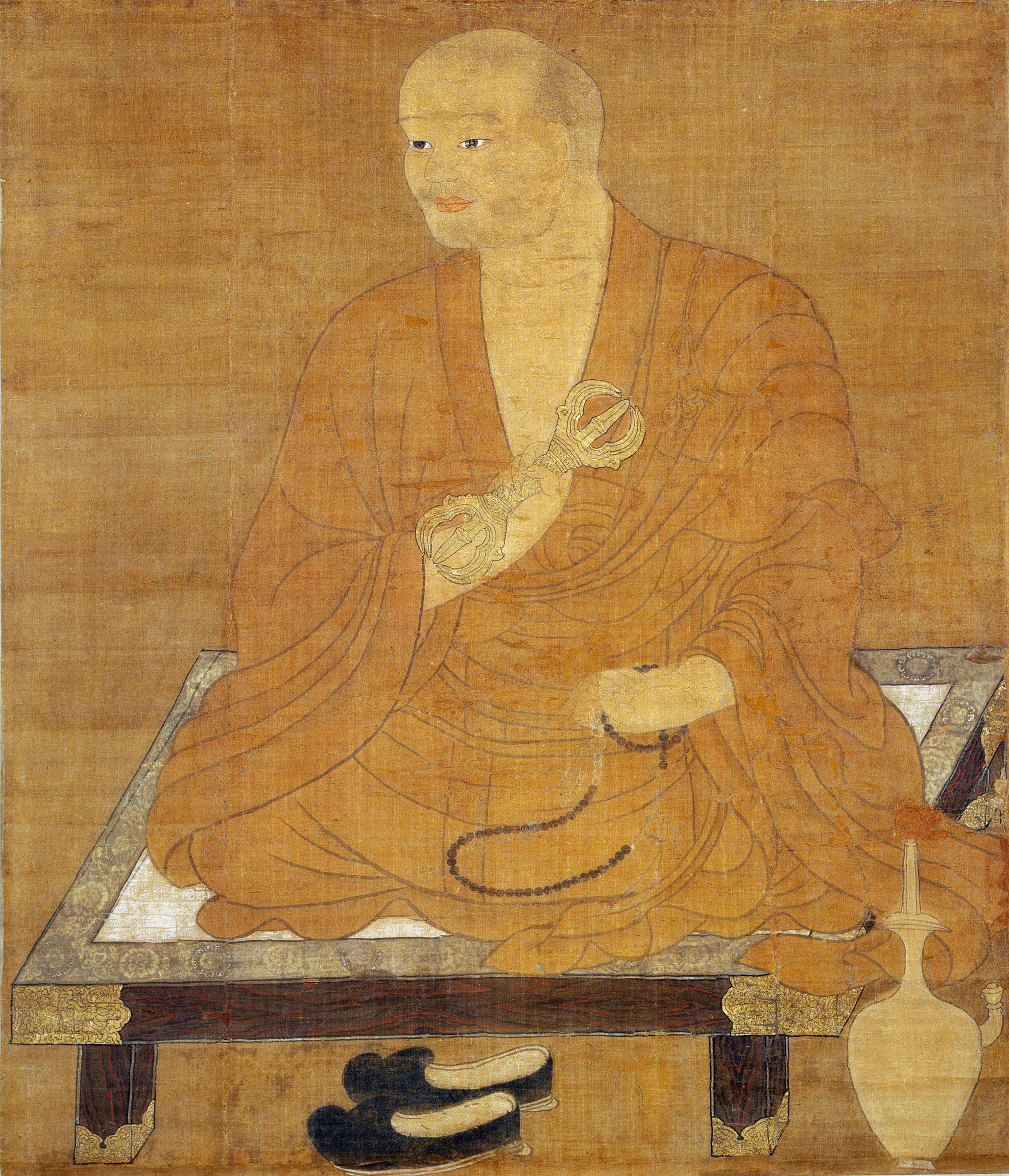
Kobo Daishi, Courtesy of Wikipedia

Kobo Daishi was born on the island of Shikoku. He practiced on this island – in these temple locations.  It was here, he made his ultimate psychological breakthroughs. 

The pilgrimage is an homage to the man.

There isn’t really a Western equivalent to Kobo Daishi. If you combined Leonardo da Vinci, Thomas Jefferson, and Moses into one person, you might be getting close.   

Kobo Daishi was a brilliant artist, linguist, diplomat, and engineer who brought sacred teachings and texts back to Japan from China. A champion of regular folk. 

We already knew all about Kobo Daishi from our Buddhist journey. We had been married in a Buddhist Ceremony some 40 years ago, up to our eyeballs in Tibetan Vajrayana Buddhism, a close relative to Shingon.

Our Wedding Announcement

At the time we were running a solitary retreat center just north of the New Mexican Border. Peyote Road Men, Vision Quests, Drop City Communes, Alan Ginsberg. That sort of place. That sort of time.

FWIW, Alan Ginsburg came down for an extended solitary retreat. After just a couple of days he drove off in cloud of dust in the early morning. Not a word to us.

Not the first time someone had run away, but a bit surprising given his Buddhist street cred.

This pilgrimage seemed to offer the opportunity pay our respects, see Japan, and contemplate the next chapter in our lives, whatever that may be. Which is kind of how it all worked out.

Not in the way we expected, but that’s kind of the point – in the world of Kobo Daishi.

Planning

The pilgrimage is a loop of about 750 miles clockwise around the island of Shikoku. With 88 temples, the route is pretty much defined – just connect the dots.
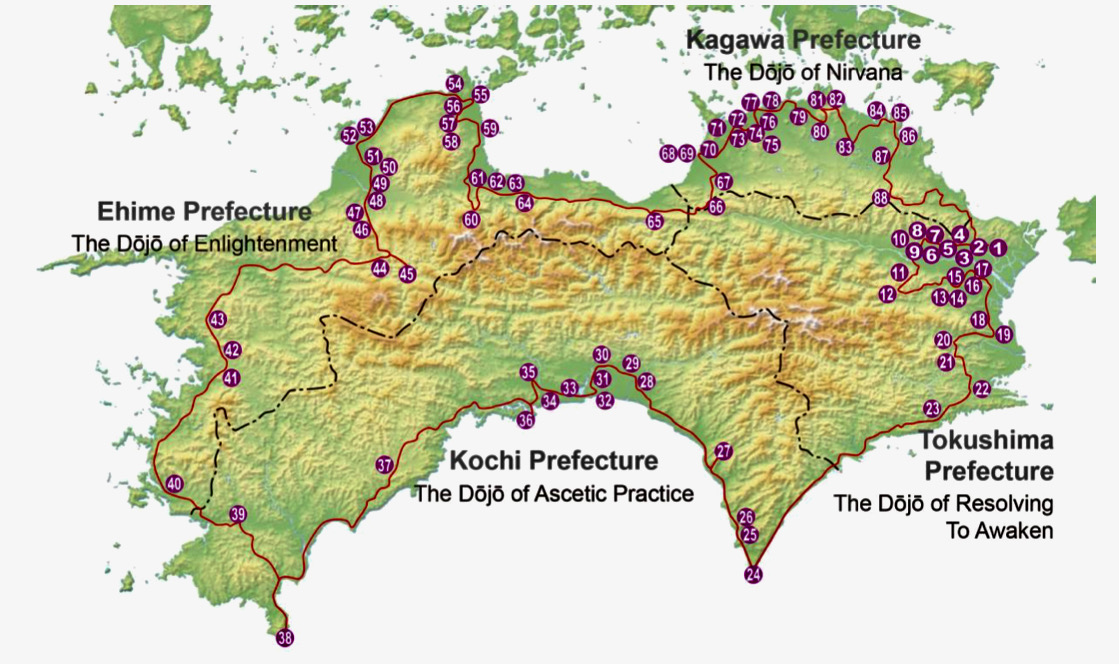
Shikoku Pilgrimage Map. The numbers are Temples. Start at 1.

From other trips, we knew 30 to 50 miles a day would be about right, which would work out to roughly three weeks of riding – all things being equal – which of course they never are. 

We needed to factor in climbing, accommodations, and temple specifics.

As our first step we ordered the “Shikoku Japan Route Guide” from Japan.

A most excellent decision. We now had our overview, complete with detailed maps, elevation profiles, inn locations and temple protocols – all in one tiny book.

Elevation profiles looked extreme. Long flat stretches and then incredibly steep climbs. We double and triple checked our route with Ride with GPS software. Add three days. 

Inns not exactly where we needed them. Add a day.

Temple protocols. Only so many temples can be visited in a day if you are going to pay respects properly. Add a day.

We had a plan: 26 days of bicycling and another 9 for air travel, prep, rest and recuperation, packing and buffer. 35 days total.

We had a month window. 35 days seemed close enough. We bought our plane tickets. Arrive October 9 and depart November 12.

Now all we had to do was learn Japanese and get in shape.

Japanese

Sharon is one of those crazy gifted types. If you’ve seen the movie, “My Brilliant Friend” you kind of get the idea. She grew up dirt poor on wrong side of the tracks in a Spanish-speaking neighborhood in Florida. Went to college at 15. The truest of intellectuals, but on her own terms. An incorrigible iconoclast.

In the past 5 years or so, she has learned German, Italian, French, and Swedish. All I had to do was ask, buy the books, and sign her up for the language courses. 6 to 9 months later folks would be laughing at her jokes.

It’s oh so nice to have a travel companion who can speak the language.

When Japan started getting real, she told me point blank, “Don’t even think of asking me!” Fair enough. I’d do the studying.

I bought the books, found an app and started in. A few days later I had company. Someone couldn’t resist. I was shortly thereafter lapped several times over. 

Was I surprised when folks laughed at Sharon’s jokes in Tokushima? Yes, and no. Yes, because there’s always a new twist, and no, because that’s just how she is. 

When we were lost in the middle of nowhere, was I happy that Sharon repeatedly saved the day? You betcha. 

After one memorable GPS hiccup, we pulled up having lost our signal and our way, when seemingly out of nowhere, this magical little old lady appeared, as though she had been waiting for us. 

Sharon did her Japanese language thing.

The woman started nodding, laughing, and patting Sharon like a long lost best friend.

A somewhat regular occurrence, FWIW.

Training

We started bicycling three years ago in 2017. Sharon had a hip replaced the year before. Her rehab included a stationary bike. Bingo, inspiration. 

That winter we ordered a tandem that could be broken down for travel. The following Spring we started riding. That summer we took it to Italy for a group tour. Last year we took it to Finland and rode across the Finnish Archipelago – on our own. 

Each of the last two years, we logged about 1000 miles. This year we were just nudging another 1000 miles when we left for Japan. So I figure we’re no longer beginners – 

More like advanced beginners. 

Rationally this ride was way over the top, but realistically when you’re over 140, in tandem years, it’s best to get on with things while you’ve still got a shot.

This story will be told in 5 parts: This introduction and then 4 posts on the the 4 prefectures we circled through: Tokushima, Kochi, Ehime and Kagawa.

Day 1 , October 8 Tuesday; Fly to Tokushima City Japan (TKS)

We left our house in MA at 9 AM on October 8 arriving at Morimoto-ya Inn in Tokushima City at 9 PM the next day. We flew Boston to Toronto to Tokyo to Tokushima. 

Day 2, October 9. Wednesday [Itano Town Japan] Arrival in Tokushima

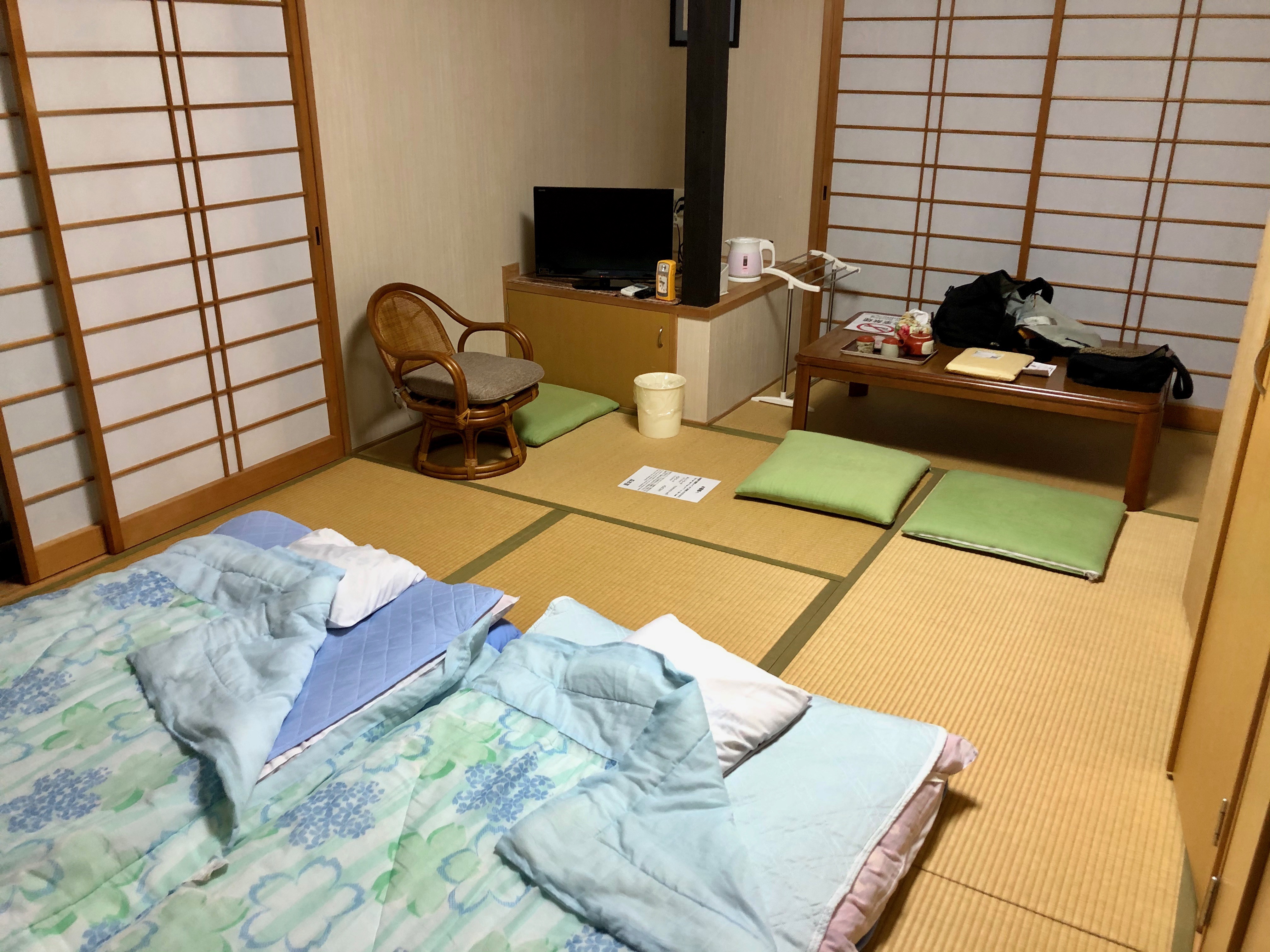
Toshimitsu Mima, or Mima-san, from Morimoto-ya Inn picked us up at the airport and served us a much appreciated late dinner when we reached the inn. We had been on the road 23 hours or so. 
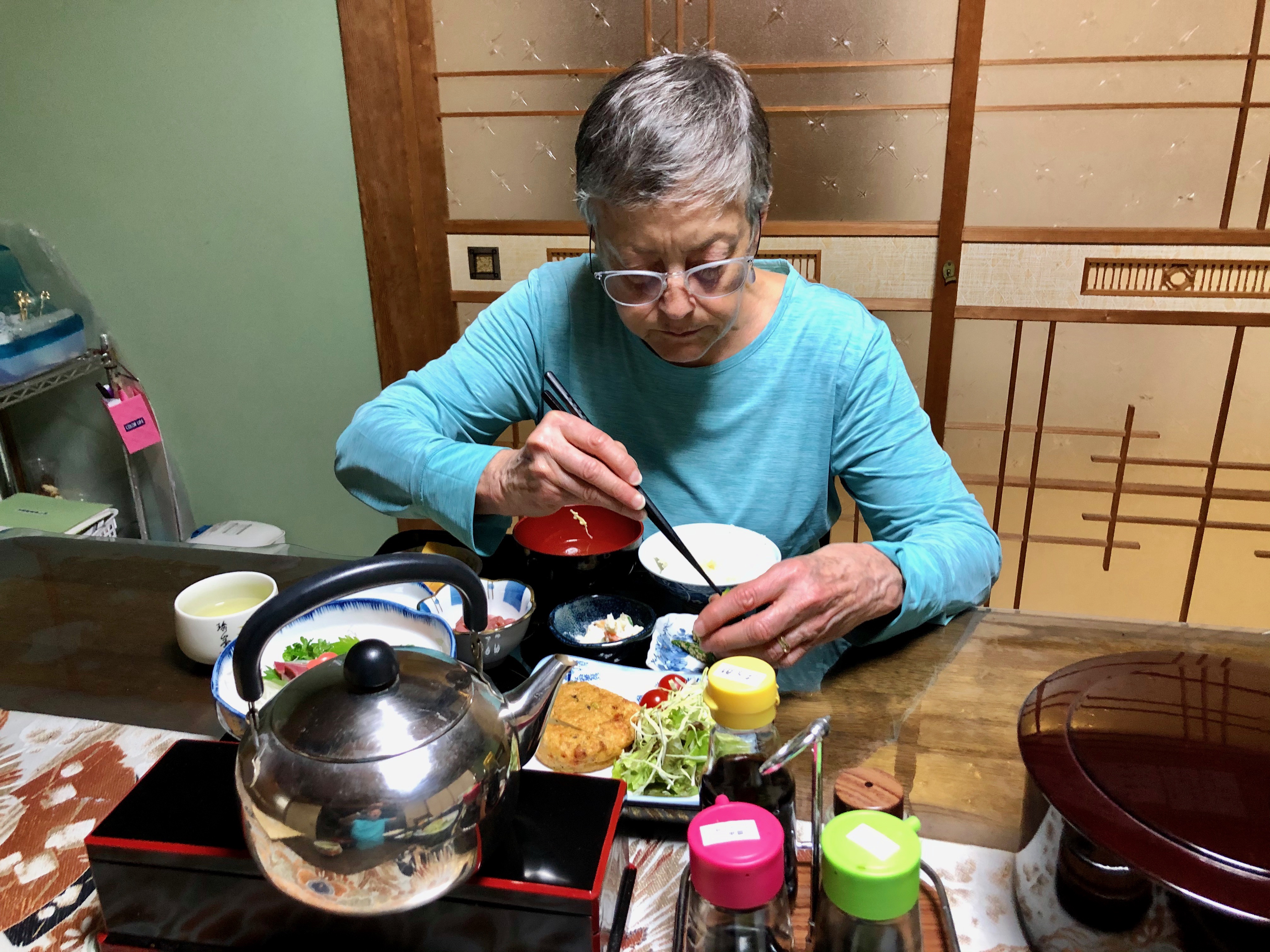
We slept Japanese style on futons on tatami mats on the floor.
And were introduced to the world of Japanese Toilets.

Every button is a most intimate surprise

Day 3 October 10 Thursday; Test Run & Temple #1, Ryozen-ji

Temple 1 Ryōzen-ji 霊山寺 Naruto, Tokushima

The next morning I put our bike together out front of the inn.
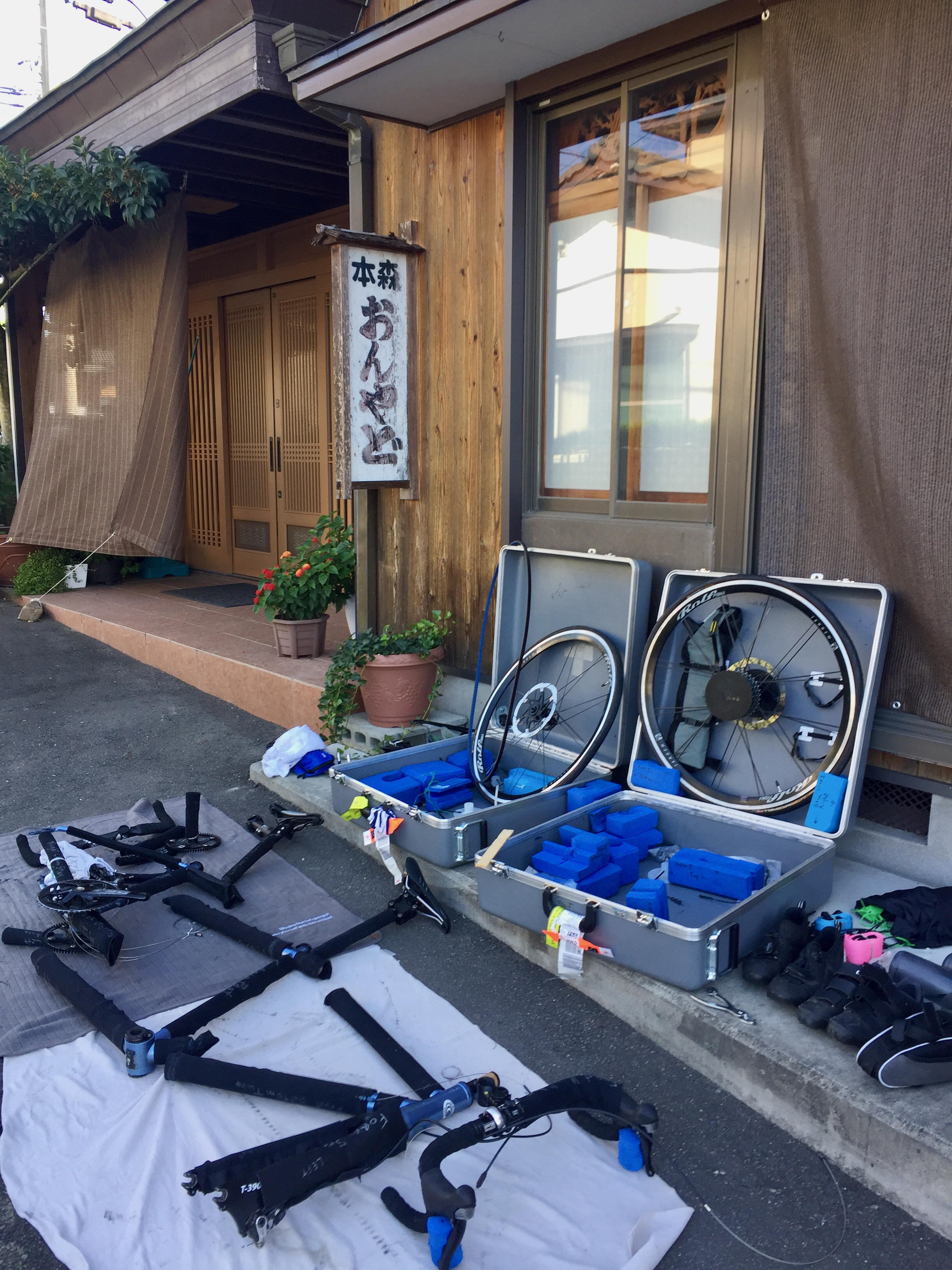
And we rode it on backstreets to Temple #1, Ryozen-ji. Both shifting and braking seemed fine. A good thing. And reassuring. It hasn’t always been so, after baggage handling did their thing, on other trips. 

We pulled up to the temple gate. Our first of 88. 
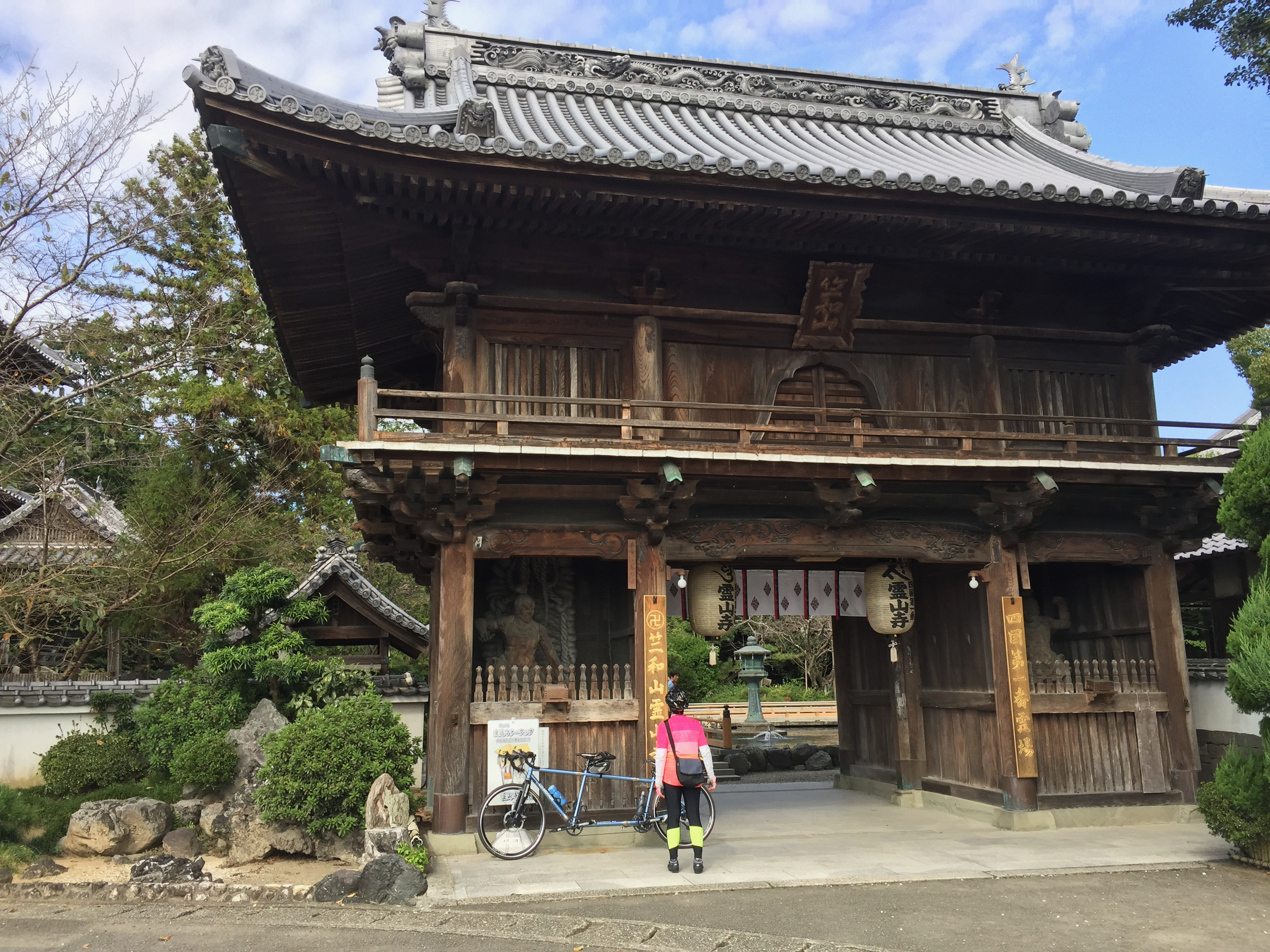
Mima-san had tipped us off that the place next door was cheaper than the temple store for pilgrim clothes and supplies. So we moseyed on over, and picked up white pilgrim vests, temple books, nameslips, candles, incense and a lighter. 

Suitably equipped, we were ready for our first temple.

Back at the temple gate, we bowed and checked out the guardians. Always unique. Always no nonsense. Temples are considered sacred ground and the guardians are there to keep it that way.
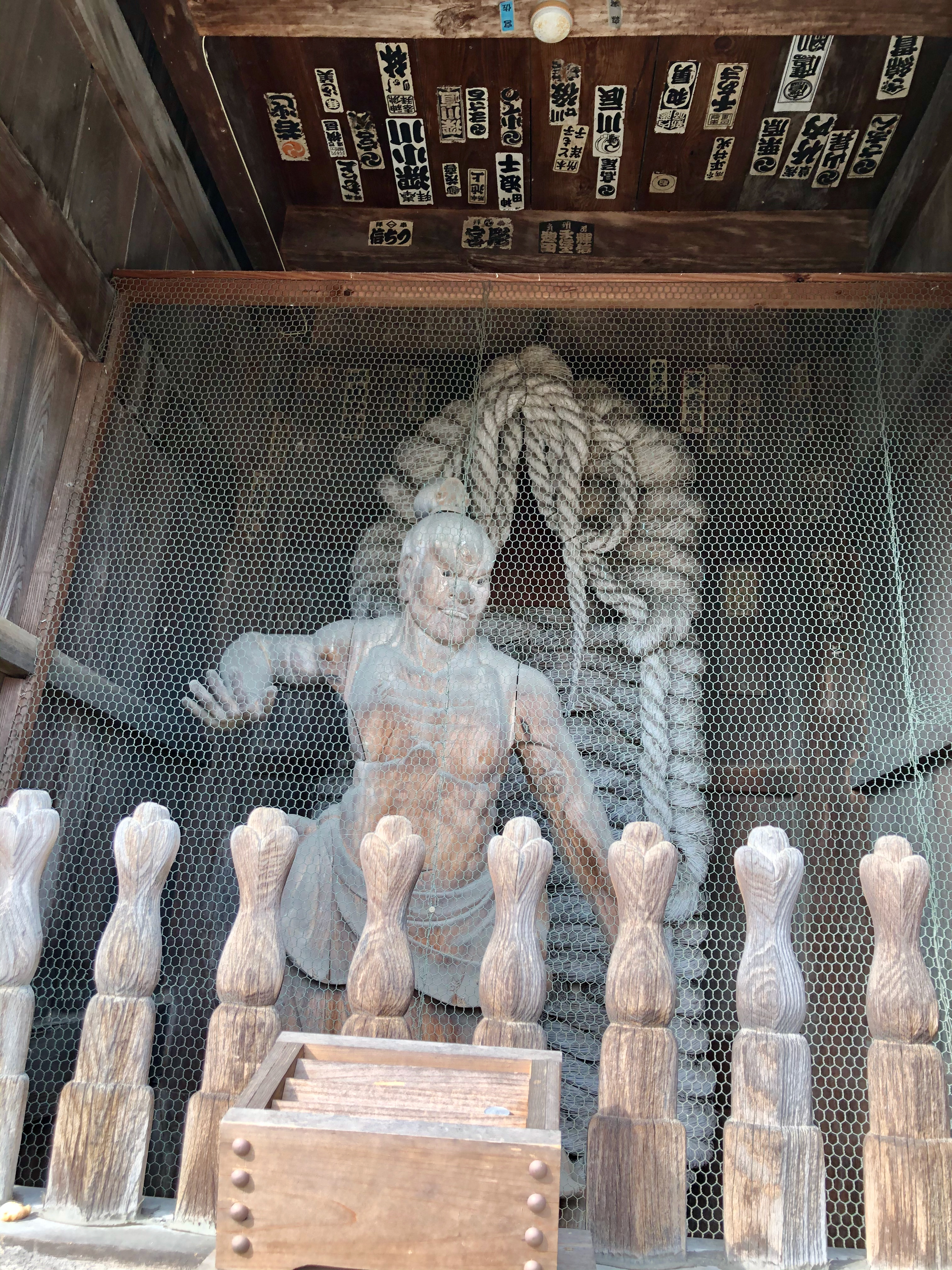
So where to park the bike? I rolled it through the gate and locked it up on the backside. Where to start? In a flash, Sharon was off to the wash basin. Suitably purified she rang the bell announcing our arrival. 

I sat down on a bench next to another old guy and watched the Koi fish slowly swim around. 

In Japan, Koi are a symbol of good fortune associated with perseverance in adversity and strength of purpose. I was feeling the 13 hours of jet lag. The lolling Koi were about my speed.

Wandering through the temple grounds we soon found the Main Temple Hall, where following protocol, we lit incense and candles and left nameslips in the nameslip box and a small donation in the offertory box. 

Nameslips are something akin to a spiritual business card, including name, age, country of origin, and intent/wish. They are left at the Main and Daishi Halls, exchanged with other pilgrims and given to those from whom you receive gifts – osettai. More on osettai later. 

Then we wandered into the Main Hall itself. The lanterns were quite atmospheric. And the shrine felt oh so familiar. Memories flooded back.

Back in the early 1970s, I did a month long group Buddhist meditation intensive. Perhaps the first ever in the USA. All of us had been practicing formless mediation intensely several times a day and for weekend stretches, but never all day long for a whole month.  We wondered what would happen?

Bottomline: Nothing. Which is kind of the point. Lots of mini-drama though.

We’d be sitting there, eyes open trying to pay attention to our breathing and labelling thoughts thoughts, when out of nowhere now and then, someone would start laughing or crying. Internal monologues taking over. Nothing particularly new there.

One day a young woman next to me broke down sobbing. Later I asked her about it. Nothing to do with memories or fantasies.

She said that she had let a fly land on her face, and then walk across her open eyeball. 

At which point she broke down. Way over all the lines, & in the present to the extreme. Kobo Daishi stuff.

And I’d always thought of her as pretty easy going.

****

After the Main Hall Sharon and I made our way back to the Daishi Hall, lit incense and candles and left our nameslips per protocol. 

On the way to the Temple Office this was the pagoda view.
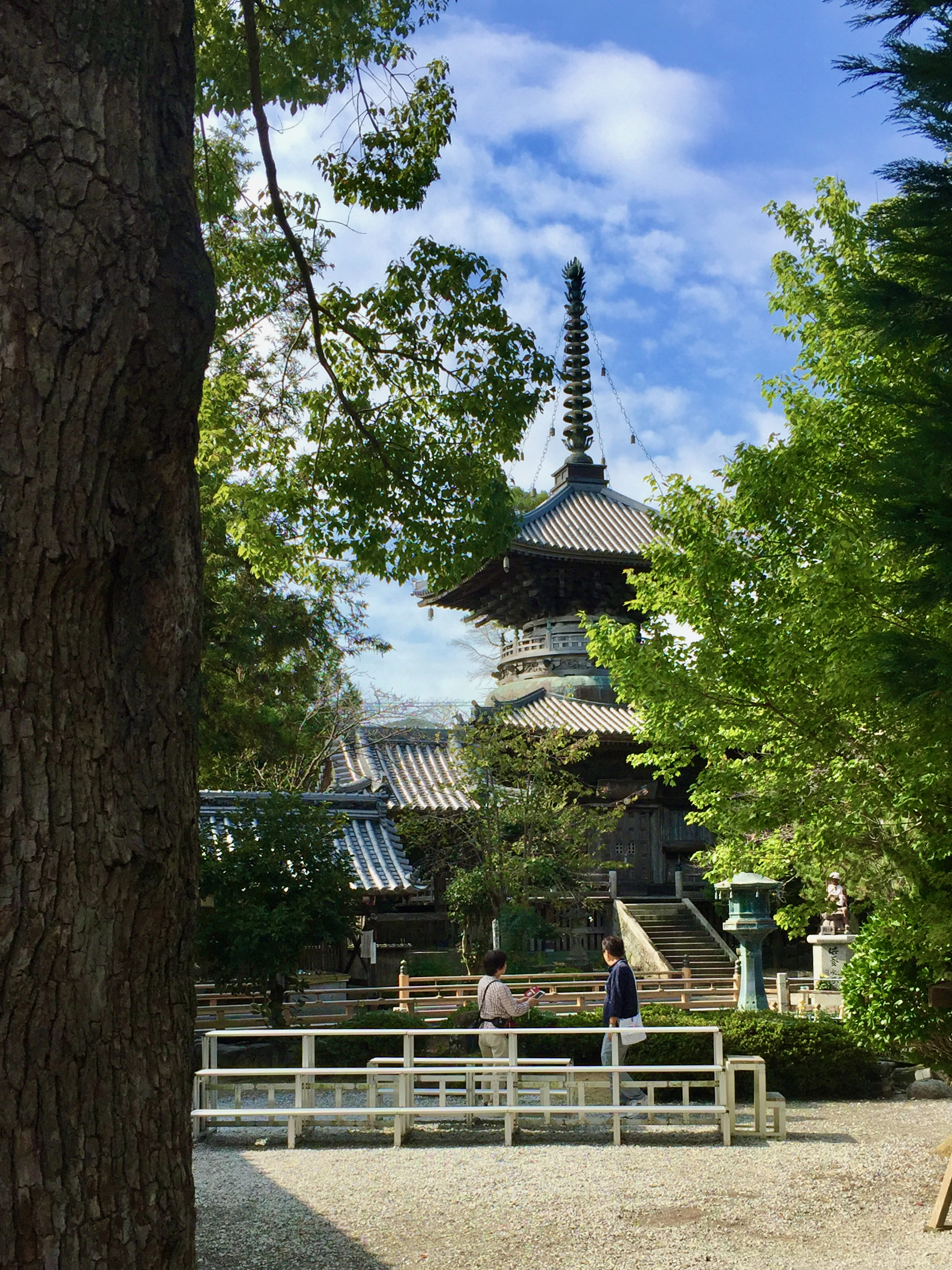
At the Temple Office we pulled out our virgin pilgrim books and received our first stamped calligraphies. 300 yen (about $3), well spent. 1 down 87 to go. 
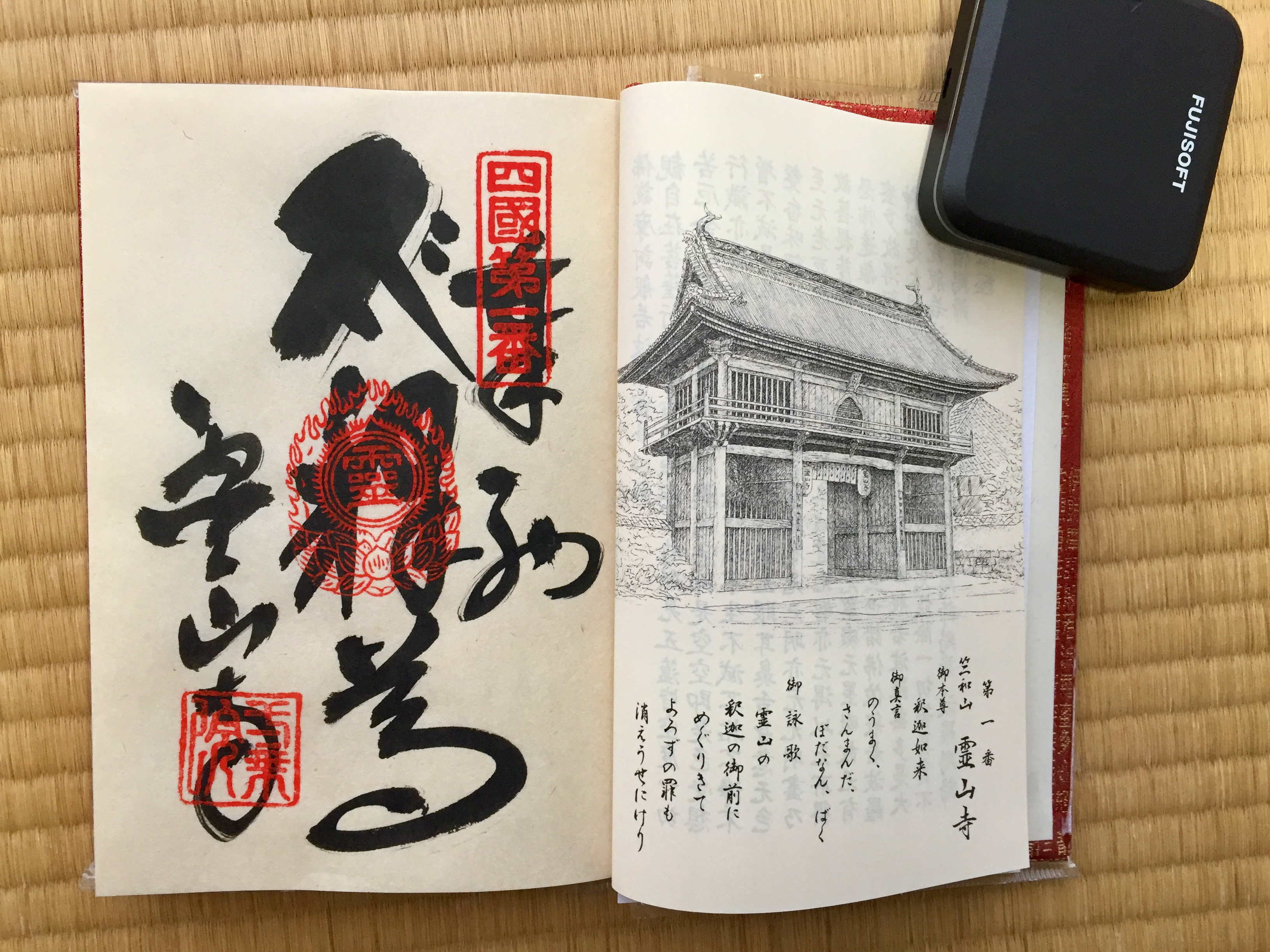
We rode back to Morimoto-ya Inn, the way we had come. Arriving in time for an early private couple tub soak. Grandma knocked on our door to let us know that the tub had reached just the right, really-hot-temperature. We walked down the hall, and went in, locking the door behind us. 

We showered side by side, sitting on low stools with handheld sprays in the open room. Suitably clean, we slowly lowered ourselves into the steaming tub sized for two. Grandma had expected us to bathe together. 

Welcome to Japan. 

At dinner there were two Japanese, two Germans and us. The Japanese kept to themselves, as did the Germans until the meal had almost finished, & then the German woman broke into English. 

It turned out that she was German/Japanese with excellent English and Japanese. Her German friend, she had met that day on the road.

In her late 20s, she had spent the last 6 months caring for her dying mother, grieving at a crossroads in her life. Her band had broken up, and her boyfriend had left.

She had decided to do some of the pilgrimage as a time of reflection in memory of her Mom. She said perhaps she would visit the first dozen or so temples. Or as far as her limited budget would go.

We saw Anika again at Temple 12, photo below. 
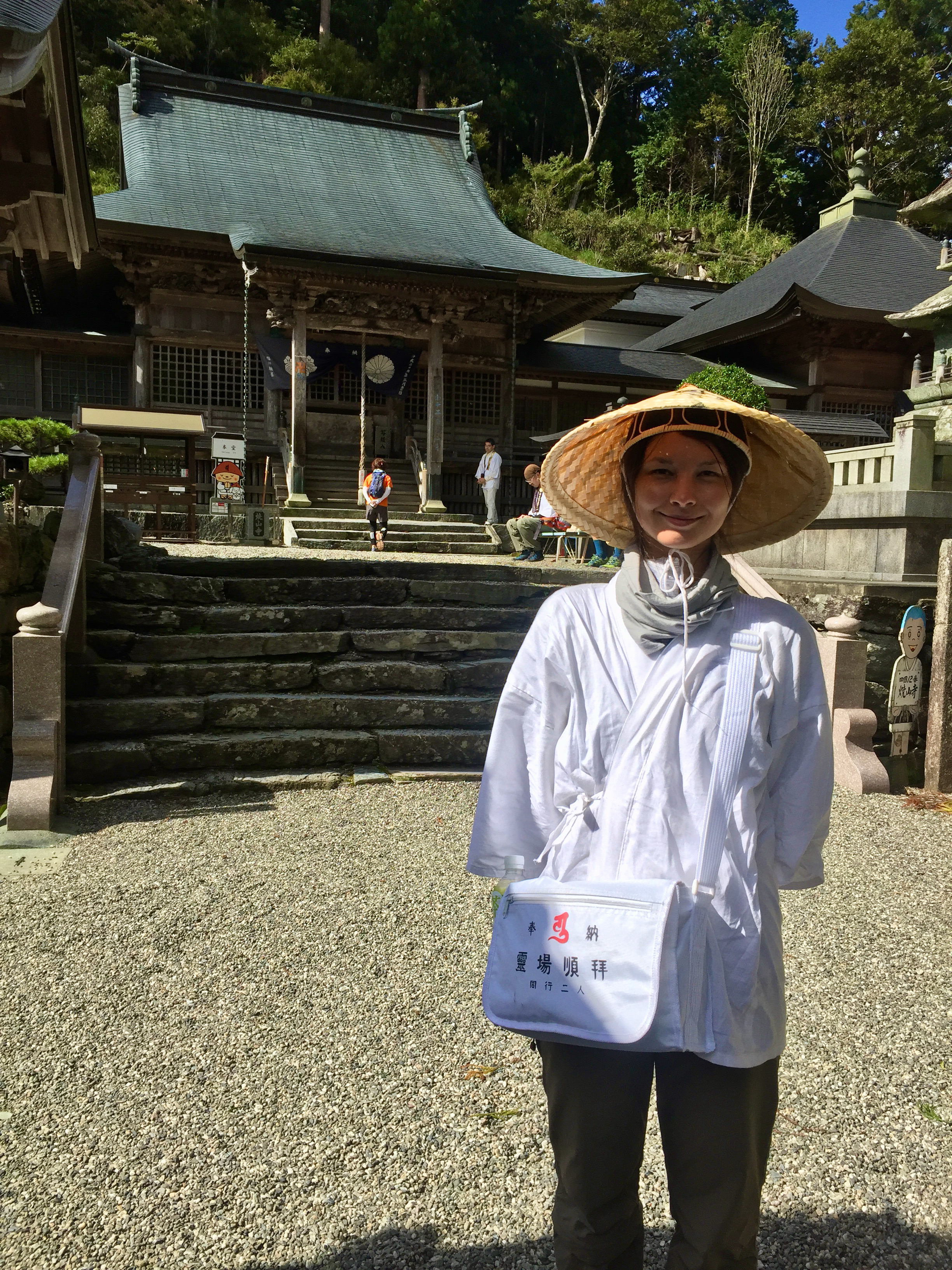
In late November, I checked the Shikoku Facebook page, and there she was. 88 temples. Kudos Chica.

People do the pilgrimage for many reasons: honoring loved ones, religious conviction, a break from daily routine, or simply as a challenge. All are welcome. All equally valid. Kind-of like formless mediation.

We had heard that the Shikoku pilgrimage was pretty much undiscovered by Westerners. True. In our month on the road we met perhaps a couple dozen Europeans and only two other Americans. 

That said, the trend is fewer Japanese and more foreigners. Will this be an issue?

Yes, as Jean Phillipe explained a week later in Minami Town. 

Day 4 October 11 Friday; Another Test Run, & Temples 2 – 5

2 Gokuraku-ji 極楽寺 Naruto, Tokushima
3 Konsenji 金泉寺 Naruto, Tokushima
4 Jizō-ji 大日寺 Itano, Tokushima
5 Dainichi-ji 地蔵寺 Itano, Tokushima

The next day was another test run. We looped back to catch Temples 2, 3, 4 and 5. 

The first two temples were a piece of cake. Then we headed to temple 4 as dark clouds were gathering. One bad decision followed another as we raced to beat the weather. 

We arrived at what we thought was Temple 4, but really was temple 5. Then headed off downhill to where we thought 5 should be. Our bike computer kept rerouting us in circles, down on the flats miles off route. 

Rain started falling. We were tired, disoriented and getting our first lesson from the world of Kobo Daishi.

“Slow down and pay attention.” 

If we had just taken more time and paid proper attention, we’d have already been soaking in that tub at Morimoto-ya Inn. Instead we had to retrace our steps. Back at Temple 5 we faced a big climb to Temple 4 which we had barely missed when we went left instead of right. 

The women in the Temple 5 office laughed knowingly at our story, glanced at each other, and then one offered to drive us up to Temple 4 in her car. 

She walked us through the temple. At the wash basin, after washing each hand,  I went to wash my mouth out, per book protocol. She made a nasty face and said, 

“No. The water is dirty. Just watch and imitate.”

Which I did and from then on, after washing each hand, I simply let the water run back down the ladle’s handle and over my hand like 98+% of the other pilgrims. Cool, smooth, simple, symbolic and hygienic.

Sharon, the incorrigible one, continued with her mouth washings. As we worked our way around the island from temple to temple, I noticed that the really hardcore pilgrims did the same. 

Traditionally the 4 prefectures: Tokushima, Kochi, Ehime and Kagawa are associated with 4 places of training. Each have personalized lessons. Tokushima was the first: The Hosshin dojo or Place of Spiritual Awakening.

We certainly weren’t shortchanged on lessons, or more accurately, I wasn’t.

Back in the day, a friend used to laugh about Jack Kerouac thinking he could reach enlightenment by going faster. Suppose anything is possible, but that’s kind of the wrong end of the stick.

You’d think that after all these years, now in my old dog days, I’d have figured that one out.

Nah.

“It’s about slowing down psychologically and the connections.” My personalized Tokushima lesson.

The next morning we would bid our comfy and cozy inn goodbye. We did a final packing and sorting, with one eye on the weather.

A typhoon was bearing down on Japan. A really big typhoon. Tokyo looked like a direct hit. But Tokyo was 300 miles away. Maybe we’d luck out.

Maybe not. 
Link to next Shikoku Pilgrimage post: Tokushima.

Finland 3: The King’s Road

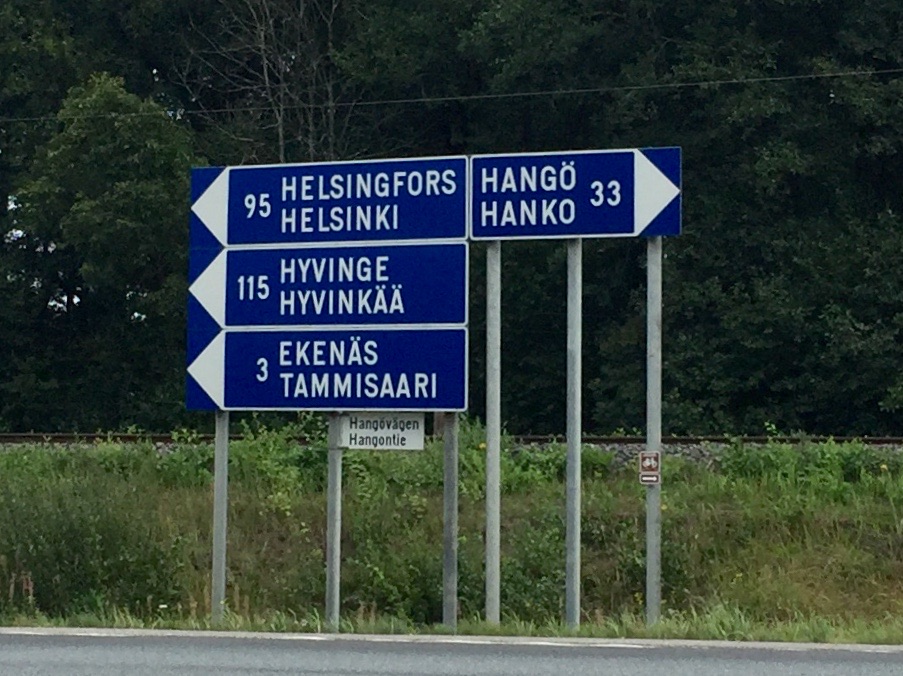
We pushed south from Matilda reaching Hanko on southern tip of Finland just ahead of the storms. Hanko’s August 25 end of summer celebration was our goal all along and we made it.

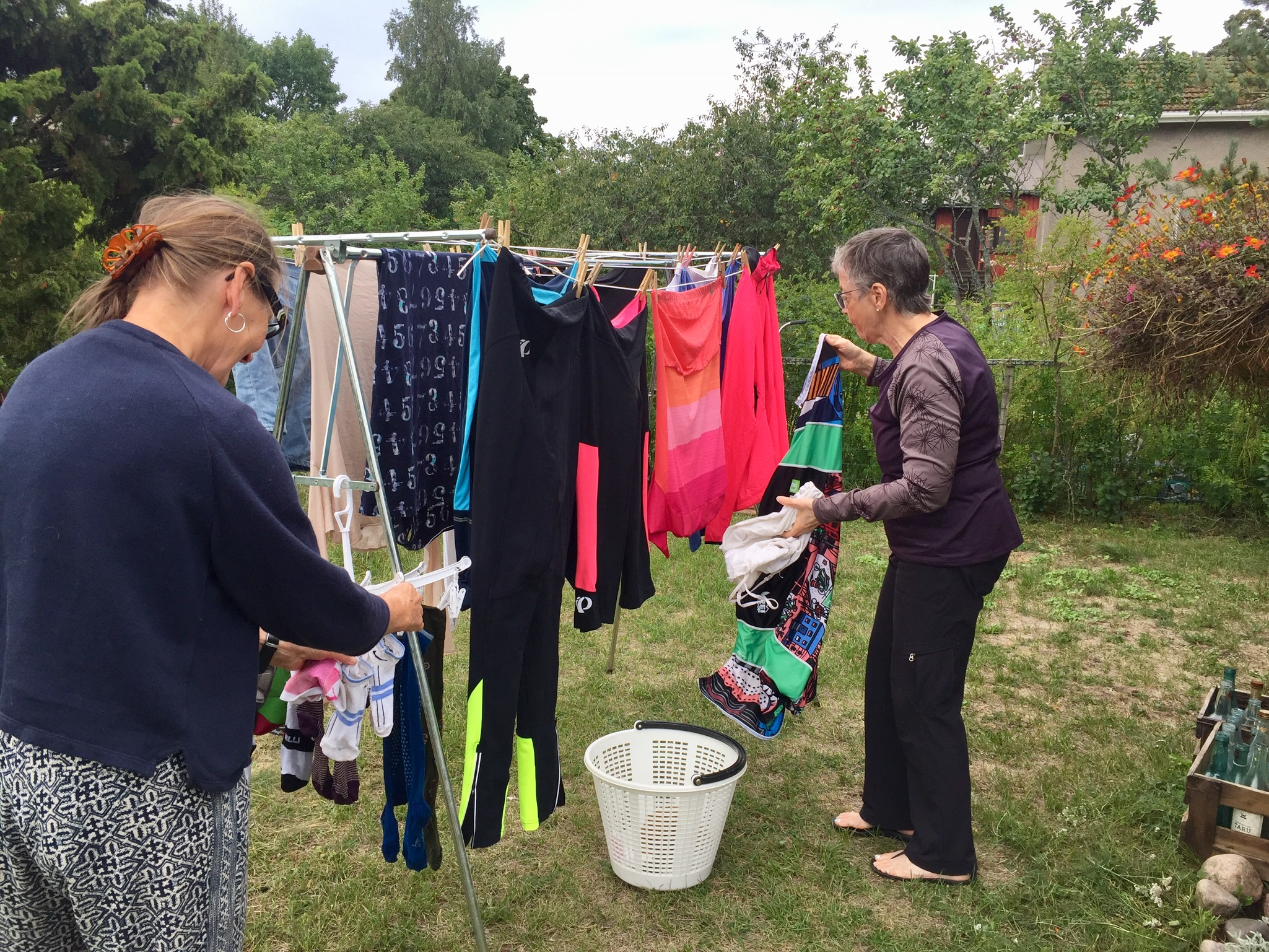
In Hanko we stayed with our Finnish counterpart Liisa and her daughter Saila for a three days. Did some visiting, did some mushroom hunting, did some sightseeing, and did some laundry.

Generally had a great time.

Together all of us said our final farewells to my Mom and tossed her ashes into the Baltic as she had wanted.

Then Sharon and I bicycled back up the coast to Helsinki along the historic King’s road.

Day 11  Friday August 24 Matilda to Hanko

We were up early. We had a big day ahead. The final push to Hanko.

The challenge of the day would be our route. We now knew enough to know that our bike computer had us riding many miles on gravel roads. Those dashed lines on our paper map were a dead give-away, and gravel was not for us. 

We came up with a plan, but first another wonderful Finnish breakfast. 

Then, we picked up a loaf of fresh bread from the baker behind Terho and lashed it on top of our trunk bag. Sharon and the baker had hit it off the day before, when Sharon was exploring. The baker threw in a couple of most appreciated extra treats.

fullsizeoutput_40a7

Sharon’s baker friend

After leaving the woods of Matilda the roads got bigger and and the traffic picked up

IMG_0098

We took the smaller side roads where we could. And were rewarded accordingly.

IMG_0099

Our rear bag bread shrank as the miles added up.

We had some nice wide smooth roads through some big trees.

IMG_0100

We finally hit the main route to Hanko a bit worse for wear, and running empty on water.

IMG_0101

We were huddled over our map, plotting our next move, when a car pulled up. 

Remarkably it was Saila. Helsinki family headed south to Hanko. We asked her how she knew it was us. 

“Not too many tandems in Finland.”

5 minutes earlier or later, and we would have missed each other. 

Synchronicity Magic. 

Perhaps it was the bag of my Mom’s ashes in the back of the car. Who knows? 

In any case, it was all for the good. 

Saila took our water bottles back up the road for refills. On her return we transferred our bike bags to her car. Another blessing. 

fullsizeoutput_40ac

We were able to ride the last 20 miles into Hanko on an unloaded bike. We followed the bike paths when available. We would veer off onto pieces of the old road to Hanko when directed. Once again weather was threatening. 

We arrived in Hanko only a bit damp. A half hour later, the heavens opened up.

By then we were safe and sound in Liisa’s house.

IMG_0103

Days 12 & 13; August 25 & 26;  0 miles 

My great grandfather Alexander and Liisa’s great grandmother Fredrika and were brother and sister. Our families diverged when all 5 of Alexander’s children and his wife emigrated to the USA in the early 1900s.

Liisa’s family, and Alexander, stayed in Finland.

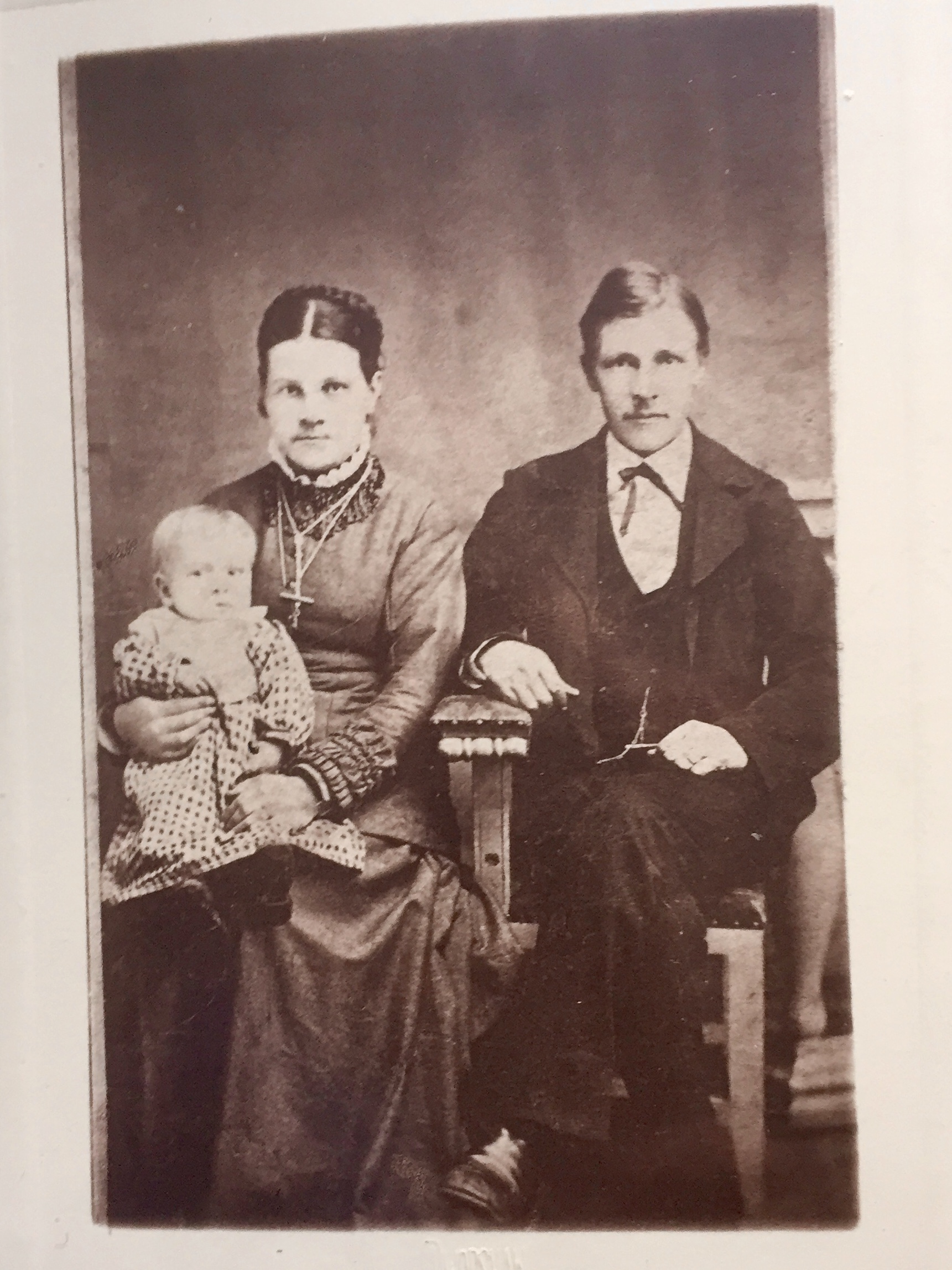
The photo below from the 1880s is Alexander, his wife Heta, and probably my grandfather’s older brother Abraham, the first born. 

fullsizeoutput_420e

Alexander and Heta’s was a family-arranged marriage. It didn’t work out. From what I gather, he was more refined intellectual than businessman. Heta was a bottom line kind of gal.

After the split-up, Alexander wrote a book, “The Pitfalls of Marriage.” No copies survive that I am aware of, but the title does kind-of say it all.  

I feel for the guy.

Hi marriage hit the rocks. His wife left him. And to top it off all of his children and ex-wife emigrate to the USA and he never sees any of them again.

Liisa says her side of the family held Alexander in high regard. He was said to be a thoughtful, responsible, and all-round nice guy. He had beautiful handwriting and a prodigious memory. Story has it that he memorized the whole Bible. 

Apparently all this wasn’t enough for Heta. 

In 1901, Alexander’s 2nd son Peter, my grandfather, was working in Helsinki as a watchmaker and engaged to the bosses daughter Signe, when he was drafted by the Russians to fight the Japanese. The photo below is from that time.

fullsizeoutput_41b7

Peter was a tough guy, faced with hard choices. He chose to emigrate to the USA, where eventually he married my grandmother Tyyne, another Finn, in 1919. By then he was an established successful businessman owning a jewelry store in Duluth MN.

Tyyne was a catch, if you like young, really smart, no nonsense, professional women, which apparently my grandfather did. Tyyne was an MD.

By all accounts theirs was a happy marriage. Complicated, but happy. I wish I had known them, but I grew up a couple of thousand miles away in California. But that’s another story.

fullsizeoutput_4211

But Peter never forgot Signe back in Helsinki, keeping her gold snake ring his whole life, hidden away: engraved with her name inside the band. My Mom found it sorting through odds and ends. 

Years ago I nabbed it. I didn’t care about the story, I simple liked the look. The diamond on top of the snake head was the clincher.

I’m still wearing the ring as I write this. I find it curious that the ring and its memories have survived more than a 100 years. 

When Peter emigrated to the USA, he left from Hanko, the southernmost port in Finland. Because of its location and the mild sea climate, Hanko was the only harbor open year round.

In the early 1900s, Finland was ruled by Russia and a popular destination for Russian nobility who built quaint charming summer homes, restaurants, casinos and so forth. Much of that charm lives on today, including Liisa’s house.

****

We were all up early. The next two days were pretty much open. Plenty of time for laundry, a visit to the robot boat, mushroom hunting, sightseeing, a swim in the Baltic, and a farewell to Mom.

IMG_0110
Great to have access to a washing machine
IMG_0111
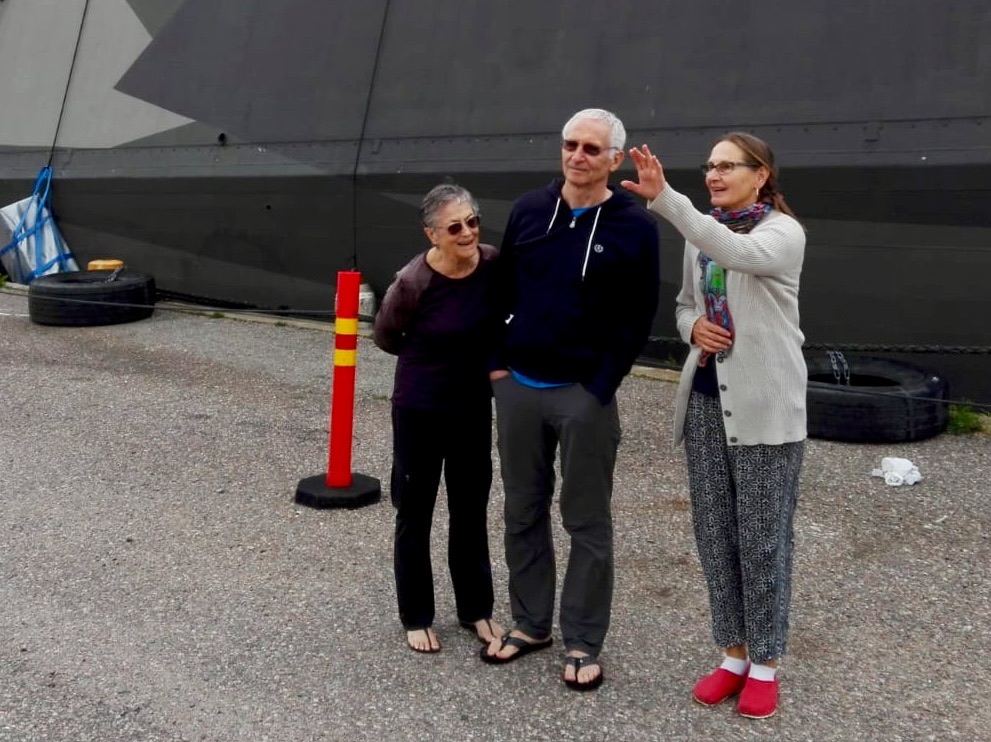
Our visit to the Finnish “Robot” Boat
IMG_0122
Mushroom hunting

When the hour finally arrived to send my mother on her way. The four of us piled into Liisa’s car and headed for Mannerheim’s Café. It had closed for the day.  We had the place to ourselves.

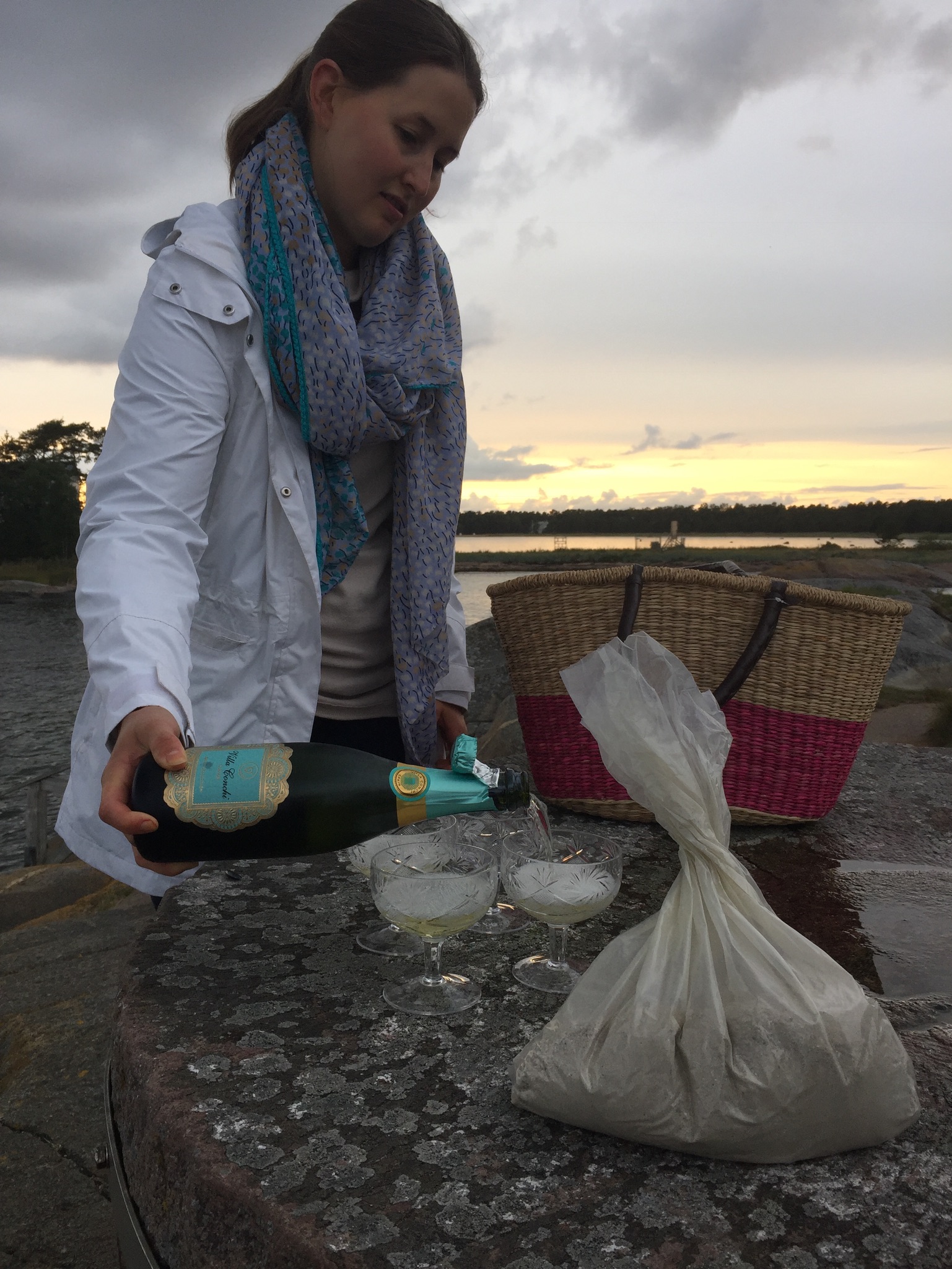
We walked around back to the rocks on the Baltic. On a rock outcropping, a millstone was setup as a table. This was the place. On cue, the sun dropped down below the clouds. All was still, save for the waves gently lapping.

Saila and Liisa had brought the champagne and glasses. I brought Mom’s ashes. 

IMG_0117
Saila poured the Champagne

Time to say goodbye. 

Almost.  

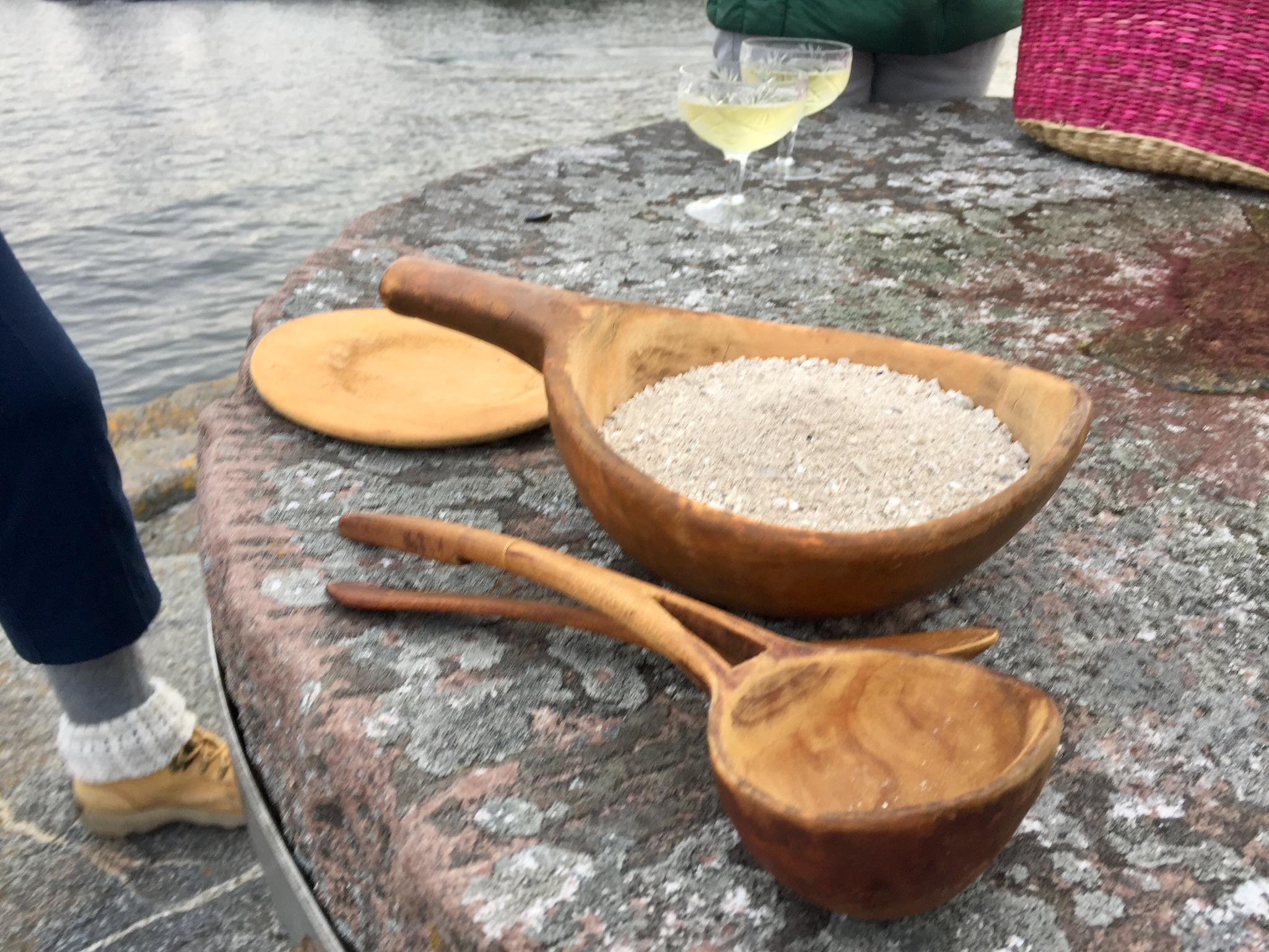
We needed a cup or spoon or something to scoop ashes. In an ah-ha moment Liisa remembered the wooden, antique, hand carved Finnish bowl, spoon, plate and ladle we had brought as house warming gifts.

They had come down in my family through my Mom. It had seemed fitting they return to Finland. 

Twenty minutes later Liisa was back. The wooden implements were perfectly practical and appropriate. 

IMG_0116

We toasted my Mom. I seem to remember saying something along the lines of: she did it her way. And that she was a bit of a free- spirit. Both creative and stubborn. Not an easy path.

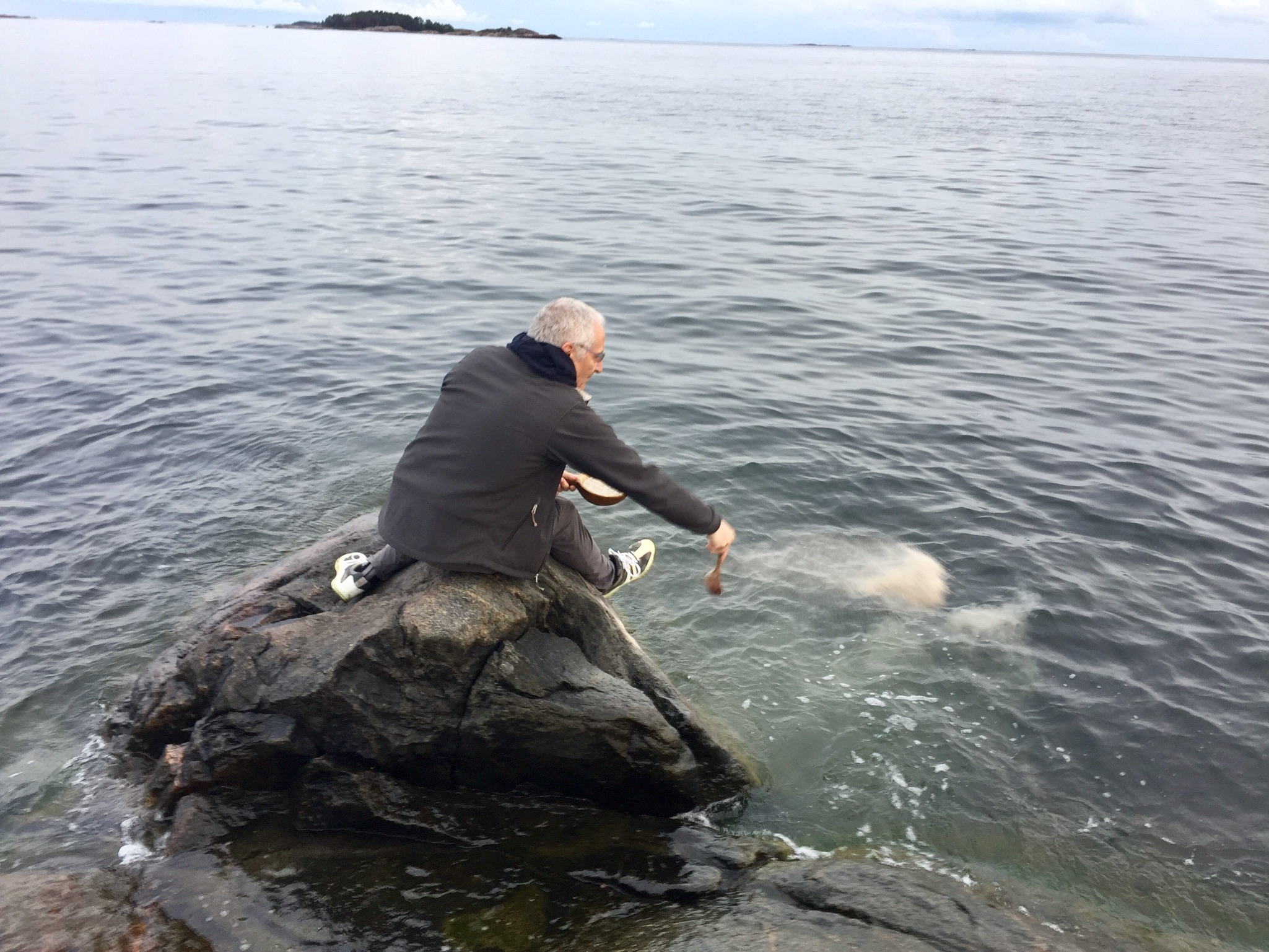
Each of us took turns tossing her ashes into the sea, as we said our final goodbyes.

IMG_0118
We said our final goodbyes

I think my Mom would have been most pleased. She never explained her reasoning behind her request to have her ashes thrown into the Baltic here, and I never asked why. But, I think I know.

Many angles. Clever woman. 

Her ashes were to be returned to the homeland of her spirit. Hanko was both a gesture respect to her father, and Liisa’s family. And, our coming to Finland, would be a bonding between favorites in both family lines.

She was very attached to both Liisa and Saila. I suspect that she hoped that both would be here to send her off. Which is how it happened.

Well done Mom. 

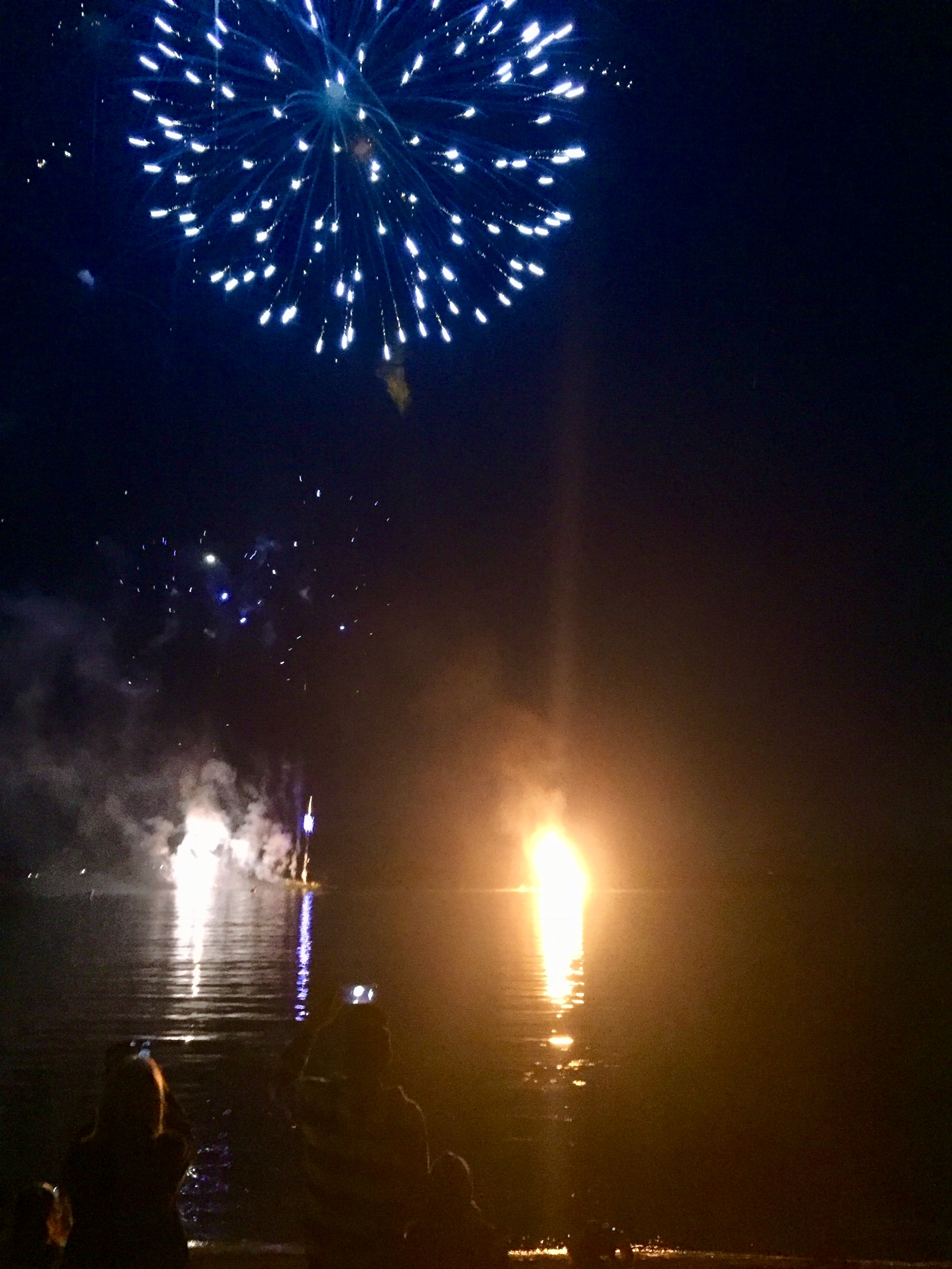
Our next stop was a beach for the bonfires and fireworks of the end of summer celebration. The bonfires were pagan tradition. The fireworks, a 21st century Hanko icing-on-the-cake. 

We had been in Hanko for the festival in 2005, on another beach. A far more vivid and raw experience. The bonfire that night had been big as a house. The guy next to me, had handed me a bottle of a horrible, awful, stiff, licorice drink. I had looked up the coast and could see huge bonfires on islands disappearing up into the archipelago. 

This iteration felt a bit too refined. Candles were placed along the water’s edge every 10 feet or so. I’m not sure if there actually was new age background music, but there were lighters, swaying and singing-along, so I think there was.

No matter. The magic was still there, swaying lighters and all. Fireworks coupled with the poignancy of Winter’s knock above the 59th parallel. 

Suspect Mom would have approved.

IMG_0120

Day 14; August 27 Hanko to Inkoo

Our mission accomplished, we still had another 2 days and 89 miles up the coast to Helsinki. The first stretch would be a retracing of our ride down the peninsula to Hanko. 

Not all that exciting.

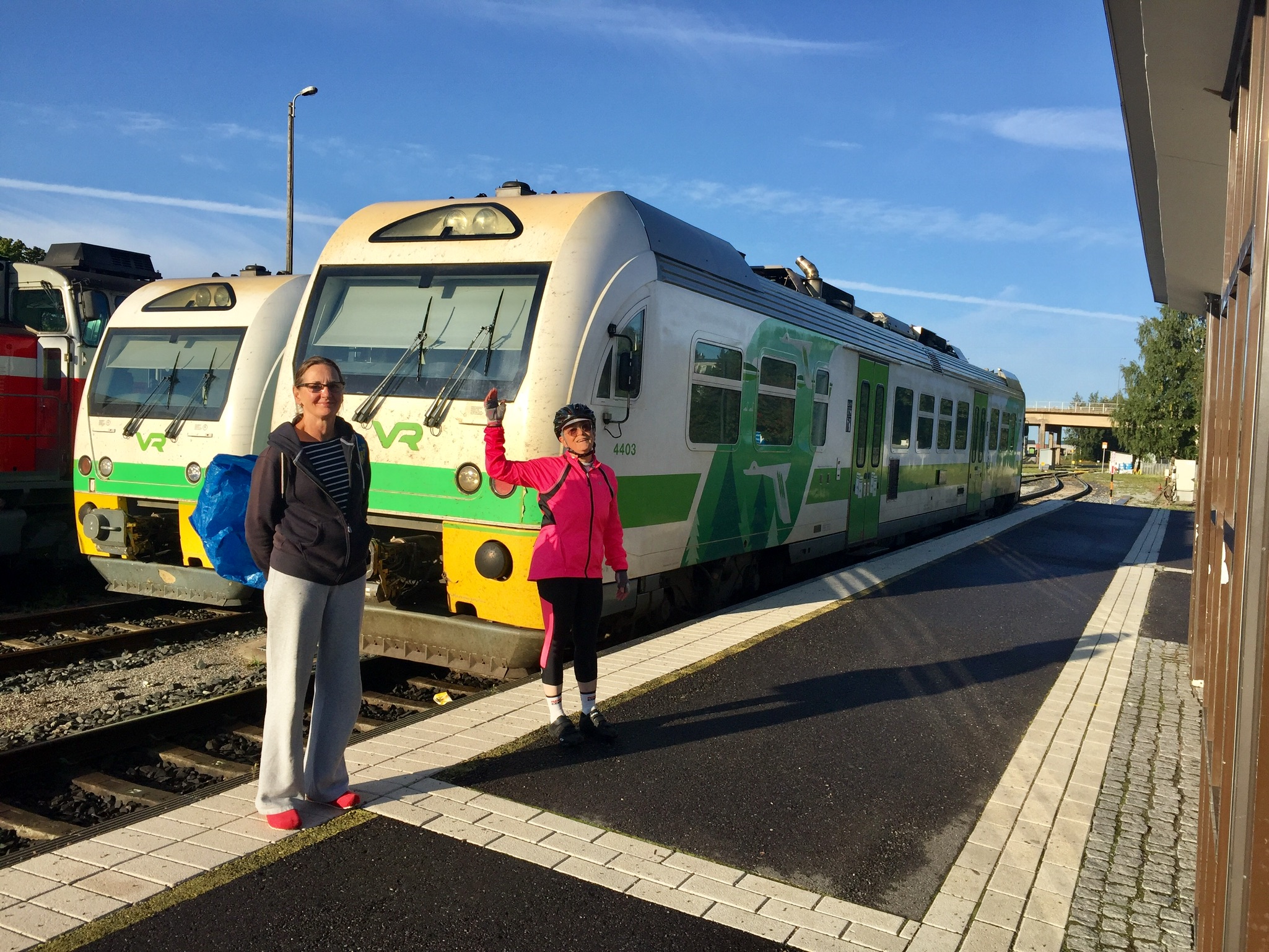
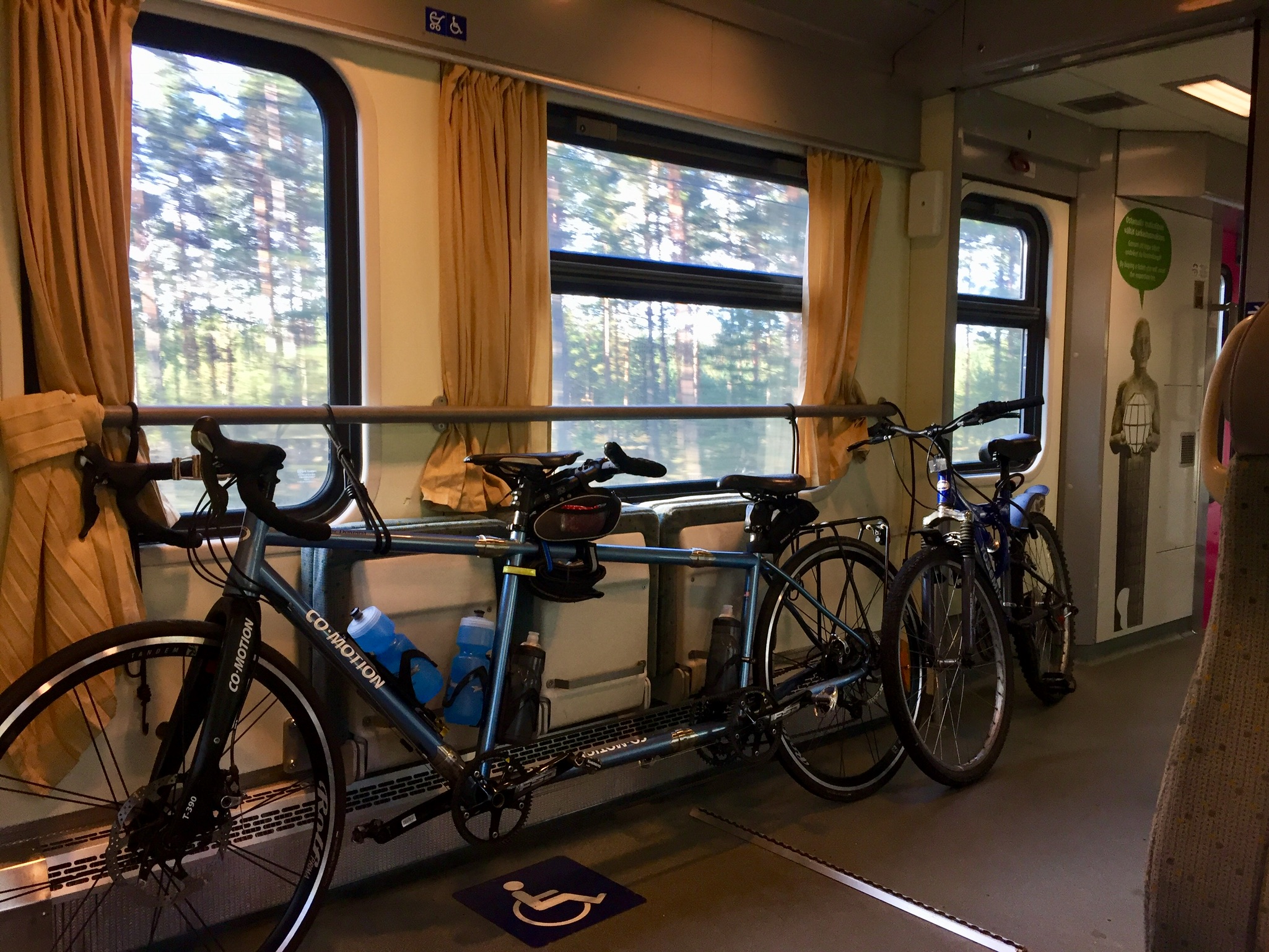
Liisa suggested that we take the local train up to Raseborg, knocking a big chunk of mileage off the day. Not much downside as long as our tandem would fit on the train. A short field trip confirmed it would.

We rode our tandem to the station. Liisa drove over to see us off.

IMG_0124

We had purchased our tickets the night before online – 2 pensioners & 1 bicycle. It’s kind of an honor system with a big stick. Every now and then someone inspects for tickets. If you don’t have one you pay not only for the ticket, but also a very stiff inspection fee.

IMG_0125

Our bike strapped in next to us, we settled into our seats. It was the Monday morning commute. The young woman opposite us was putting on her face. Sharon had the window seat. In a stretch through the woods, she saw a young moose – watching our train roll by.

It wasn’t long before we were in Raseborg. Far larger commuter crowds were ready to board. Once off the train we found a quiet spot to put ourselves together and come up with a plan. We were far off our computer-based route and would have to find our way on our own.

10 miles later we were back on our coastal route. We had passed the test.

IMG_0126

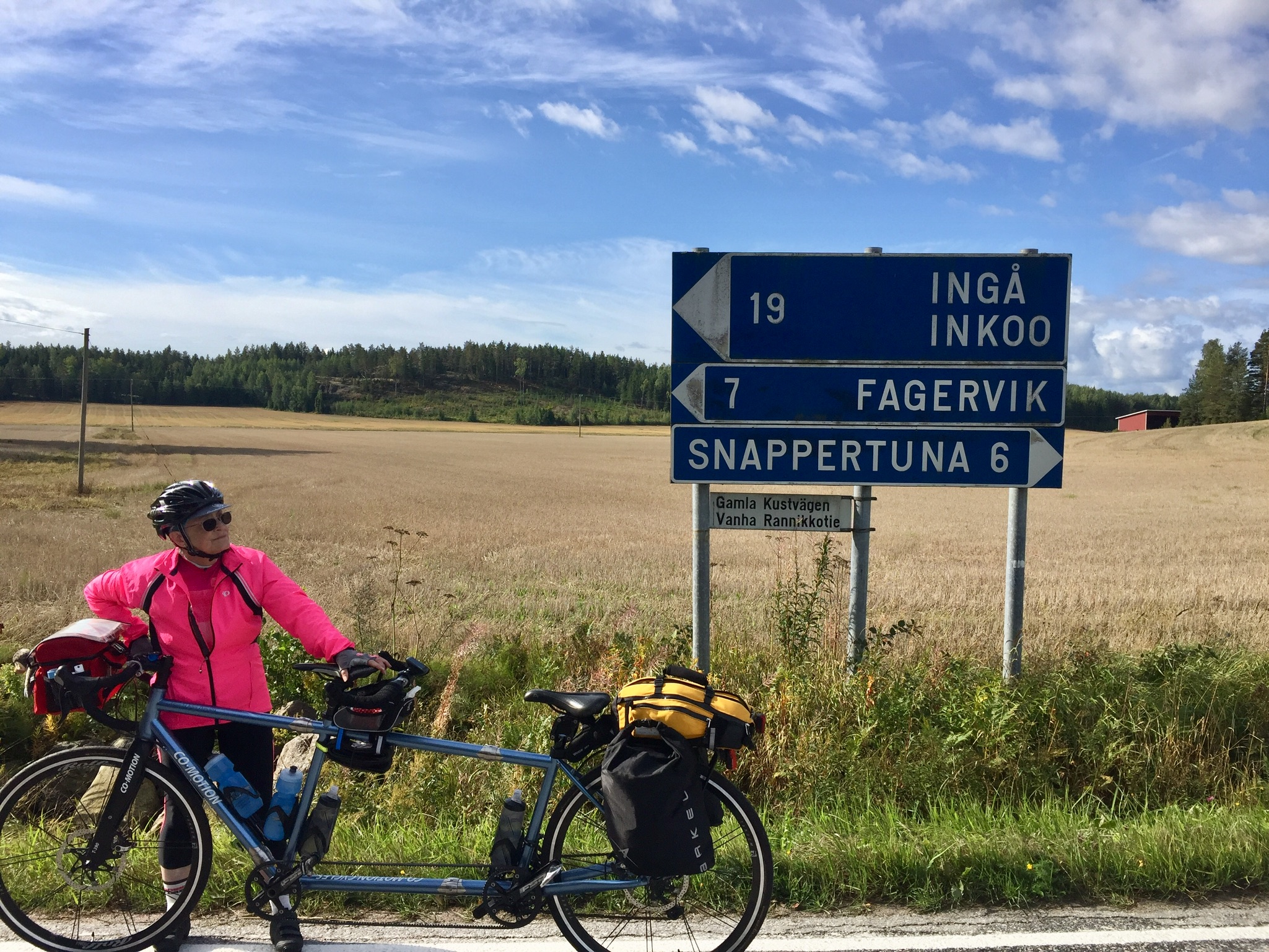
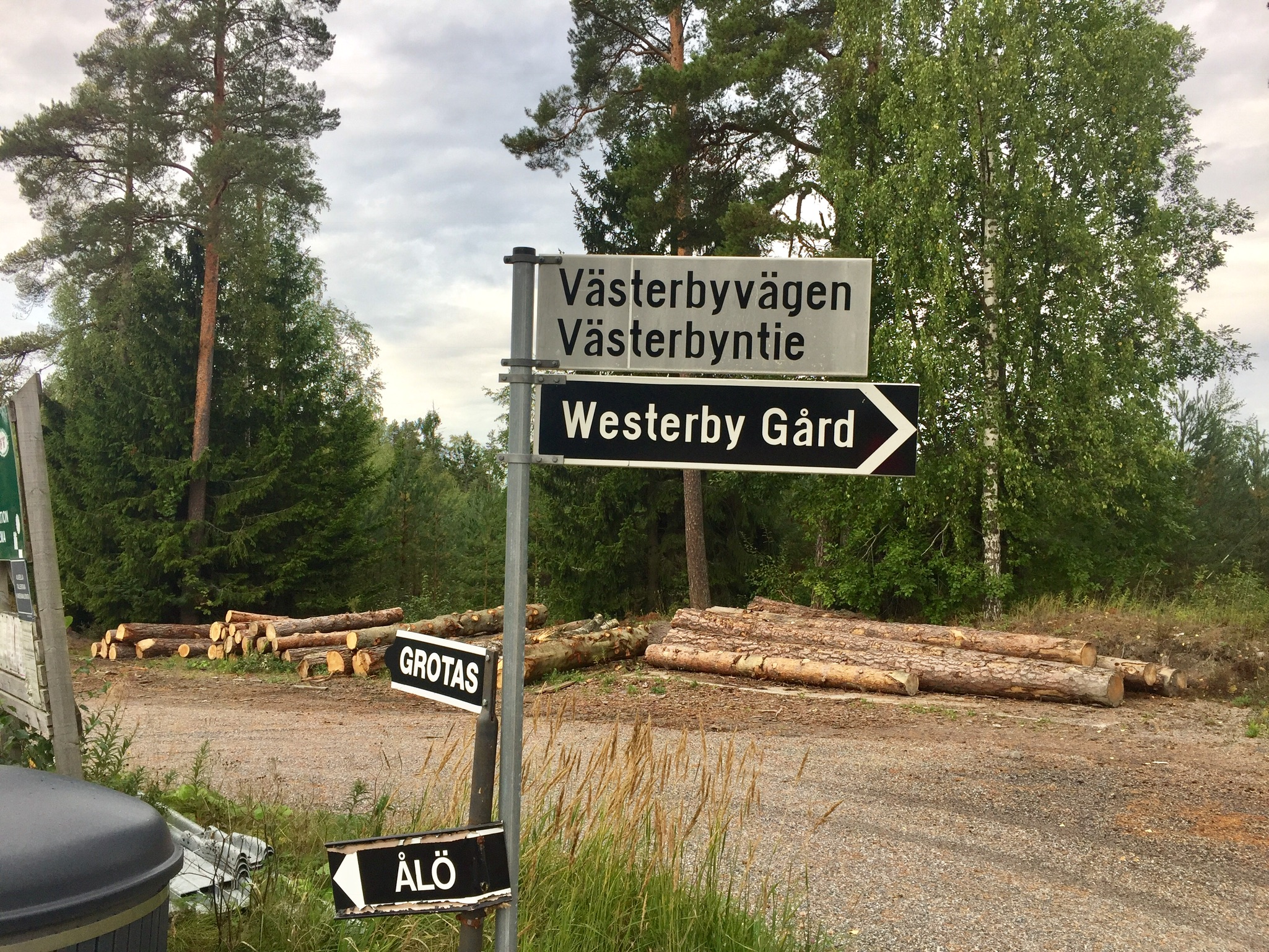
While we were standing by this sign, we got a good news email from Gunilla at Westerby Gard, our inn for the night. They would be opening their kitchen that night for a group which had just booked. Were we interested in dinner as well?

Yes!

The next stretch was the oldest road in Finland once linking Sweden and Russia. It’s also the likely route my grandfather took in 1902 when he traveled from Helsinki to Hanko and then on to the USA.

IMG_0127

Sharon still talks about about the wonderful, clean, fresh, cutting smell on this stretch. I suspect is was the ozone after the rains. Or perhaps it was just the earth at the end of summer in these parts of rural Finland. 

IMG_0128
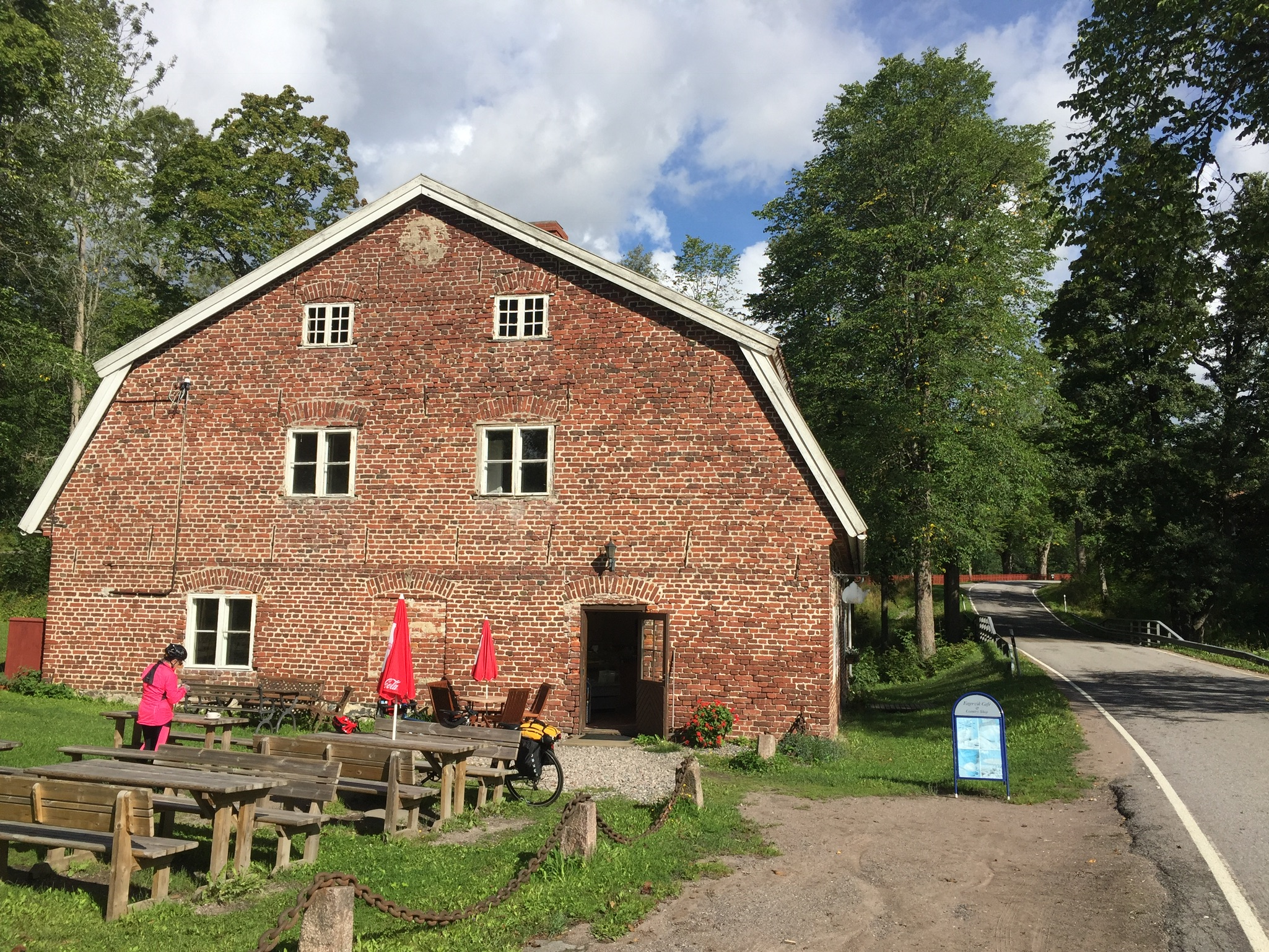
Cheesecake and Coffee on the Museum Road

We stopped for cheesecake and coffee on a special section designated as a “Museum Road”. It was great riding- no traffic, scenic, rolling and winding.

And the sign confirmed that indeed we were at ground zero for historic roads in Finland – in four languages – Finnish, Swedish, English and German :

“Fagervik museum road follows the route of the medieval Great Coastal Road from Turku to Vyborg. The coastal road ran along the southern coast through the oldest parishes and ports. It is not known when the road was first established, but it is considered to be Finland’s oldest road.

Evidence of the age of the road includes 15th century records of bridges across branches of the mouth of the river Kymijoki. The coastal road was a national highway between Sweden and Russia and also a connecting link between castles of Turku and Vyborg.”

IMG_0129

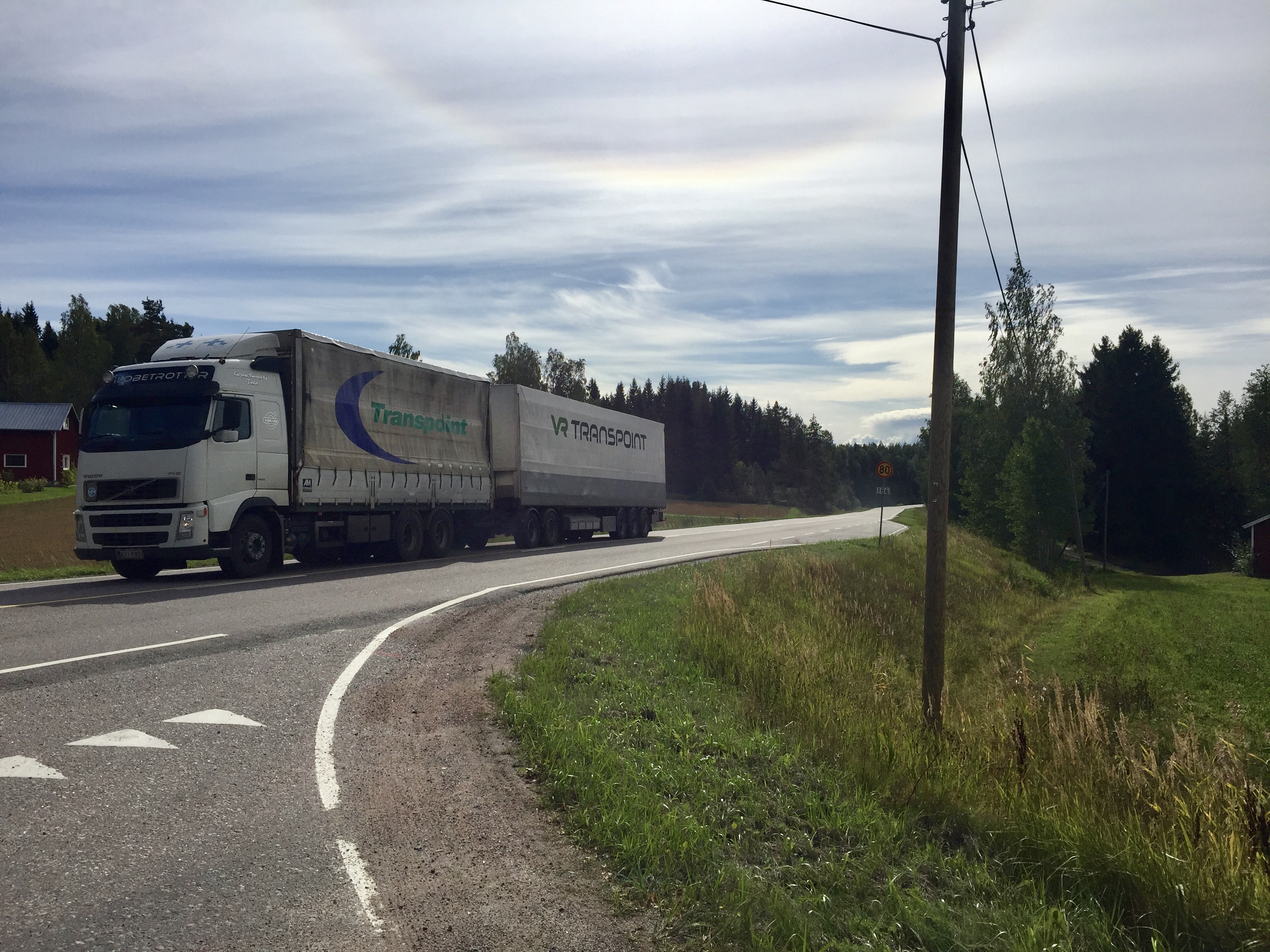
The magic came to an abrupt halt when we hit route 186. We had choices. Gravel roads, or big roads with big trucks? We had sworn off gravel roads, but the semi’s were articulated and the shoulders were pretty much not there. 

fullsizeoutput_415a

Gravel it would be. We crossed route 186 and rode on the as-it-turned-out, not so bad gravel road to Inkoo and Westerby Gard. 

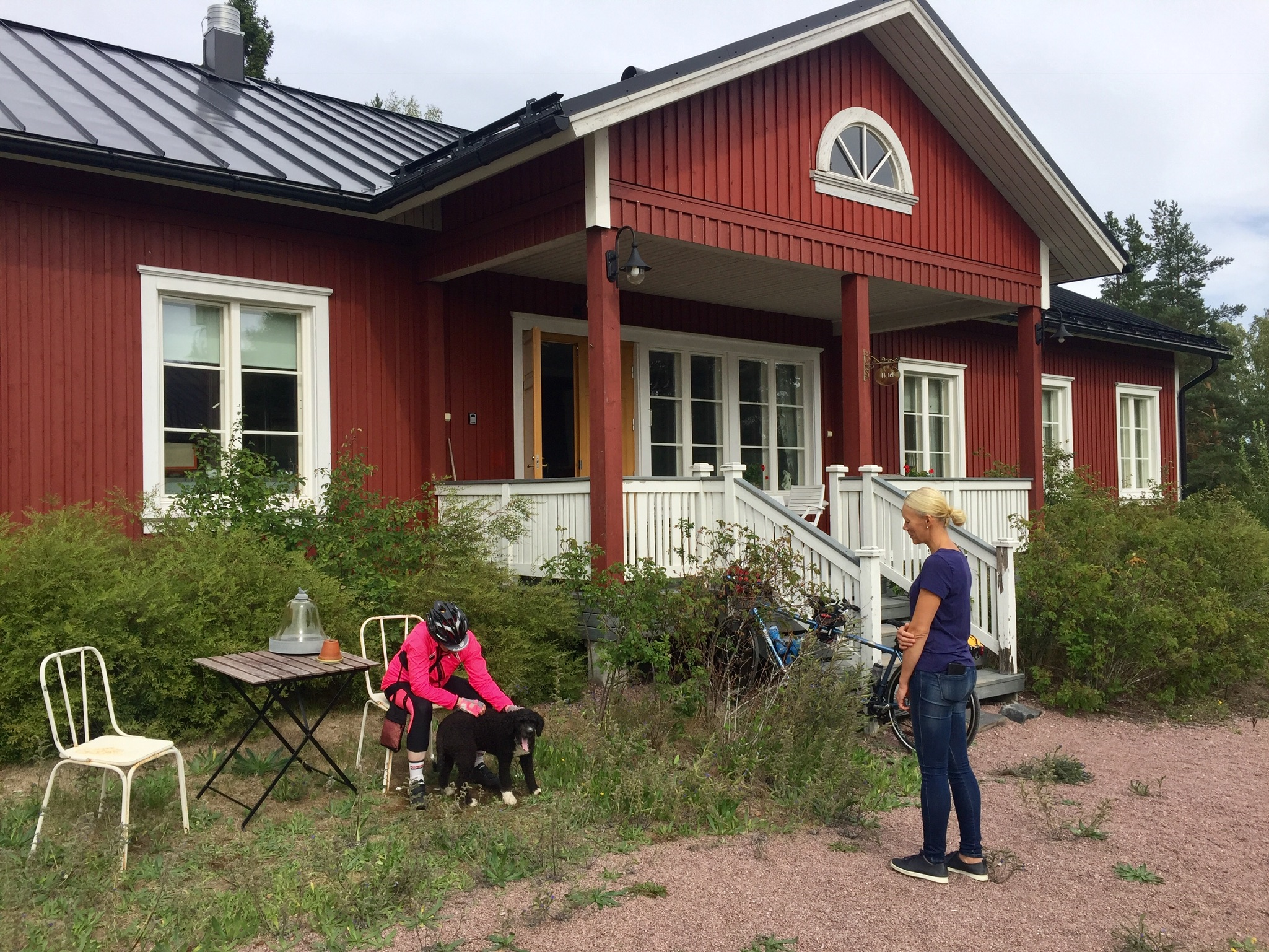
I was expecting Westerby Gård to be interesting and charming. It didn’t disappoint.

Set on a 17th-century farm in the Inkoo archipelago, Westerby Gård was a relaxed, clapboard hotel in the middle of nowhere. But only a bit over an hour or so, by car, from Helsinki, it catered to sophisticated folks looking for a break from the rat race.

Sharon made friends with Gunilla’s dog, we unloaded our bags, and then I parked the tandem in the barn.

IMG_0131
Sharon, Gunilla and a new friend

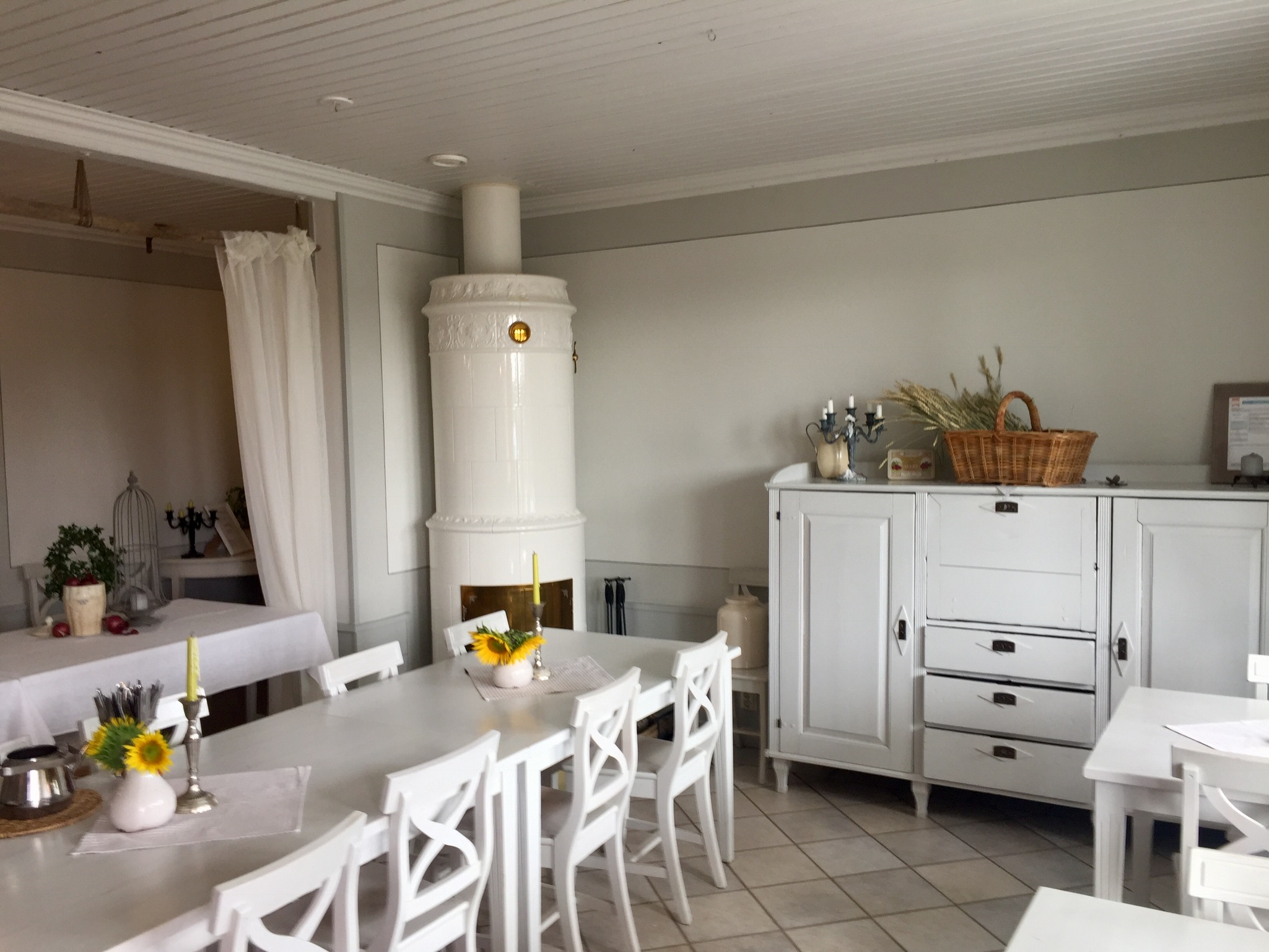
The dining area had a white theme. Check out that white wood stove! You won’t see too many of these. 

IMG_0133

After showering and relaxing it was time for dinner. We asked if we could eat early, before the group. No problem. Thanks Gunilla.

IMG_0134

It was all pretty much perfect for our last night on the road. Good food. Good drink. Nice folks. Great bed. Farmland quiet.

Day 15; August 28 Inkoo to Helsinki

After a great breakfast, we checked out, loaded the bike, and waved goodbye to Gunilla. We thought for the last time, but au contraire, we would see her later up the road.

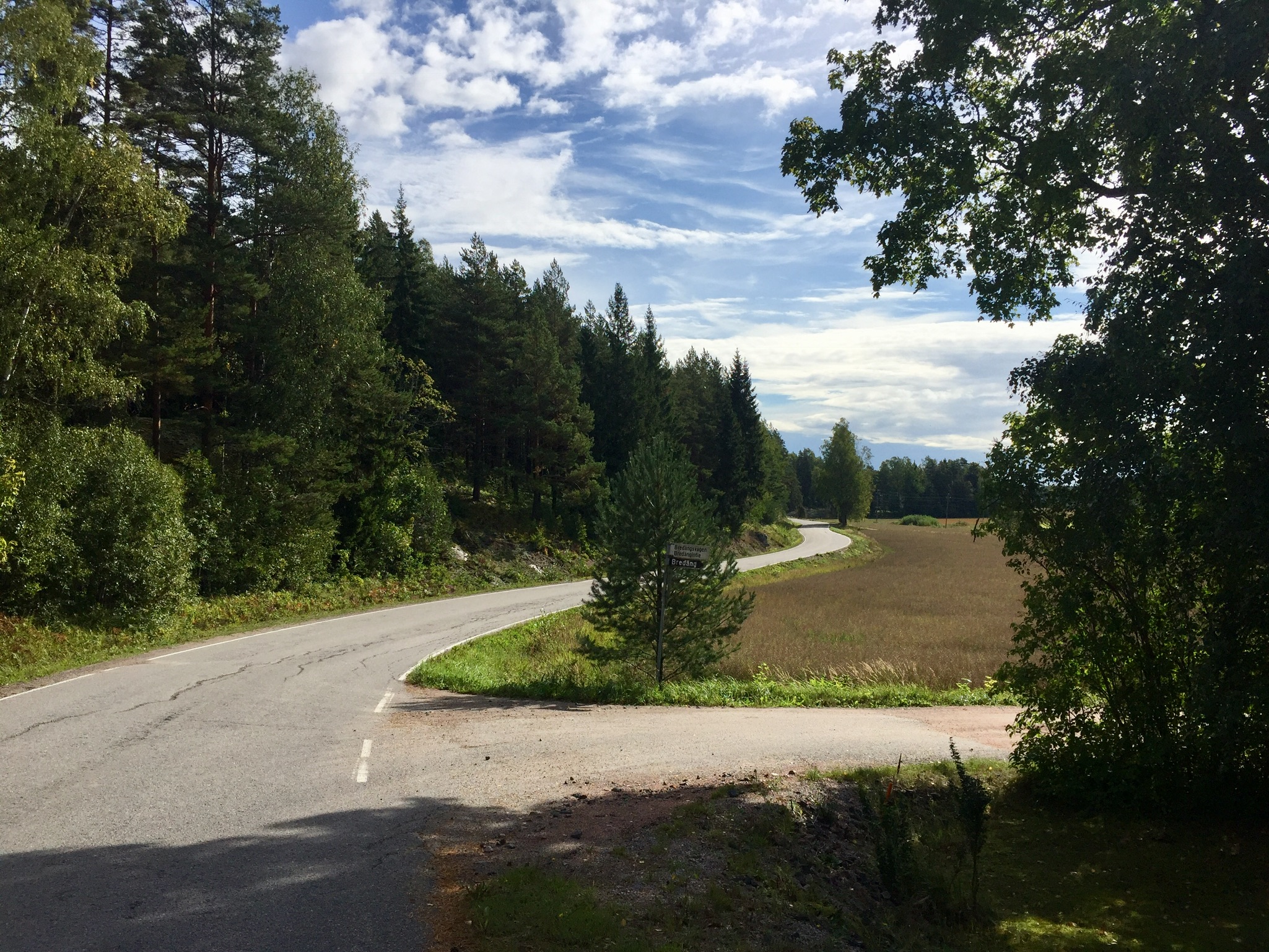
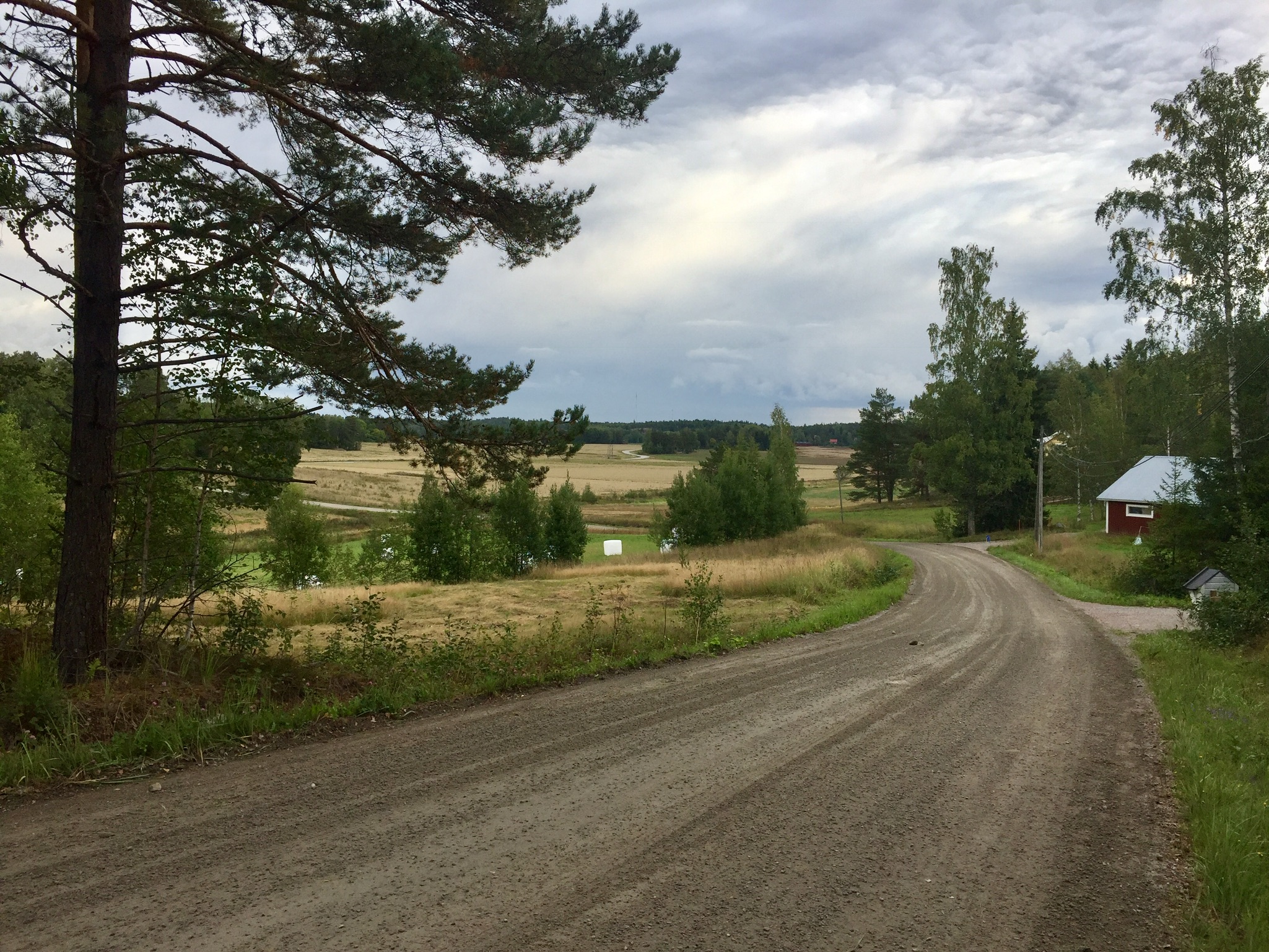
Our last day of riding from Inkoo to Helsinki started with a few miles of gravel road. We stopped for this pic at the fork. 

IMG_0135

It was a nice gravel road.

IMG_0136

Then we were back once again back on the King’s Road which had stretched from Oslo to St Petersburg. Some of the old forgotten granite road markers had survived the centuries. Sharon noticed them first. No surprise there. 

After the third or fourth marker, I finally stopped for a closer look. These were the real deal from days long gone by. 

IMG_0137

Then my phone started ringing. In Finland I never answered my calls. USA robo-calls were forwarded and if I answered, I paid. 

For some reason I answered this one. It was Gunilla.

Did I still have our room key? A quick pat on my back jersey pocket confirmed that I did. 

I had meant to pass it over at check-out, but the conversation was very entertaining and I hadn’t.

This was a very valuable key. Ironically, Sharon and I had joked about the sign in our room, that if the key was lost, there would be a 200 Euro charge. 

It looked like the joke would be on us. 

Gunilla said, “No problem. I’ll come get it. Where are you?”

Well, we were about an hour out, by bicycle, which was only 20 minutes by car for Gunilla. We explained about where we were. She suggested, we not move, so we didn’t. 

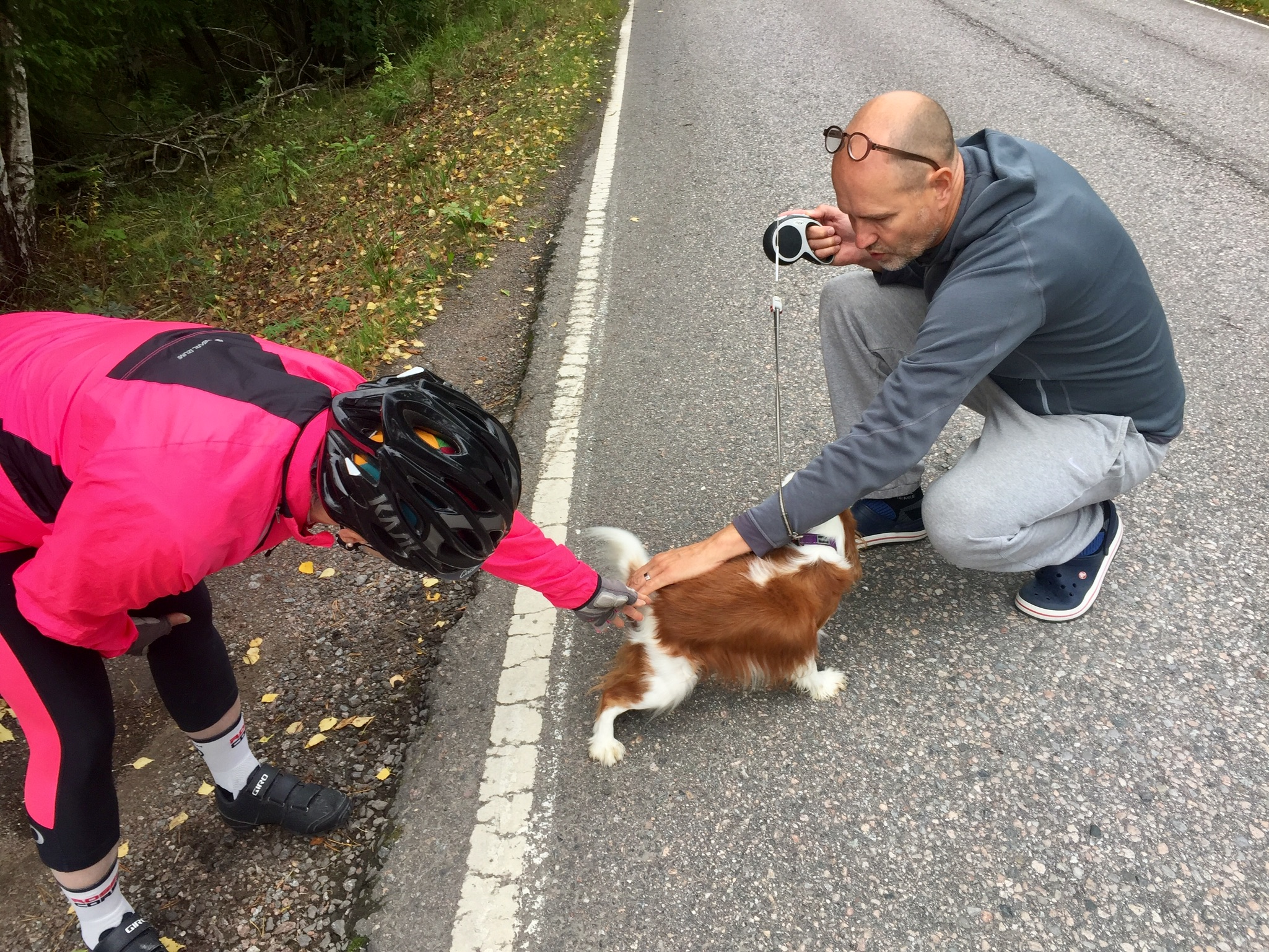
As we were waiting, up strolled a guy with a charming little dog. He was also a bicyclist, and we shared stories as Sharon made another friend.

IMG_0138

Gunilla pulled up and we passed over the 200 Euro key. All’s well that ends well. A tip of the hat to Westerby Gård.

Back on the road, we passed a few more historic granite road markers along the old wooded rolling rural road, and then abruptly the mood shifted as we hit the extended Helsinki suburban sprawl. 

The bad news was that we exchanged the woods for 21st century strip malls and heavy traffic.

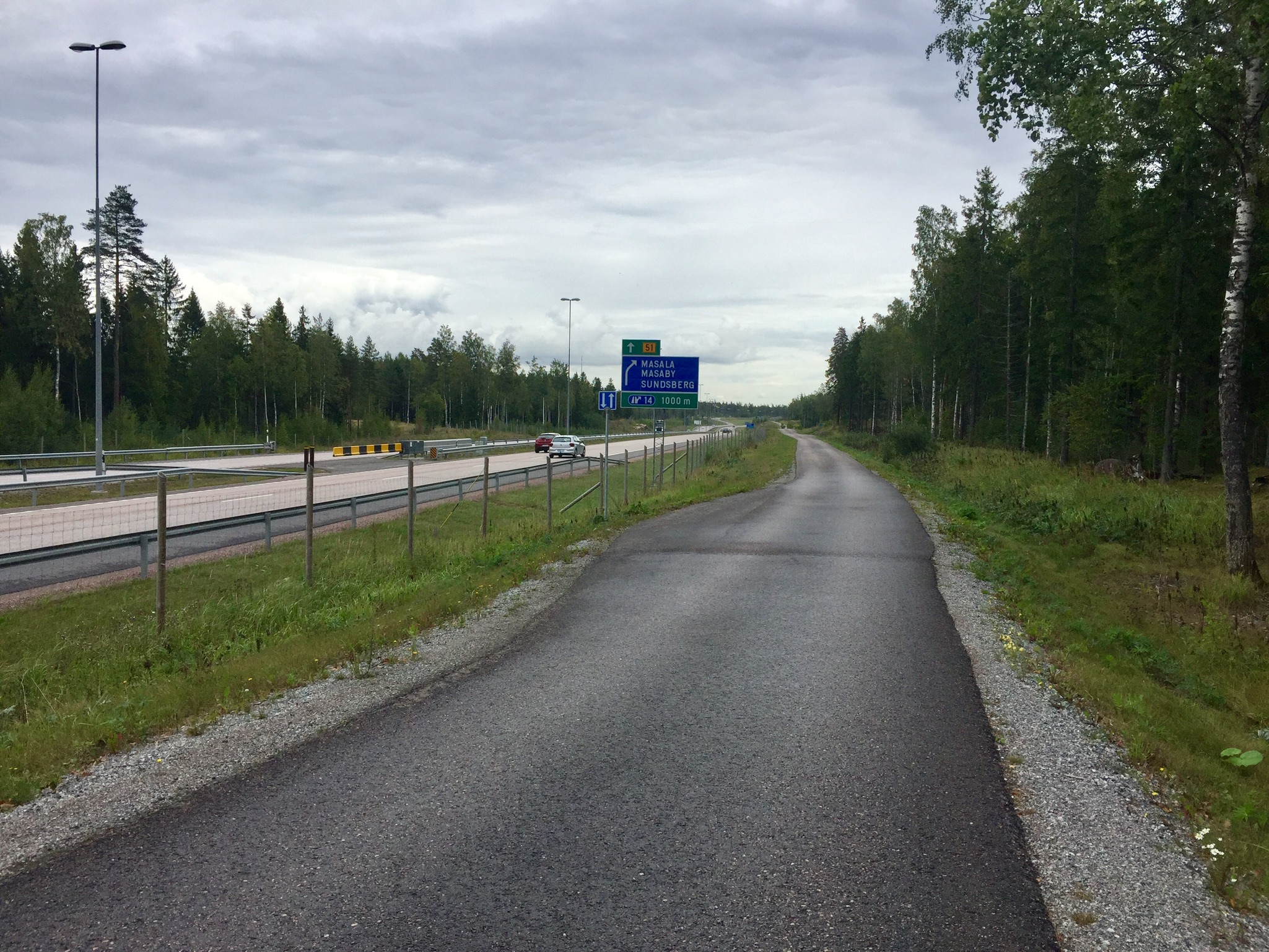
The good news was that we had bicycle paths and were into our home stretch. Soon we were paralleling the freeway to Helsinki. 

IMG_0140

Some paths crossed bridges. I didn’t take any pictures of the crazy twisting bike paths in obscure neighborhoods. Bike computer humor.

IMG_0141

By early afternoon we were approaching Helsinki. We had been worried about rain all day. Roads had been wet from recent showers, but we were lucky. Only a few scattered drops.

IMG_0142

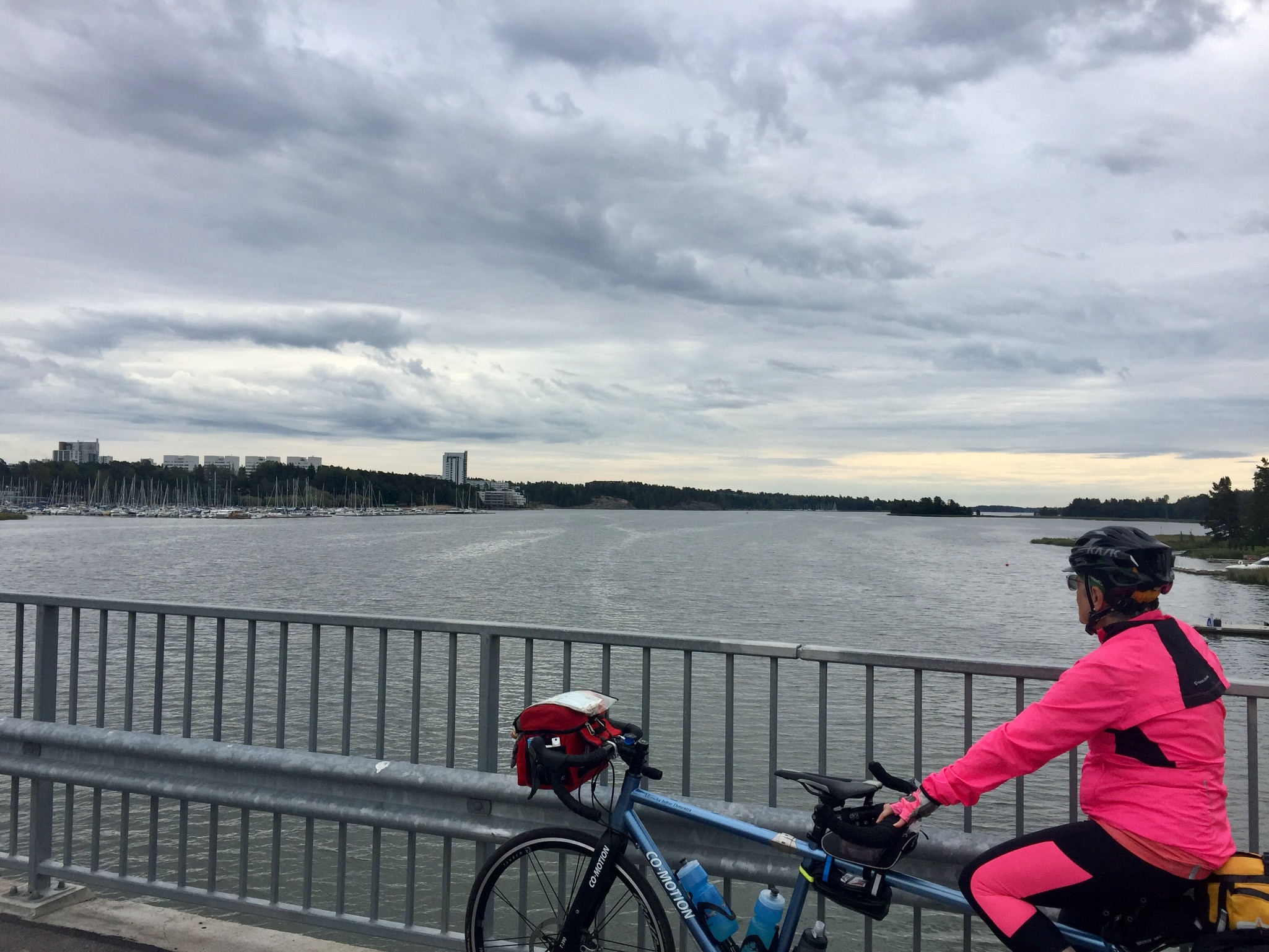
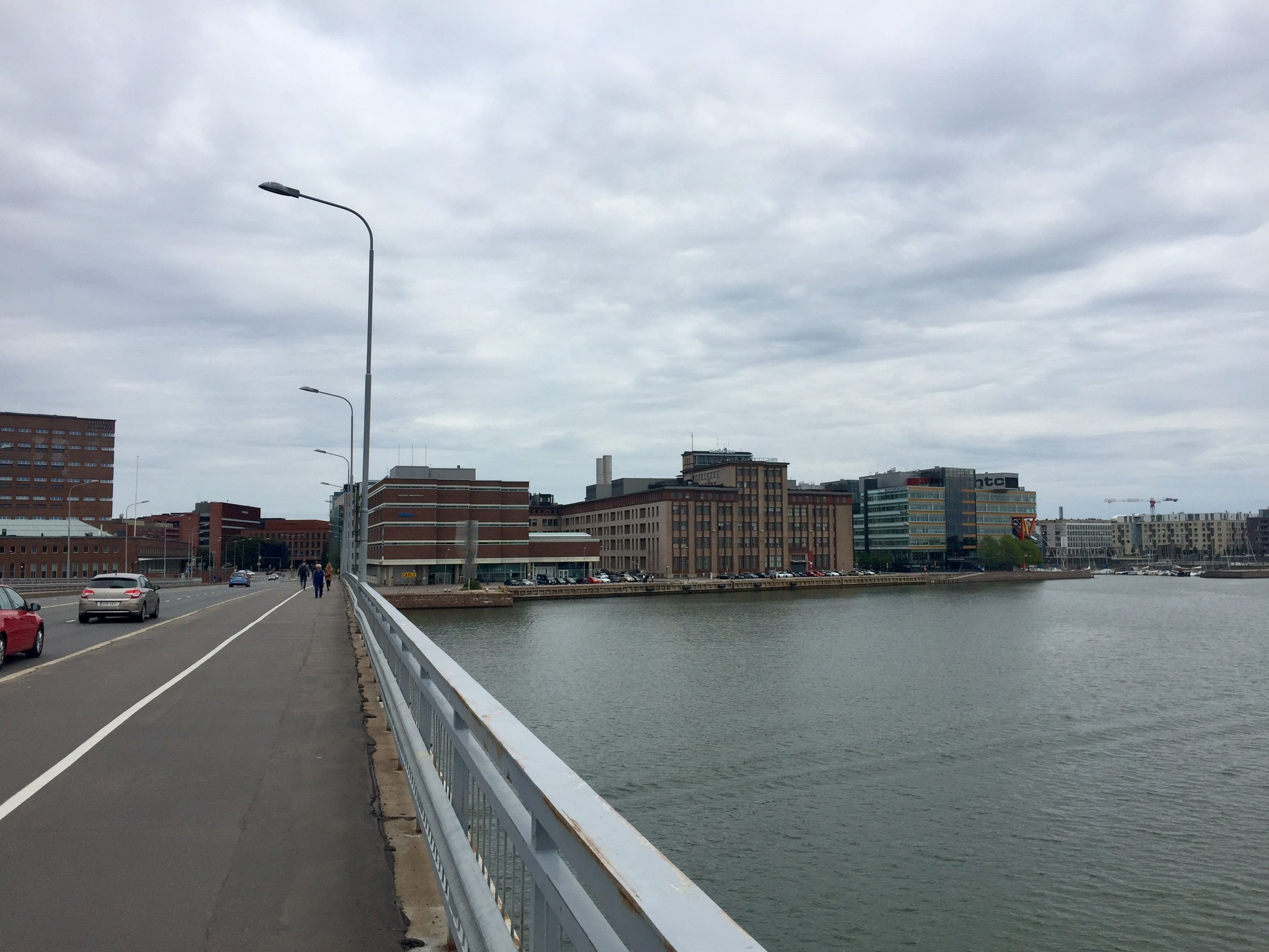
After one last bridge we arrived in Helsinki. We stopped shortly thereafter at this public sculpture. It was really big and kind-of wedged onto plaza alongside big traffic.

IMG_0143

This 50 foot high, black-painted, aluminum sculpture is named “Rumba.” The official interpretation is that: 

“Rumba’s lively figure has inspired a host of interpretations. Some have seen it as the Nike, the winged god of victory from Greek mythology while others have taken it as a depiction of the dynamics of movement, referring only to itself as is typical of the 1990s modernist sculpture. The title is a reference to music, and in Martti Aiha’s opinion, it also refers to the “Rumba” of the passing traffic.”

The back story is that Alko, the Finnish government-owned alcohol company, donated the sculpture as part of its 60th anniversary. Alko’s headquarters are nearby. 

To me this sculpture epitomizes the Finns evolving relationship with alcohol. Something of a twisted tale. 

Back in 2005 my Mom told me that Finns have a reputation for liking to drink, but our family in Finland didn’t drink at all. Suspiciously, this line was repeated far more often than necessary. 

Once in Finland, Sharon and I exchanged amused and knowing glances, at each meal, when the wine came out, then were the mid-afternoon cocktails and the after dinner apertifs. Might have been some schnapps as well.

Mom loved it. Held her own. Never mentioned family drinking habits again.

IMG_0010.JPG

Photo above is from Hanko 2005. Liisa’s mother Kaija is on the left. Fun, generous woman and a beauty in her day. The boy next to her is Erik, Kaija’s grandson and Hannu’s son. Lisa’s brother Hannu had married German and lives in Majorca.

Which kind-of explains how Erik grew up to be a talented Finno-German musician who raps in Spanish. 

Erik

We wove our way into Helsinki, on the city’s bike paths. Left of the tree- bike path. Right of the tree – pedestrians.

IMG_0144

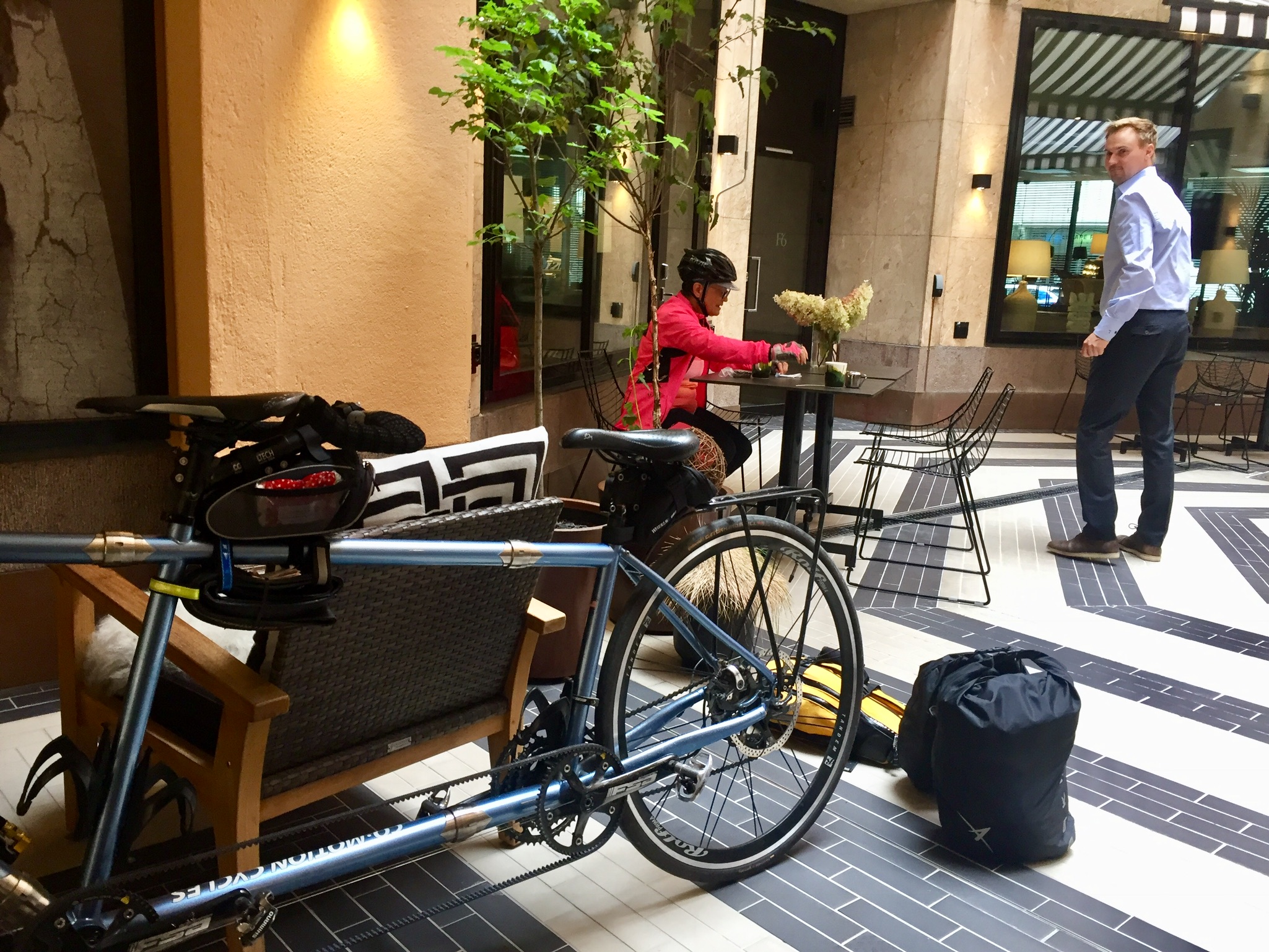
We pulled up to Hotel F6 in the early afternoon. Our friend Riku at the front desk, was happy to see us. He knew our story and plan and like many along the way, I suspect wasn’t sure we’d make it.

IMG_0145

Riku went for coffees and we exhaled.

IMG_0146

We walked the bike into the courtyard and pulled our bags off. Doesn’t look like all that much for two people, 13 days on the road. Then again, less is better – doubly so on a tandem. No regrets.

IMG_0147

We took the bike apart and started packing it up. Then it was time for showers and out on the town for a great dinner. 

IMG_0148

Day 16; August 29 Back to Boston

We finished packing in the morning and had a relatively smooth return to Boston.

Liisa picked us up for the drive to the Helsinki airport, but we had time to spare so we headed to her Helsinki apartment. We chatted, met her cats, and enjoyed the view.

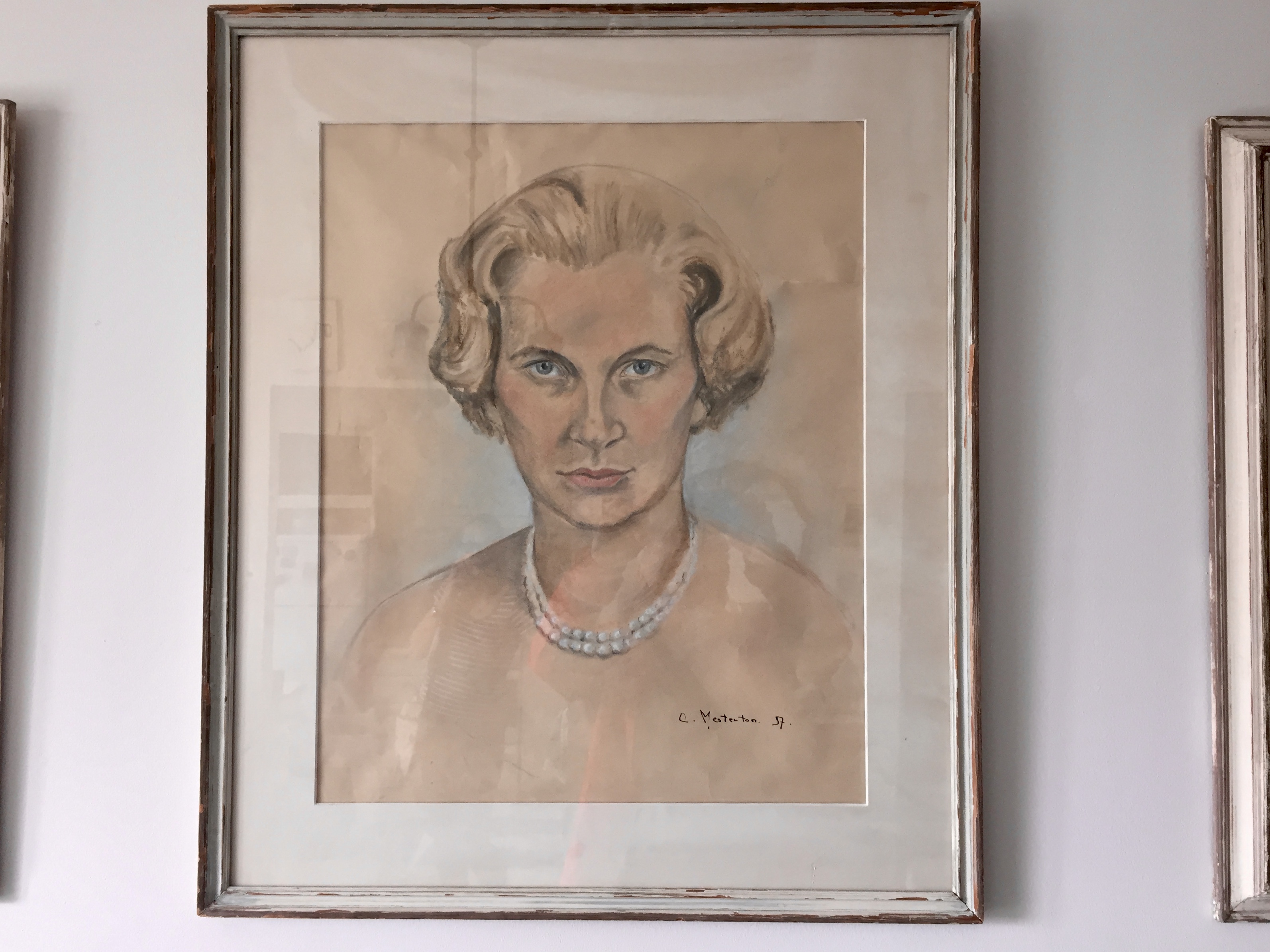
She had a portrait on the wall.

Liisa explained that she had inherited it early. No one in the family seemed to like it. 

So Liisa asked us, “So who do you think it is?”

fullsizeoutput_415d
Kaija Portrait

Of course, it was her Mom, Kaija.  The portrait is dated 1957.  So she probably would have been in her early 30s. 

I love this portrait, the severity and intensity. Although I never saw this side of Kaija. I knew it in my mother. Most knew her as polite, friendly, artistic, and fun. But underneath all that, there burned this same Finnish severity and intensity.

On the way to the airport, Liisa told us a Finnish saying, which explains nothing and everything. A bit of Finnish Zen if you will. 

Oma maa mansikka; muu maa mustikka.

My country strawberry; other country is blueberry. 

I remember thinking at the time, how it made perfect sense. 

Now, I’m not so sure.

The very Finnish state of mind was fading.

2017 Italy on a Tandem

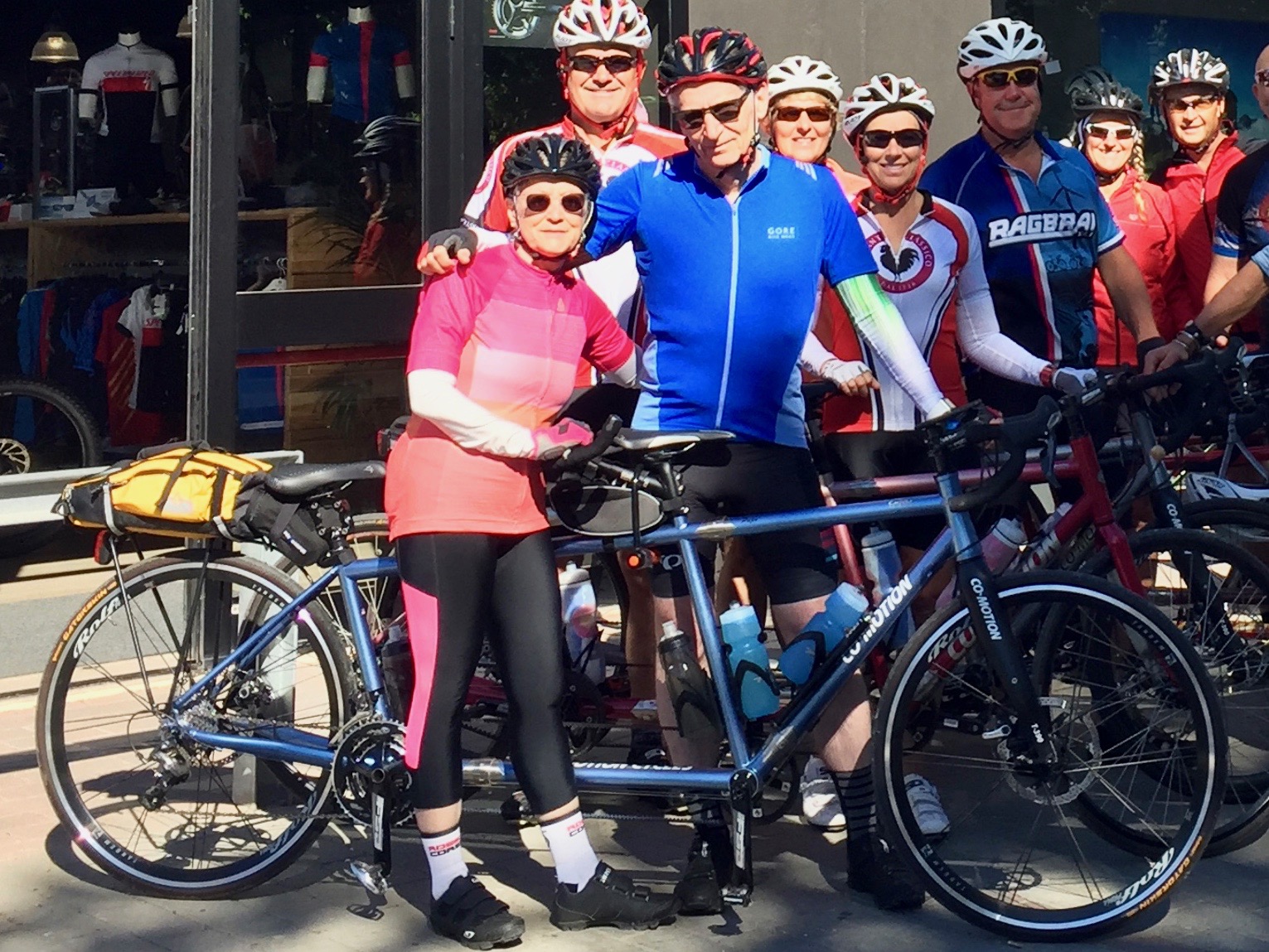
Italy pose & bike

The plan had been to borrow a tandem. See if we liked it. Try a short local tour. Buy our own tandem. Build up the miles and eventually celebrate with a tandem tour in Italy. A perfectly reasonable 3 year plan.

On the other hand, we could just order a tandem.

grandpa pig.jpg

Put down a deposit on a European tour. Borrow a friend’s tandem. Have it rebuilt. Wait for the ice to melt. Learn to ride between snow storms.

Take delivery of our new tandem. Ride the 5 Boros of New York City with 32,000 other bicyclists. And celebrate our survival with a ride across Italy 3 weeks later.

In character, Grandpa Pig, “Snort”, went with option 2.

And survived. Barely.

Sharon graciously agreed to try to learn Italian for the trip. I had no doubt 4 months was plenty of time. Sharon rolled her eyes.

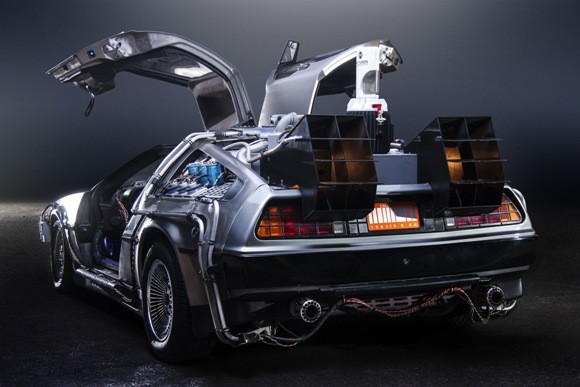
The Burley Rumba – Back to the Future

d964999.jpg

We ordered our Co-Motion Carrera Tandem towards the end of January. Delivery date Mid April.

Friends had a Burley Rumba Tandem in their basement- untouched for a decade+. Dreams unfulfilled. They most graciously offered to loan it to us.

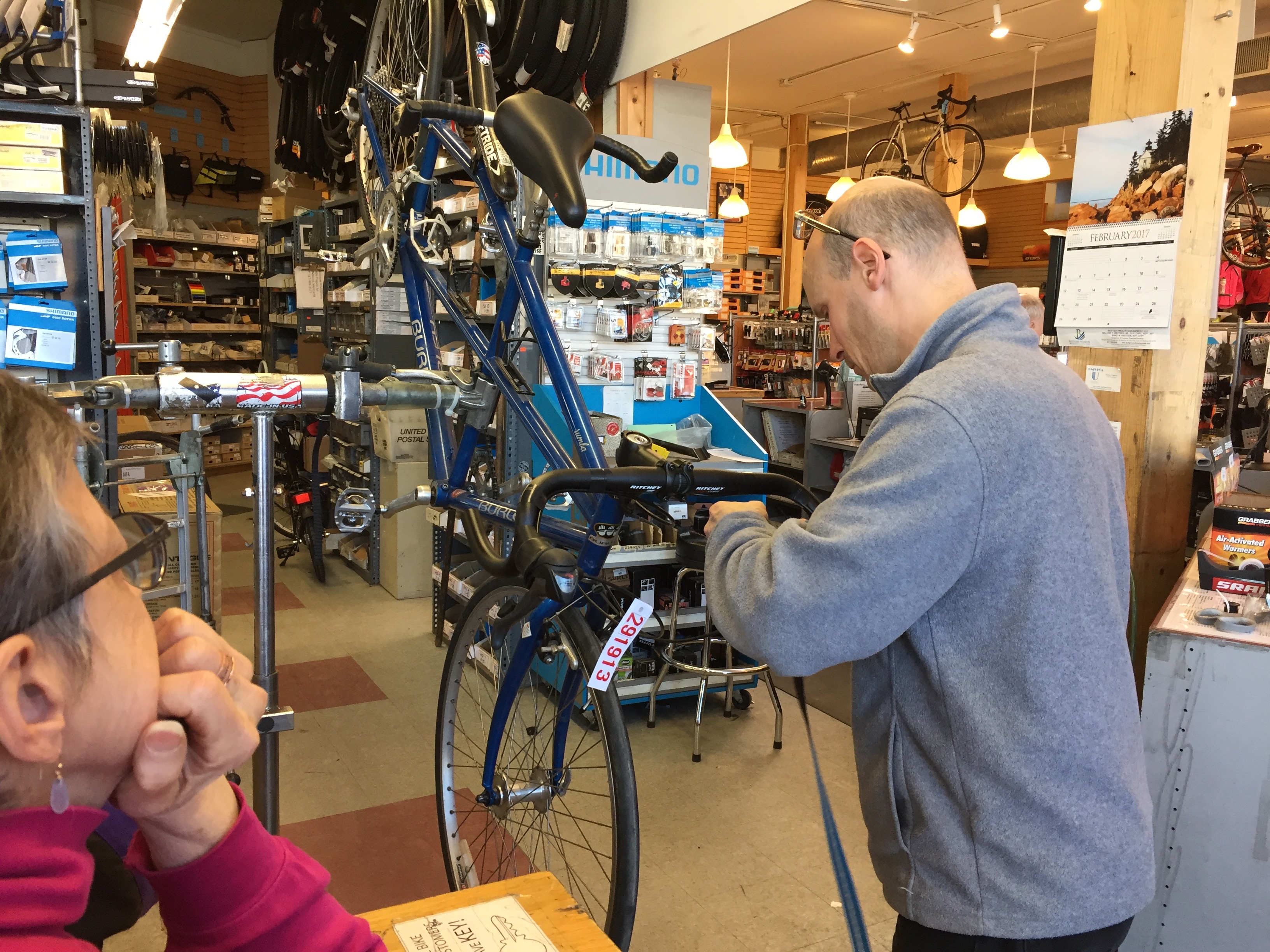
The Burley needed some work.  One makeover later, we had a new old bike:

Burley

“New shifters, old derailleurs (the compatibility chart is 3 pages long), running 8-speed shifting with only 7 gears (it’s a 7-speed rear wheel). Road brake levers with Canti brakes…  I came in ready to rebuild a tandem and see just how many things don’t work together – standard practice.

This is where it gets weird, everything worked.  Perhaps a little too well,

I was expecting to have to replace the 7-speed chain with an 8-speed, but I didn’t.  All of the cables were showing rust, so I changed all of them. The shifting and the brakes worked like a new bike right out of the box.”

Back to the Future.

Riding a Tandem – Never ever dump the Stoker

Riding a tandem is different than riding a single bike. A tandem is longer and heavier and balance isn’t the same.

Then there is the division of responsibilities, the challenge of synchronicity and the not-so-minor issue of trust.

There is an old saying about couples and tandems:

Wherever your relationship is headed, a tandem will get you there quicker!

Ed gave us the 15 minute beginners crash course in a parking lot across from the shop. Conclusion: Sharon was a natural stoker (2nd seat) – no fear, no wobble.

Yours truly, the captain, had a steeper learning curve ahead. Steering, braking, shifting and balance on stops needed work.

Ed summed my responsibilities up: Never, ever, dump the stoker!

Mid-March, we rolled the Burley a quarter mile across a snowfield to get to our first ride around a local pond.

Our Co-Motion Carrera – You must like to ride fast

Our Carrera tandem arrived right on schedule in April. A most beautiful bike. Complete with custom lettering: Advencha before Dementia and our grandparent names by the seat posts: Amona and Papo.

We had picked metallic blue. A nod to the color of the full metal jacket of the main character in the Japanese SF novel All You Need is Kill.

Carrera Specs:

• 700c wheels with rack and fender mounts

• Reynolds 631 steel tubing

• Dual disc brakes and Shimano Ultegra kit

• Tapered headtube & carbon tandem disc fork

• Rolf Prima tandem disc wheels

• Gates Carbon Drive timing belt

Gary, who put our tandem rack on our old Audi, took one look at the bike and noted:

You must like to go fast!

I didn’t understand then.

I do now.

NYC 5 Boro Bike Tour – If they get in your way, run them over

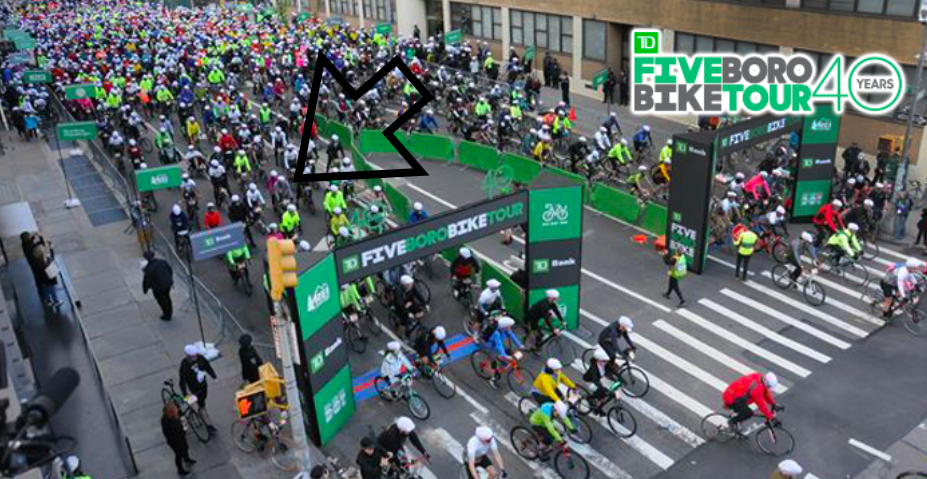
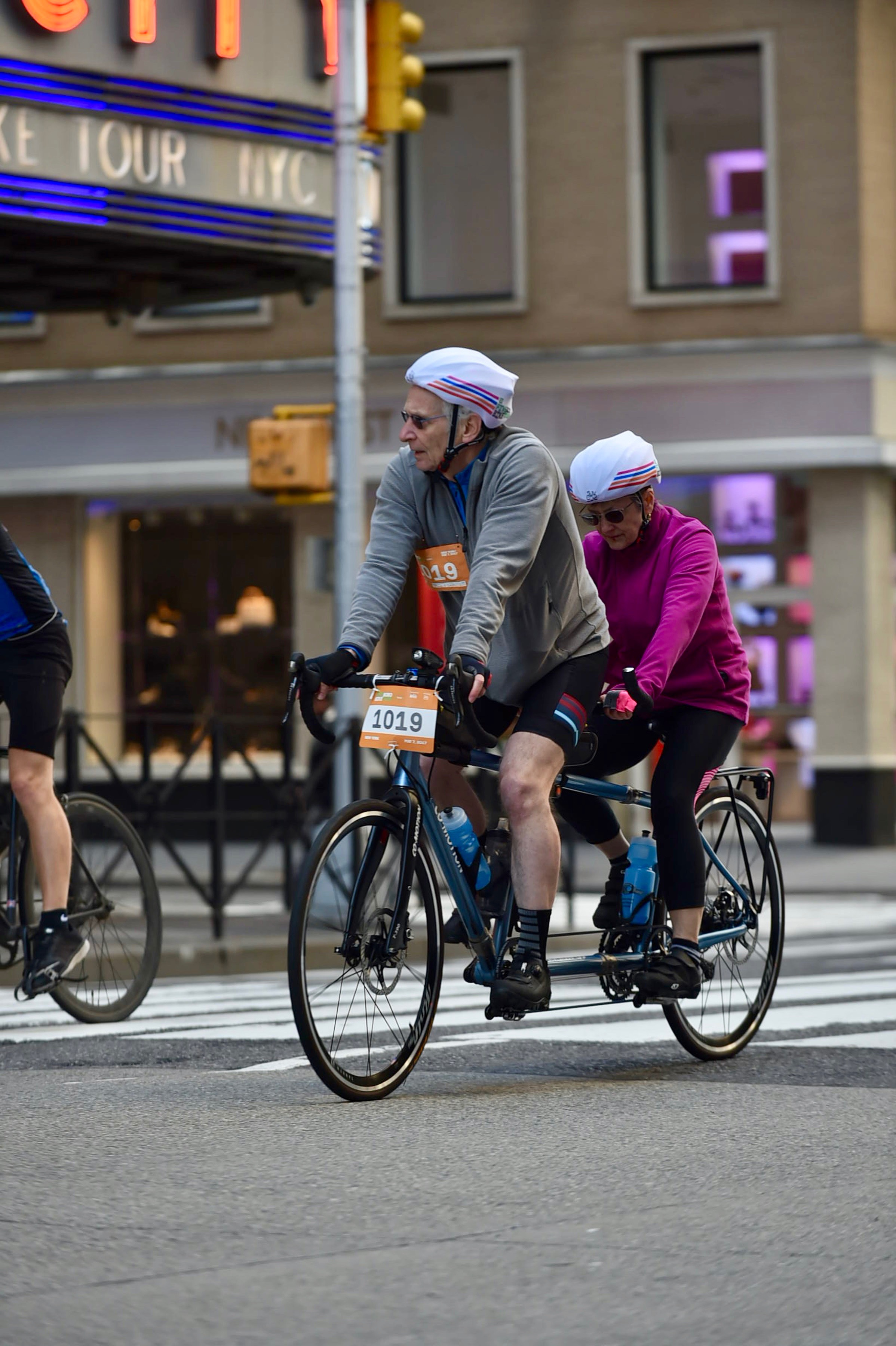
We were going to NYC to visit our son and his family- the same weekend as the 40th 5 Boro Bike Tour. 40 miles through 5 boros, NYC route streets closed to cars. I figured we could handle it.

Ed wasn’t quite so sure. The distance didn’t worry him. The other 32,000 bicyclists did. Especially the congestion at the start. His advice on how to deal with on-street aggression:

If they get in your way, run them over

Here we are in the official start photo. We were upfront because we had VIP tickets, the only ones available when I signed us up.

Screen Shot 2017-07-06 at 4.38.58 PM

As it turned out, we had no problems with other riders or the official tour.

5 boro on bike

The most challenging part was the last few miles back to our hotel in the rain.

The first stretch post-tour was the 4 miles back to the Staten Island Ferry.

No problem there, with the ice-cream and party favors.

Manhattan on a tandem, mid-day, in the rain, was another matter altogether.

We used Google Maps Bicycle with turn-by-turn directions.

Which kind-of worked, except that the traffic noise drowned out the audio and I couldn’t read the screen.

And then the rain hit.

The dodgiest moments were the wet steel plates over excavations, in traffic, on curves.

Back at our hotel we walked dripping across the lobby, swung the tandem vertical, rolled into the tight elevator and breathed a sigh of relief.

One test down. Next up Italy. But first we had to pack our bike.

bike packing

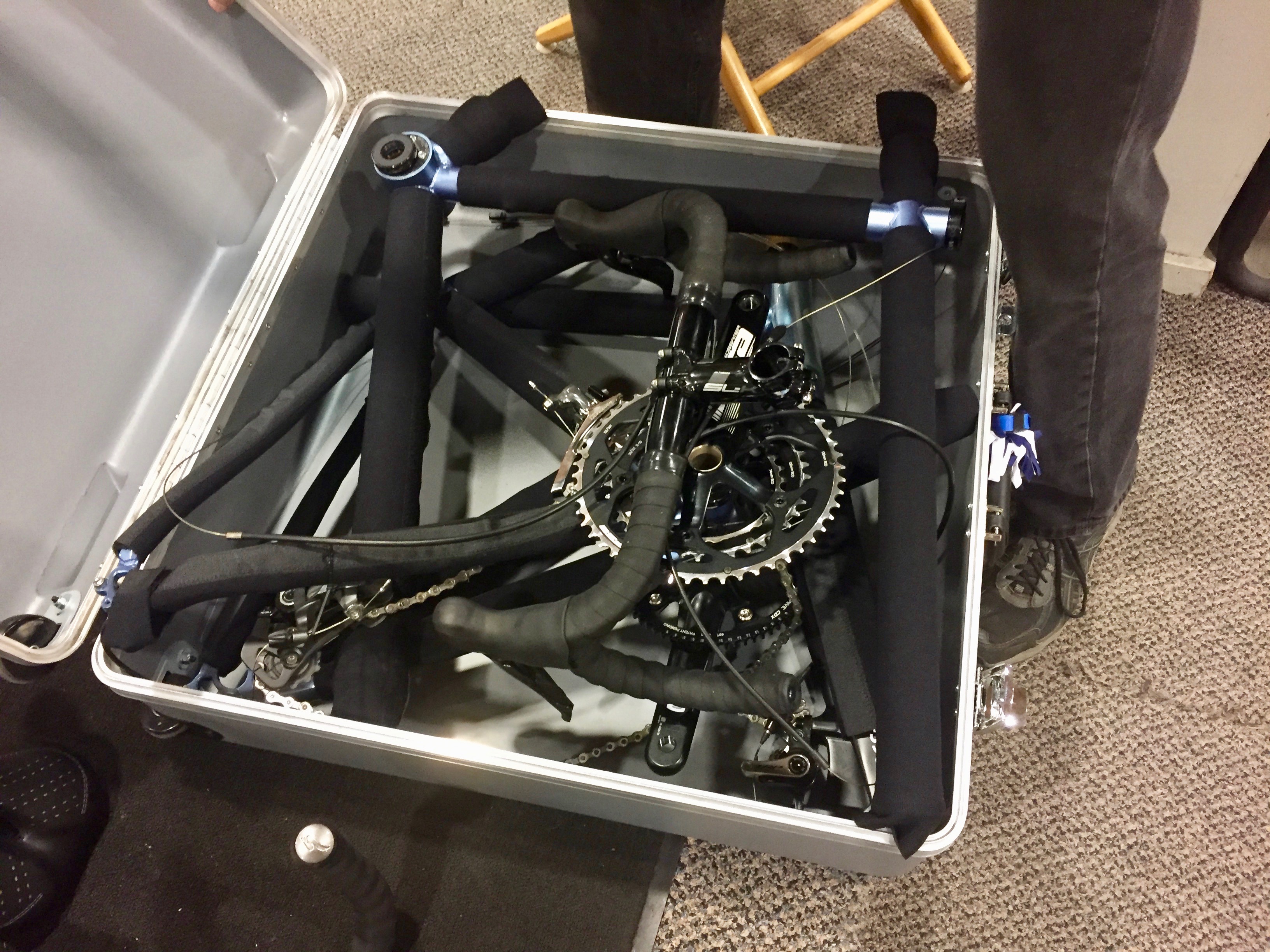
We had ordered our tandem with couplers so it could be taken apart, put into two standard-sized suitcases and checked as regular luggage.

The not-so-minor wrinkle was that the entire bike had to be disassembled.

And then put back together on arrival.

I figured I’d have time to master the process.

Not a chance.

With Ed’s help, the cases were filled and –  by a hair’s breath – latched.

I looked at Sharon. She looked at me. it was understood. We weren’t opening them again until Italy.

Then TSA got ahold of them. Then Air France lost one – for a while.

Italy

We flew from Boston to Florence with a transfer in Paris, where we ran a couple of miles to catch our plane. We would have missed it, but the pilot was late. We were last on- across the tarmac and up a mobile stairway.

We almost landed in Florence the first time. Pulled up 100′ from touchdown. The second try, we just flew around circling hesitantly. The third time we touched down.

The announced explanation was that winds were the problem. The whispered version had the pilot intimidated by Florence’s short runway.

In any case, he did hit those brakes hard.

When the Florence baggage carousel shut down, we were one case, or 1/2 a tandem short.

1/2 a tandem is less than nothing, and Italian bureaucracy only promised to deliver- eventually, so we camped out.

Thankfully the missing case arrived 2 hours later on the next flight from Paris.

By then the rest of the tour group had left in the fancy bus for Spoleto. We followed in the support van with our Italian guide Giovani.

Our tour would take us up through Umbria, across Tuscany, finishing in Liguria on the Italian Riviera. All by tandem.

Italy Map

There were ten other tandem couples on the tour including our tour leaders. An interesting group – early 50s to early 70s. All, except us, seemed tough as nails. Fast too.

20% (1)

We kept up just fine on the flats, but the serious climbs were something else altogether.

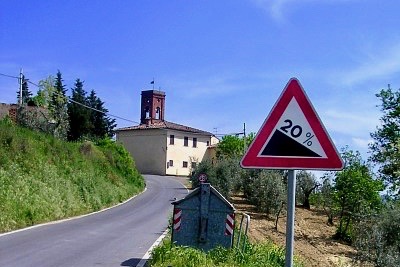
20% grades we walked.

In total we rode over 350 miles and climbed over 20,000 feet.

There were no grade signs posted on the toughest stretch of our most difficult day.

Probably a good thing.

Arrezo to Villa Lecchi was 57 miles with 4530 feet of climbing, most of which came in 4 miles.

There’s a reason they call them “Hill Towns.”

Umbria

We had been up almost 24 hours when we rolled into Spoleto from the Florence Airport. Mr Sun was setting. Sharon needed to lie down. In a fog, I reassembled our bike with critical help from our tour mechanic.

Note to self, do yourself a favor next time and schedule a buffer day on arrival.

Spoleto is in Umbria, the only Italian region having neither a coastline nor a border with other countries. We liked Umbria.

Umbria was the pleasant surprise of the trip. Not as refined as Tuscany. But every bit as interesting and beautiful. Far fewer tourists too, though the roads were a bit rougher.

Small price to pay.

Spoleto

Our first day we did a short-ish loop ride out of Spoleto.

I would guess some of the climb was over a 10% grade.

Just about killed me.

At the bottom of the descent, right before this pic, I just about dumped Sharon when I misjudged my footing.

We’ve all done it, the others kindly said. For the rest of the trip the memory lived on in my left side.

Assisi 2

Our next stop was Assisi. Home town of St. Francis.

Sharon and I took the day off, as most of the others went off for another loop ride.

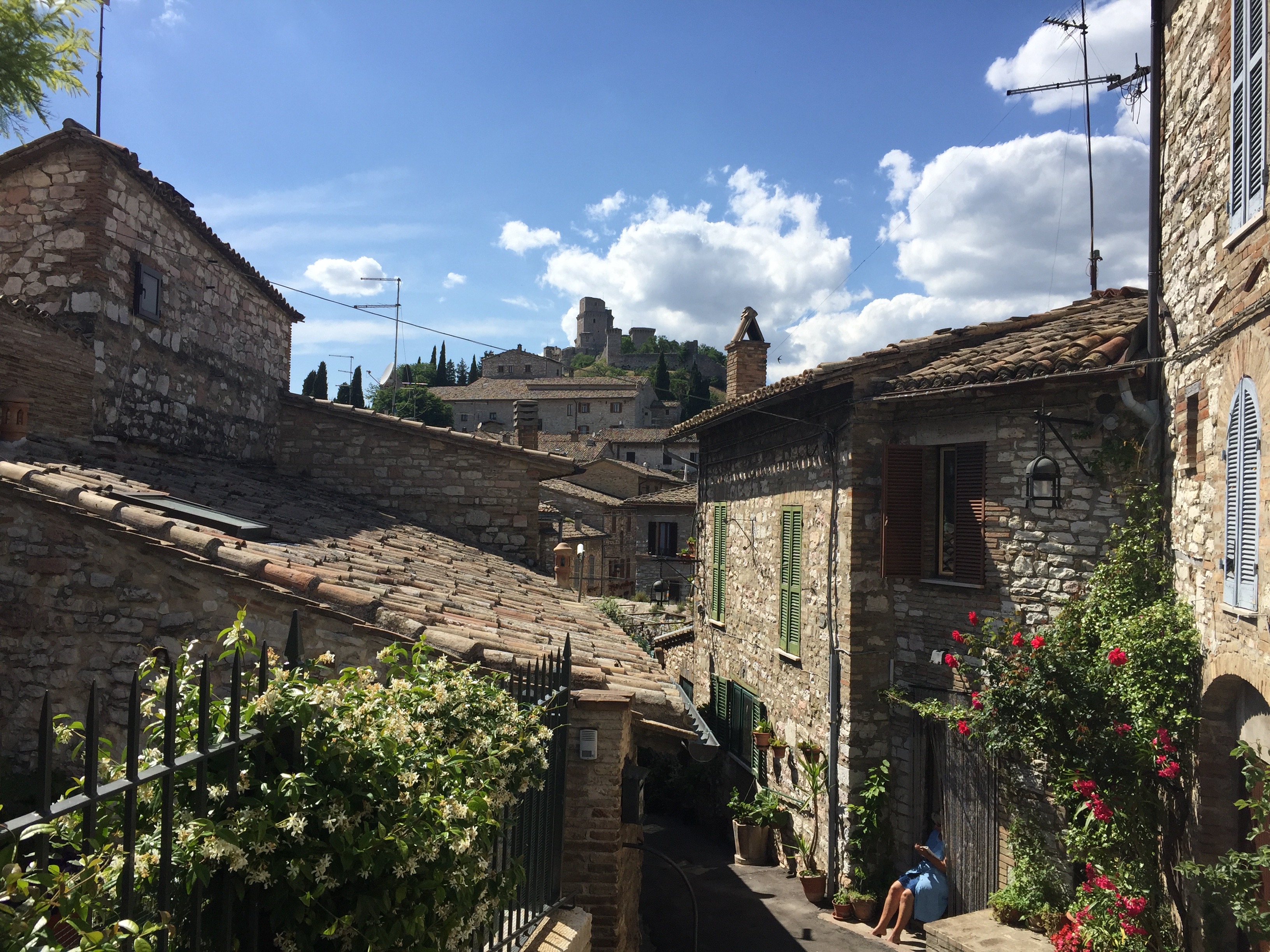
We had a great time wandering the narrow medieval streets.

Lost, we were making our way back up towards one of the towers along the perimeter wall.

Through an iron gate we caught a glimpse of a red Lamborghini parked cockeyed in amongst olive trees. A metaphor or sorts for today’s Italy.

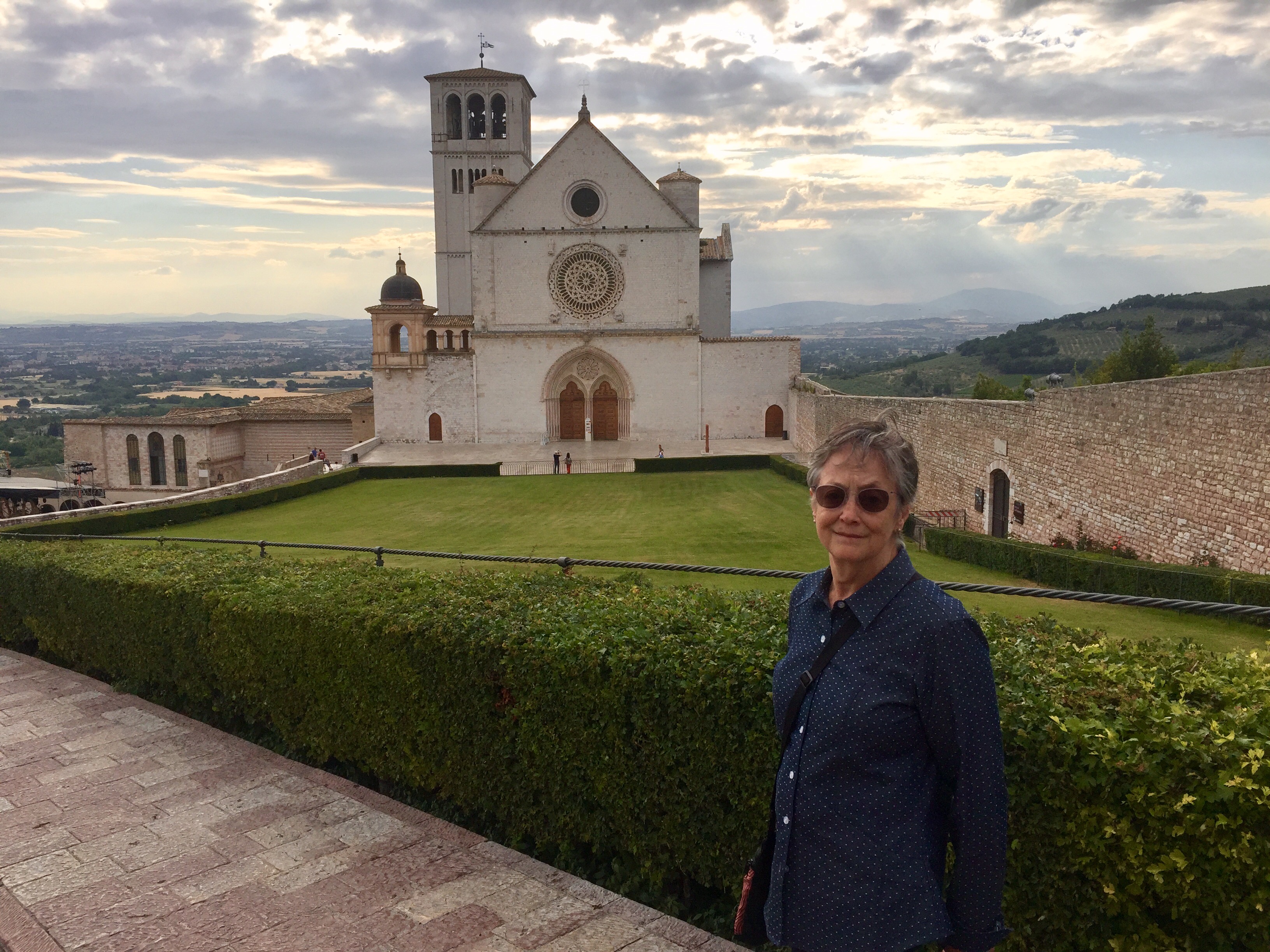
Assisi basilica

A local tour guide took us through the Basilica. Photo to the left.

Sharon loved the guy. He knew his history.

Afterwards Sharon went up and thanked him, somewhat extensively in Italian.

He looked a bit shocked and said,

I didn’t know you spoke Italian. 

Afterwards, Sharon explained to me,

I can’t say much, but what I say I say well. Yup.

Assisi hotel

Our hotel was drop-dead gorgeous. Once a nunnery, it was slated for condos until Roman ruins were discovered underneath.

The Roman ruins have been preserved as part of a spa and the whole place done over in High Italian Modern.

On theme, the female receptionist wore an impossibly tight, short skirt and dangerously high heels. Food was fabulous.

Assisi was the favorite of the trip. Layers of history. Wonderful views. Interesting all around. Would go back in a second. Our room was behind the last two windows at the corner in the photo above. We had our own private interior stair. Great views.

Tuscany

If Umbria was our initiation, Tuscany was the tease.

IMG_2082

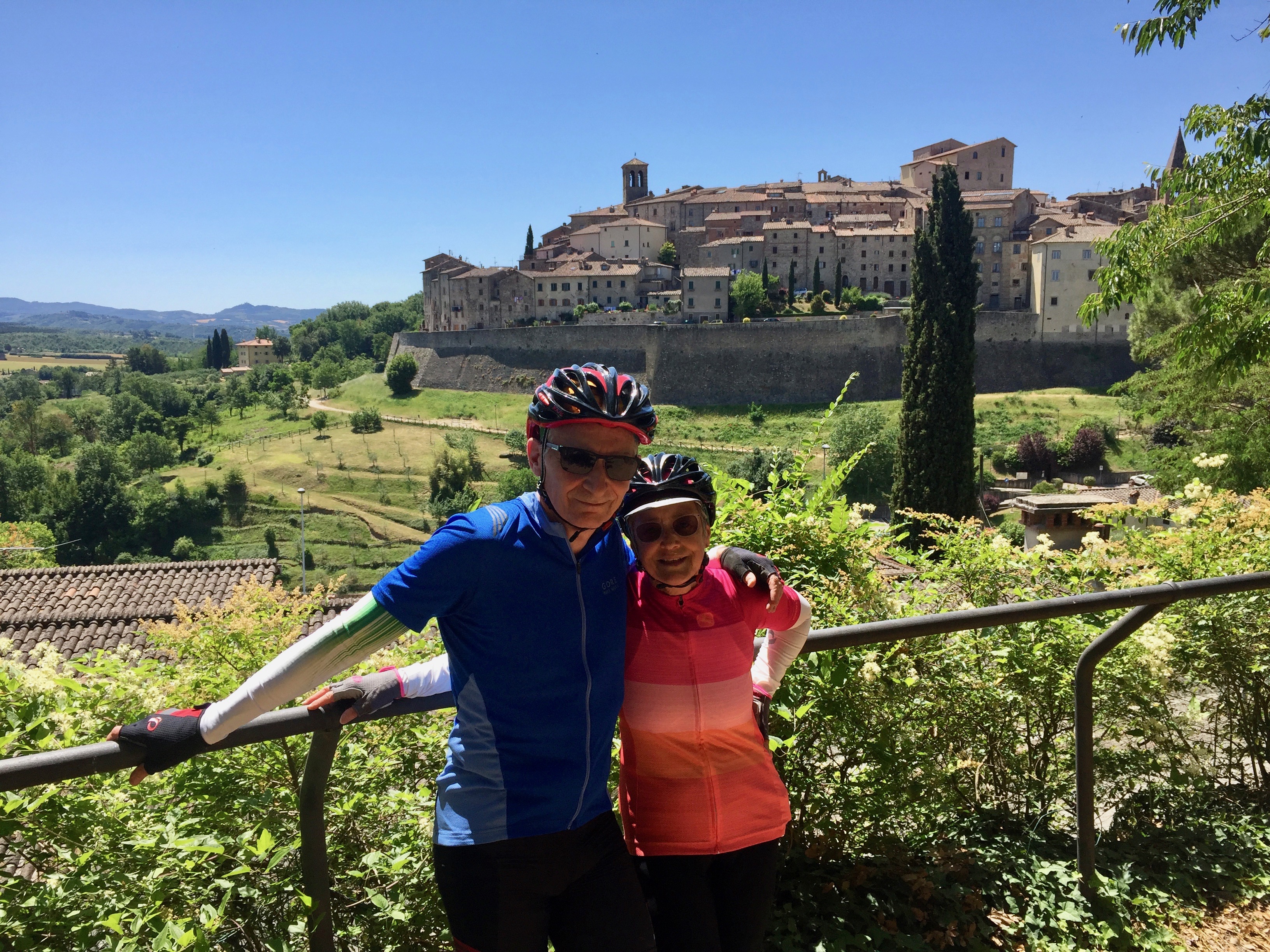
We rode by many fantastic-looking towns. Anghiari above.

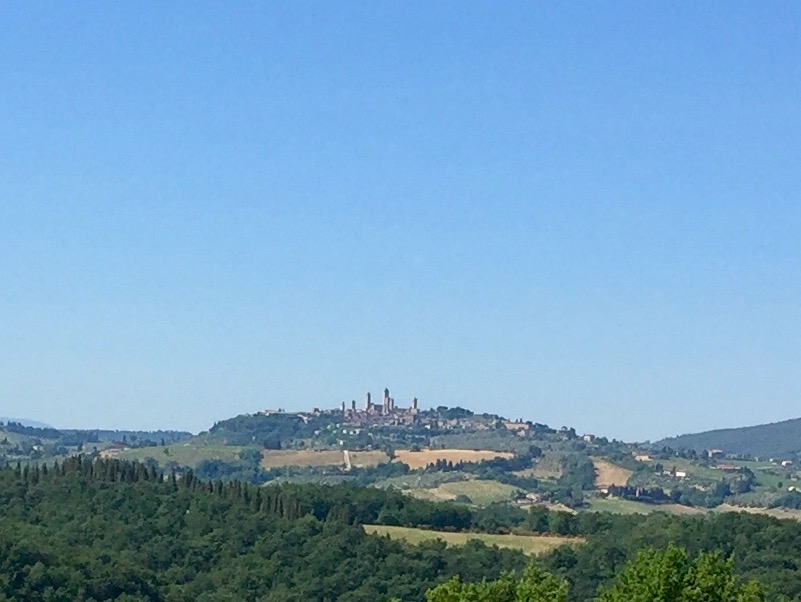
The epitome was San Gimignano. City of Beautiful Towers. One of the best-preserved medieval towns in Tuscany.

IMG_2105

This is as close as we got. Perhaps we’ll get there some day.

We spent our second night in Tuscany at Villa Lecchi, a restored 19th century residence in the middle of nowhere. Site goes back at least to the 900s. Below.

Villa Lecchi
Ferraris

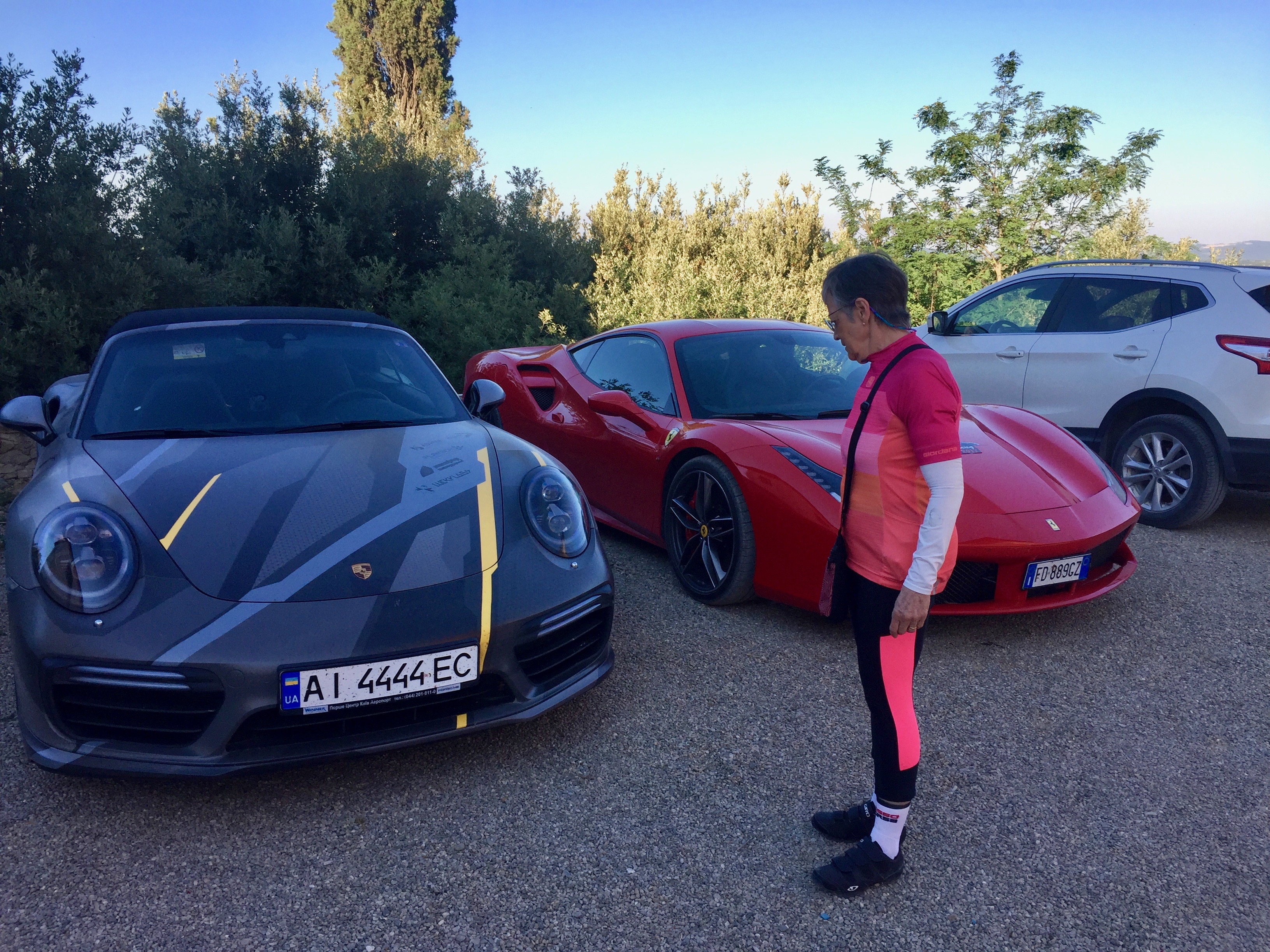
The Russian Ferrari/Porsche crowd likes Villa Lecchi.

Here is Sharon checking out their wheels.

On the way in our GPS acted up. We were alone and lost.

We flagged down a local in a dust-caked, old battered car.

Zero English. No surprise there.

He and Sharon had a very Latin, animated, convivial, loud conversation in Italian.

A very entertaining travel moment, & his directions were good.

We stayed 2 nights in Lucca, with a loop-ride to Pisa. Lucca is a sophisticated historic town. Narrow winding streets with high end shopping in every direction. Great gelato.

Pisa

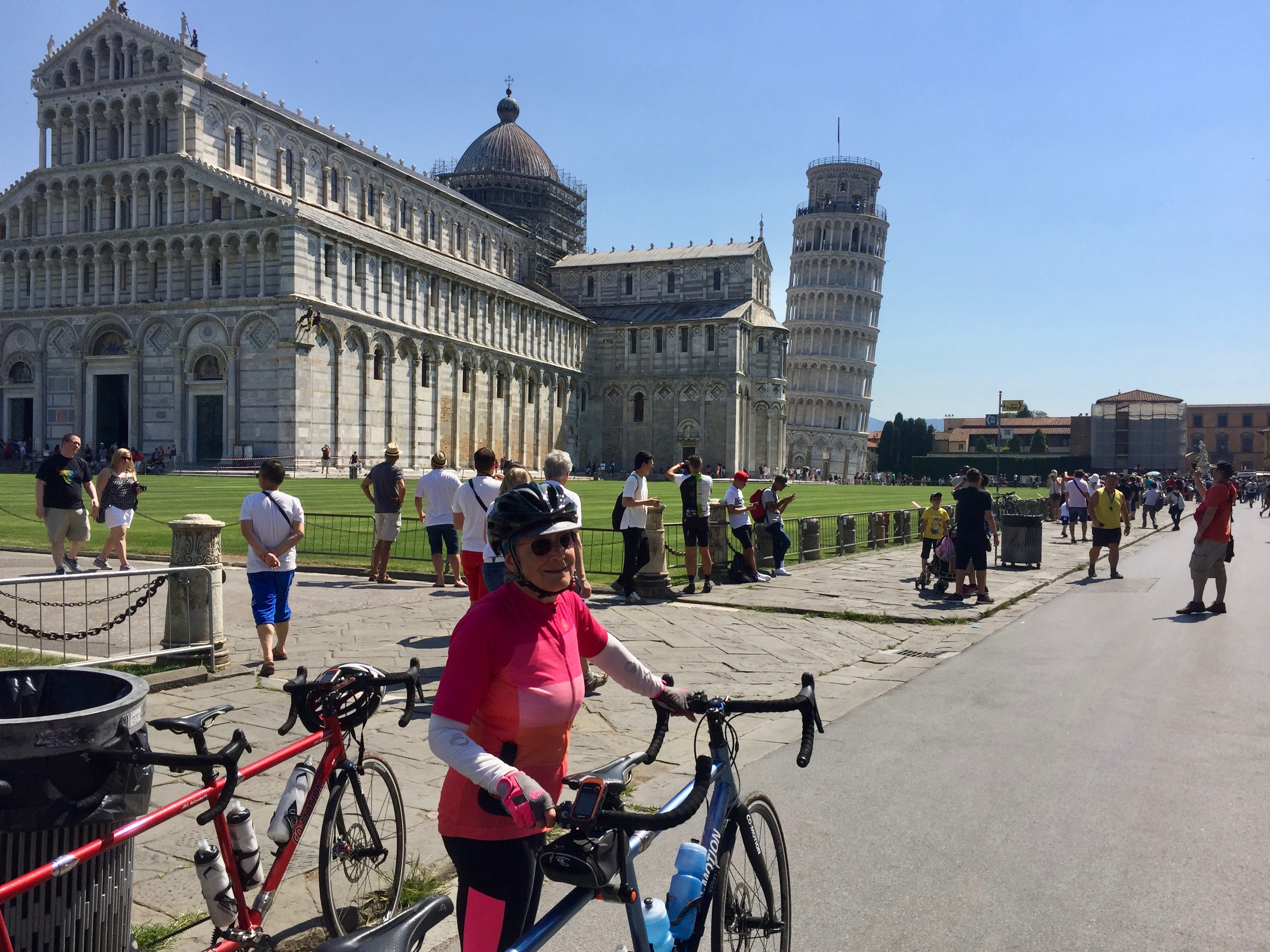
Pisa, on the other hand, was overrun with tourists. As we approached the Piazza del Duomo, there was no room to ride. We walked our bikes. The guards wouldn’t let us even lean our bikes against the wall. After 20 minutes or so, we headed back to Lucca.

Nonetheless the Piazza del Duomo, with the Leaning Tower is a rather remarkable place.

The next day, we rode our last stretch from Lucca to the coast and up to Lerici, Liguria and the Cinque Terre on the Italian Riviera.

Liguria

We rolled into Lerichi on our own, a bit worse for wear. We had blown a tire and then dropped behind on the climbs. The good news was that Sharon had mastered our Garmin GPS, so on the way in, we knew where we were and where we were going.

We could take our time.

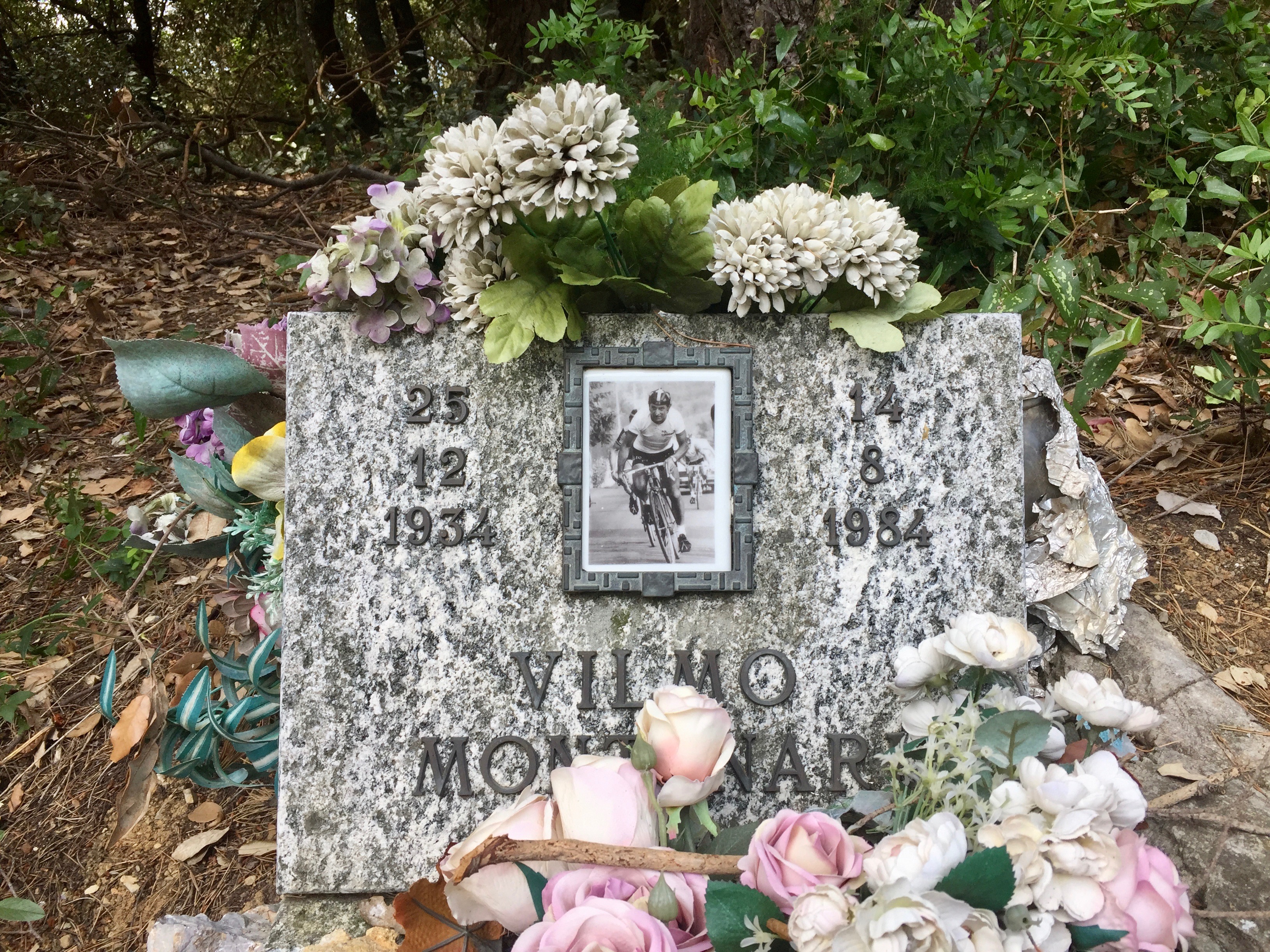
As we were walking our bike up through a series of steep switchbacks, we passed this memorial to Vilmo Montanari. We have no idea of his story, but it seems his life ended here in 1984 age 49, most likely on a bike, and clearly some folks still care. A poignant moment.

Note to self: Take care on those tight corners.

IMG_2161

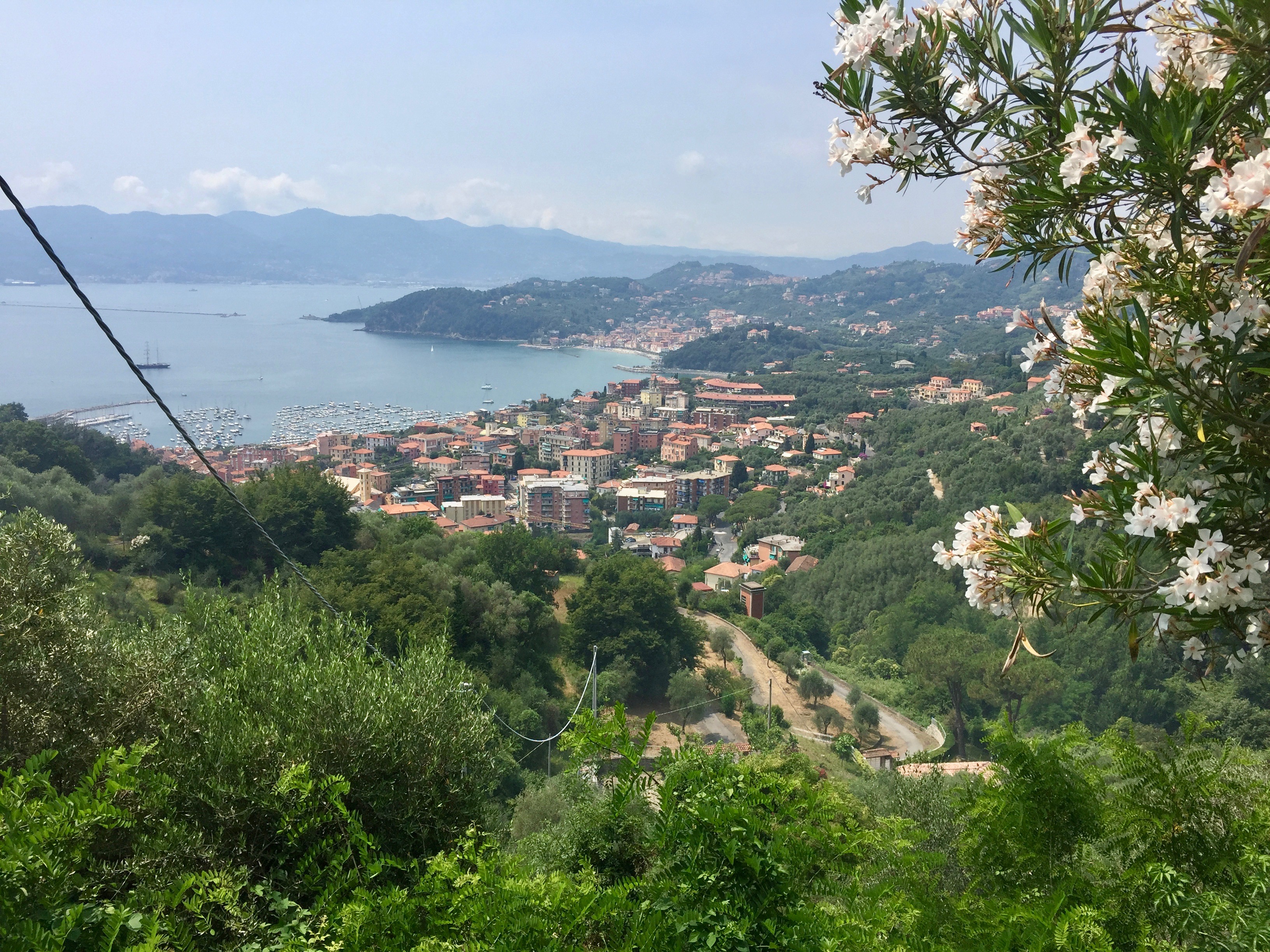
We reached the top of the climb and headed down. We were high up with views out over Lerichi to the sea. A great way to end the tandem part of our trip.

High Lerrichi

The tandem wrap: This tour was a stretch for us beginners- a tandem intensive, if you will. After riding with a fast, experienced crowd we now know we have a lot of work to do and miles to log. Spin classes are fine and well, but no substitute for time on the road.

The rough plan is to try to ride a minimum of 1500 miles in the next 12 months, and learn climbing techniques. And then ride the Finnish Archipelago next year.

My Mother passed this year and asked that her ashes be thrown into the Baltic Sea from a particular rock in Hanko Finland. We could bring the tandem and ride to Hanko down through the Finnish Archipelago from Turku.

Suspect Mom would approve.

Cinque Terre

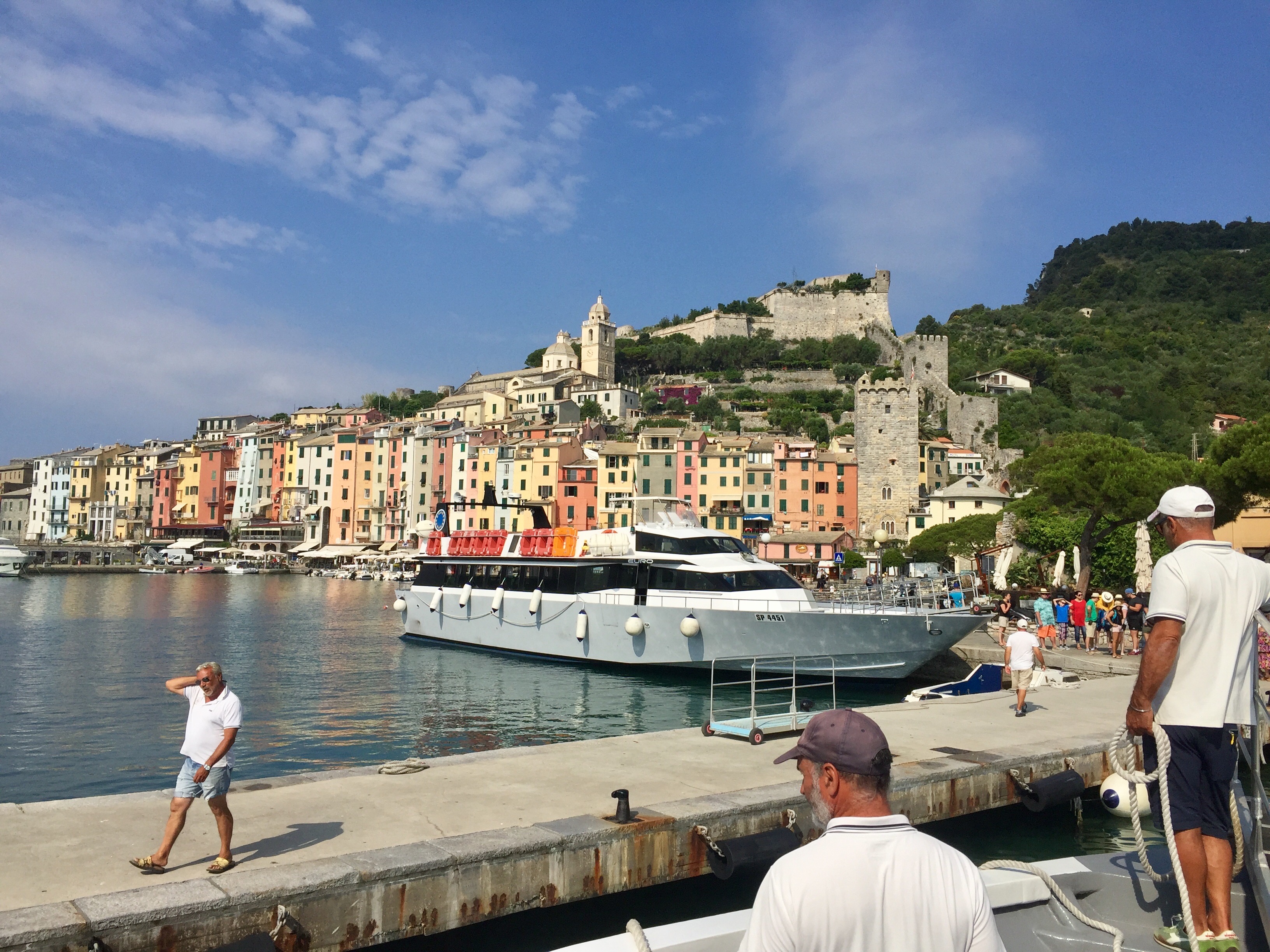
We still had a day to explore Cinque Terre – an Italian national park and World Heritage site comprising 5 villages and surrounding hillsides. No bicycles for us, just a relaxed ferry cruise up the coast.

Untouched by time. Odysseus would know his way around this coastline. We joked about Cyclops popping up and throwing boulders at the ferry.

The villages were impossibly picturesque and choked with tourists. Rick Steves described the Cinque Terre as “one of God’s great gifts to tourism.” An edgy comment for Rick, but perfectly put.

Florence

Florence

Our tour dropped us off at an airport hotel in Florence mid-day.

Check-in wasn’t for a few hours.

What to do with our spare time?

The obvious solution was to catch a taxi into Florence and see the sites.

But where to start?

The young woman at the tourist office had a 3 hour plan.

“Don’t go in anywhere. Just walk the city.

Here’s a map. Here is a route. Come back to Florence, when you have more time.”

Wise advice.

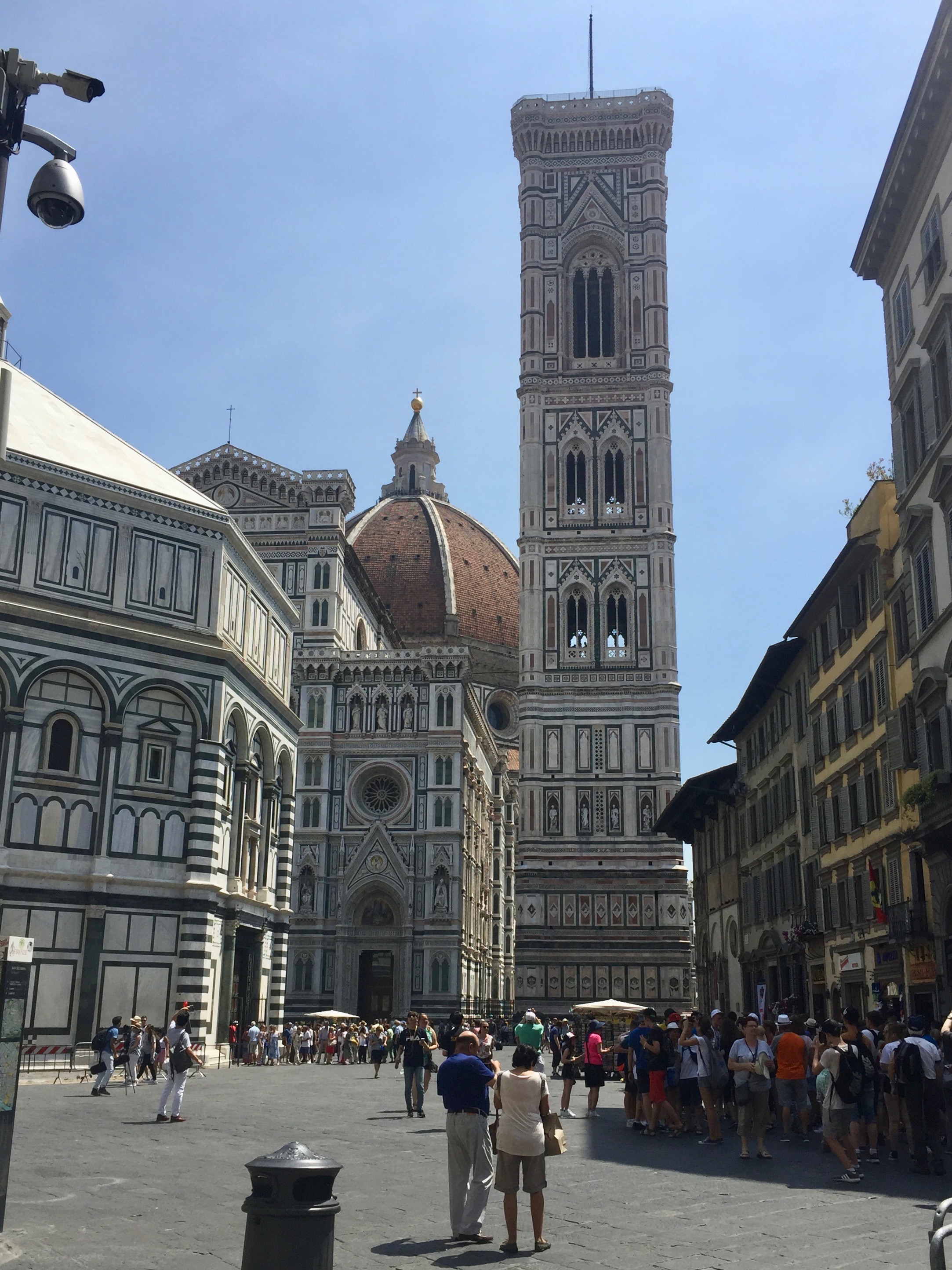
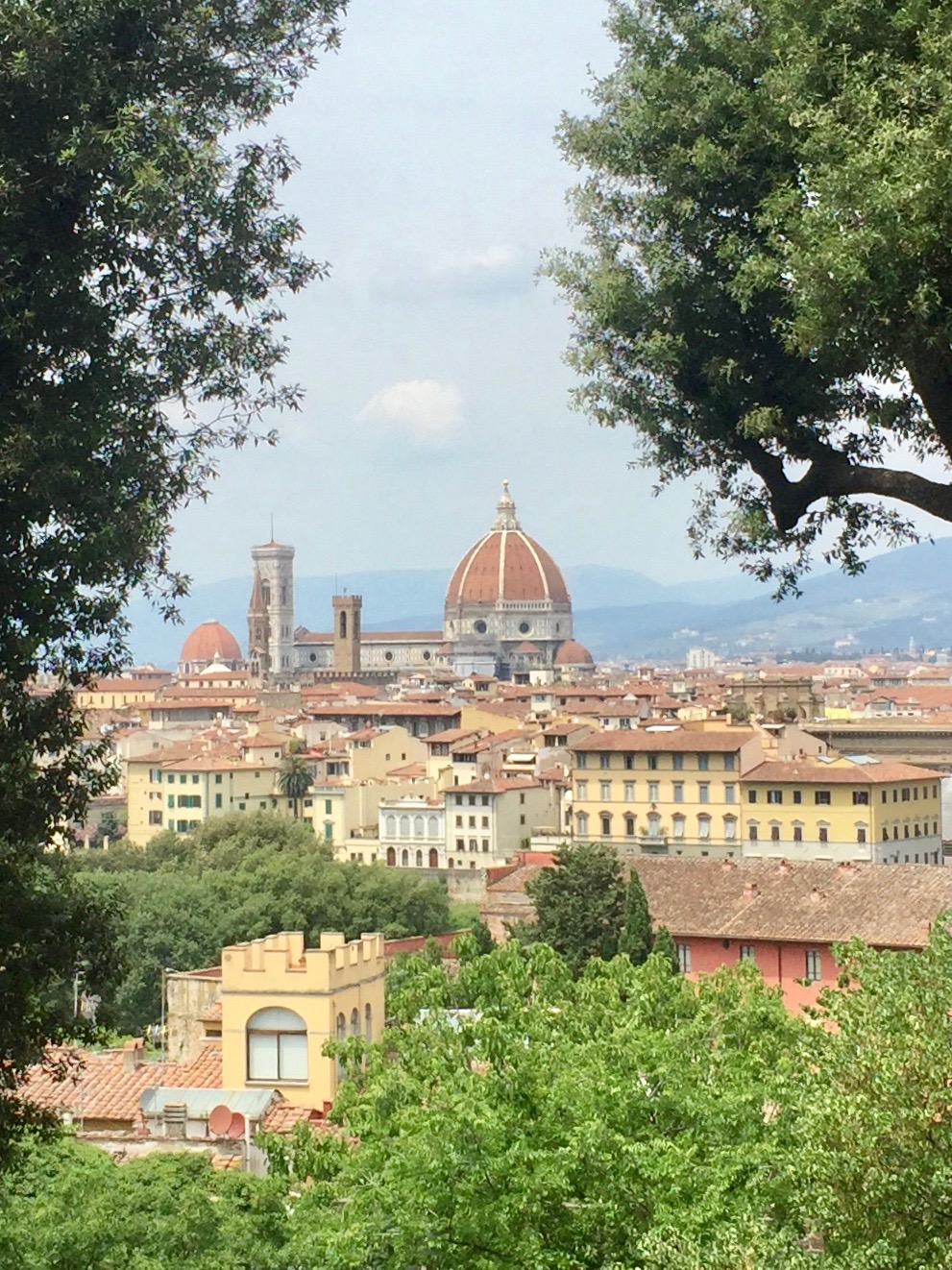
We circumambulated the Duomo and Baptistery, then headed to the Piazza Della Signoria to see a replica of Michelangelo’s David where it first stood.  The original is now safely stored away in a museum. Then it was over to the Biblioteca Nationale and across the River Arno with a climb to Piazzale Michelangelo and its sweeping views across the city – photo below.

brunelleschi's dome

Then back across the Arno via the Ponte Vecchio, a medieval stone bridge complete with shops, and then up to the Museo di Santa Maria Novella, where we caught a taxi back to the hotel.

Catching a taxi in Florence is a little different than in the USA.

No taxi stands.

They don’t stop if you wave. You have to call the office. I passed the phone to Sharon who took care of business, in Italian, of course.

Our taxi driver didn’t speak a word of English.

Sharon told me he said,

I’ve driven a taxi here for 30 years, I’ve never heard of your hotel. 

A quick google search later and he laughed, and said in Italian, Oh that hotel, they changed the name last week. 

Then he and Sharon exchanged jokes, in Italian, as we raced through the back streets, cutting across parking lots to save time.

Perhaps we will return to Florence in the not so distant future. No bike. Focus: Museums, Walking and Sightseeing.

Grandpa Pig owes Sharon this one.

Vamos a ver. We shall see.