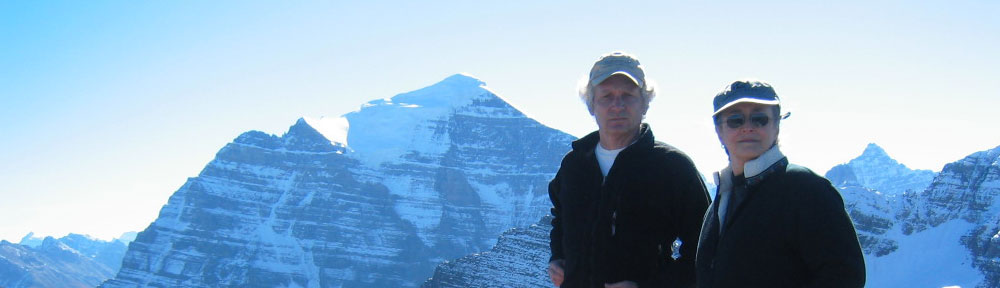

If all goes according to plan, the recipe for this trip will be one part relaxation, one part Spanish school, and one part butterfly excursion- with a sprinkling of hiking along the way.
Initially we were headed for Guanajuato, but on further thought, we decided on the smaller neighboring town of San Miguel de Allende.
Butterflies were the difference.
The Mexican Audubon Society leads interesting-looking tours to the Monarch’s wintering environs. Their tours only leave from San Miguel de Allende.
We also like the looks of a particular San Miguel Spanish School.
San Miguel de Allende
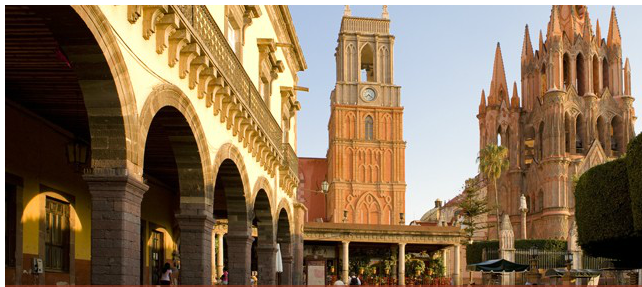
Our son Taavo and (his now wife) Meredith, visited San Miguel in 2011, on a side trip from Guanajuato. Taavo says San Miguel is a bit much. Beautiful, charming and historical, but a little too perfect.
There was a time when this would have rubbed me the wrong way.
Those days have passed.
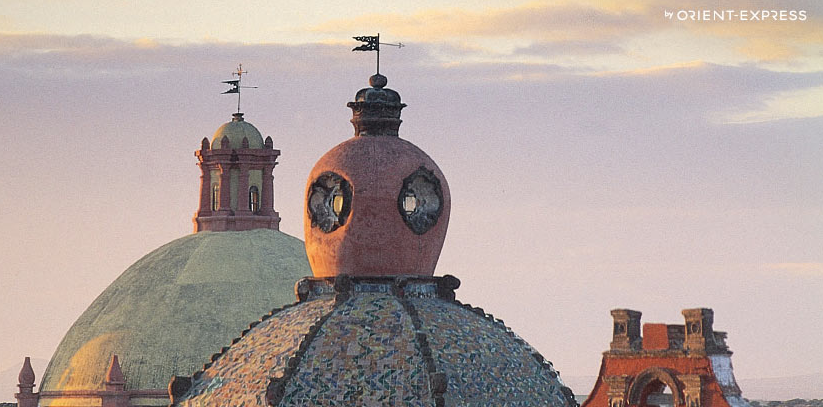
“The town of San Miguel de Allende is a UNESCO world heritage site with a history extending back almost 500 years.
Founded at the time of the Spanish colonization and defeat of the Aztec empire, large deposits of silver were discovered in the nearby areas of Guanajuato and Zacatecas. In order to defend themselves from raids from Chichimeca Indians the Spanish ordered the creating of a city. In 1542, Fray Juan de San Miguel did just that, and started a mission that became San Miguel de los Chichimecas.
During the Colonial period the San Miguel de los Chichimeca became known as San Miguel el Grande (Saint Michael the Great). This grandiloquent titledistinguished it from other cities known also as San Miguel, and showed the outstanding position that this city achieved in industry and commerce during the Colonial period.
The workshops, the tanneries, the haciendas (Plantations), the cattle and other industries of San Miguel made it a busy commercial center during the eighteenth century. Its sarapes, blankets, woollen stuffs, cloaks, rugs, harnesses, machetes, knives, spurs, and stirrups became popular within and outside of Mexico.
During that period the conspiracies which lead to the Independence of Mexico were conceived in San Miguel. The conspiracy was led by Ignacio Allende and Father Hidalgo. They were both of Spanish parents but born in Mexico. These people (called creoles) did not have the same opportunities as the pure Spaniards and were treated as second-class citizens.
Because of this, they decided to fight against the king of Spain. On the night of September 15th, 1810 their plot was discovered, so they agreed to begin their campaign that same night by giving the Grito de Independecia (scream for liberty) in Dolores. On the morning of the 16th, Father Hidalgo delivered a rousing speech to the townspeople. That day the fight for Independence started. The Independence from Spain did not become a reality until eleven years later, in 1821.
The town in the meantime endured difficult times: most of the leaders were executed and the industries were destroyed. In 1826, the town was given the status of city by Guanajuato´s government and after that its name was changed to San Miguel de Allende, in honor of the Independence hero, who was born here.”
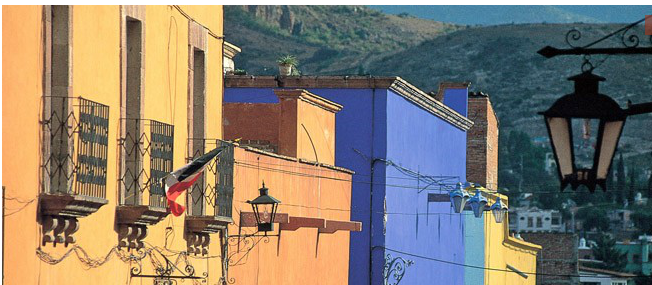
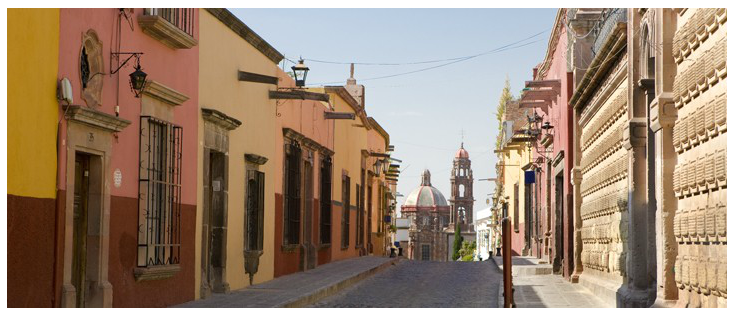
“The architecture of San Miguel de Allende is one of its principal treats. Here you can see countless examples of the elements that make Mexican colonial architecture so enchanting and seductive. Because the architecture of San Miguel is so valued there are strict limitations on what can be built in the center of the city.
All new buildings and all renovations must retain the colonial characteristics. Also, to maintain the charm that won the city recognition as a National Monument, there can be no traffic lights, stop signs, billboards or neon signs in the city center. These restrictions ensure that the downtown will remain a feast for the eyes.”
Text and photos above were lifted from the Casa de Sierra Nevada web site. Casa de Sierra Nevada is the Orient Express Hotel in San Miguel. There was an Orient Express Hotel next to us in Cuzco.
Pretty much top of the top end- extra oxygen in your room, if so desired- and so forth.
We may not be able to afford such taste and luxury, at least on regular-sustained basis, but we have found it is curiously reassuring when Orient Express Hotels are around the corner.
If there’s an Orient Express Hotel nearby, chances are rather good that you’ve got the right neighborhood.
San Miguel’s Orient Express Hotel is 8 blocks or so from our school.
San Miguel is #1 in Travel + Leisure Magazine’s 2010 list of Top Cities in Mexico, Central and South America. #2: Buenos Aires. #3: Oaxaca, Mexico. #4: Cuzco, Peru.
A most-tasteful video of San Miguel below: El Corazon de Mexico, “The heart of Mexico.”
Heart both in the literal and figurative sense. Geographically San Miguel is almost exactly in the center of Mexico. Figuratively [purportedly] for its role in Mexican independence, its religious festivals, its historic architecture, its impressive art, and its sheer beauty and tranquility.
Monarch Butterflies
For two days, we are headed to the Rosario Monarch Biosphere Reserve in Michoacan with the Mexican Audubon Society.
Here in the Boston area, in mid September, we noticed a lot of Monarchs. By October they were gone.
Where were they headed?
The highland pine forests of Michoacan and Estado de Mexico.
I particularly like the mind’s-eye image of so many butterflies that trees turn orange. So many butterflies, that their collective weight bends branches down.
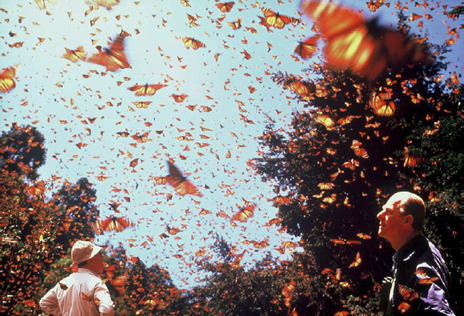 “Every autumn, millions, perhaps a billion, butterflies from wide areas of North America return to the site and cluster on small areas of the forest reserve, colouring its trees orange and literally bending their branches under their collective weight. In the spring, these butterflies begin an 8 month migration that takes them all the way to Eastern Canada and back, during which time four successive generations are born and die. How they find their way back to their overwintering site remains a mystery.”
 “The migration of the Monarch Butterfly Danaus plexippus is an amazing journey of more than 2000 miles from Canada and United States. Each year a special generation of these extraordinary butterflies locate a place for wintering in the highland pine forests of Michoacan and Estado de Mexico.
 The Rosario Monarch Butterfly Biosphere Reserve has been designated a World Heritage site by UNESCO. The Sanctuary is located in Michoacan, is the perfect setting for visitors to experience the hundreds of thousands of butterflies that winter there, and the breathtaking natural landscape of this region.”
“Day One:
7:00 am Leave St. Paul’s Church (Cardo no. 6, Centro SMA) Breakfast while traveling. Arrive at Agua Blanca and check in
Lunch at hotel.
Time for relaxing and enjoying the thermal mineral hot springs pool Hiking around Agua Blanca’s trails.
6:00 pm Cocktail time (drinks not included) & Monarch movie presentation
7:00 pm Dinner
Day Two:
7:00 am Breakfast; Check out
8:30 am Leave for the Rosario Monarch Biosphere Reserve
Arrive at the reserve
Hike to the butterfly colony or ride horse (horse not included*) Hike or ride downhill towards the bus
1:00 pm Leave Sanctuary for Rancho Givali for lunch. Please be on time!!
Bus Leaves for San Miguel de Allende
7:00 pm Arrival in San Miguel de Allende”
Spanish School
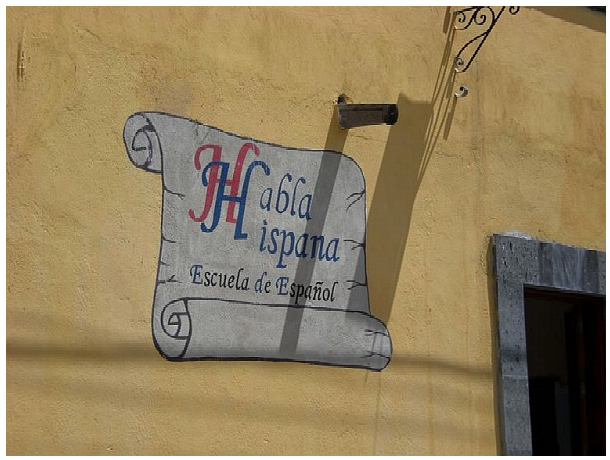 The new wrinkle of this trip will be Spanish School.
Sometime in my mid to late 50s, I decided to take up the challenge of a new language.
“Mas vale tarde que nunca.”
“Better late than never.”
At 61 I have inched ahead to advanced beginner or so. I have been ever so slowly working my way through a 1957 US State department Foreign Service Institute (FSI) Spanish audio program.
This FSI program is the same course once used by the US Government to train diplomatic personnel.
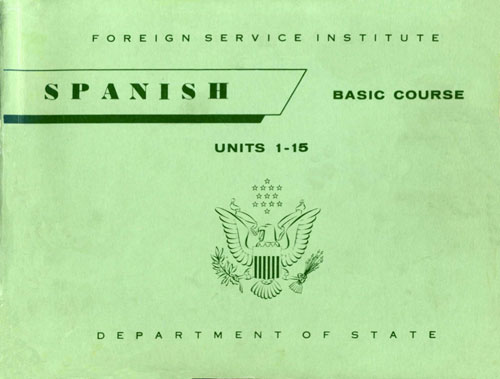 Now in the public domain, Barron’s took the first two FSI levels and released them under the Barron’s name.
I bought my copies from Amazon. On the box cover Barron’s promises in large type,
“Learn to Speak Fluently at your own pace- in your spare time.”
Encouraging words from Barron’s marketing department.
Chances that the folks who wrote and approved such wording, actually tried this program?
Zero.
This course was designed to be an intensive full-time, teacher-present, boot-camp program designed to force-march non-Spanish speakers to semi-fluency in 6 months.
Below is a review from a frustrated Amazon user, which I find particularly amusing.
Through my tears.
SPANISH TORTURE CHAMBER
Well, I should tell some and warn others that I had to check the cover to make sure this was LEVEL ONE. Not only did the book waste countless hours with banal pronunciations, but the speakers on these CDs apparently assumed I had “Mastered Spanish” long before purchasing this “comprehensive course”. I couldn’t understand WHAT the heck these Latin Hombres were saying and they didn’t seem the least bit interested in helping me to crawl before I walked. I couldn’t even get through the first CD.
Not only is this course difficult, frustrating and boring as hell, but it offers no opportunity to practice because the translations and dialogues fly by like Latin bullets and you feel like that dude Rudolph who couldn’t join in any reindeer games. My first reaction was “Forget It! I’ll just stick to PIG LATIN!”, but then I thought why should I miss out on all the joy of learning a new laguage simply because Barron’s missed the mark.
Maybe I’m not one of those “serious students” for whom this course was supposedly intended, but I would rather have bamboo shoots shoved under my finger nails than spend another day with this SPANISH TORTURE CHAMBER. I SURRENDER!!!
Sharon is keeping a close eye on my Spanish journey. She is pretty much fluent being half-Cuban and growing up on the street-Spanish side of Tampa, Florida.
She is also rather bright with impossibly high standards.
I can’t imagine how our Spanish school in San Miguel de Allende will deal with her,
“Una timbre, si alguna vez hubo uno.”
“A ringer if there ever was one”
“Pero esa no es mi problema.”
“But that’s not my problem.”
The San Miguel Spanish School, Habla Hispana:
 “Our team of highly qualified professors, with an average of twenty years experience in teaching Spanish as a second language, has designed a practical, dynamic, and communicative method to learn Spanish in a spontaneous and natural way.
All activities are in Spanish with an emphasis on improving speaking and listening skills. With the interaction of language, culture and society, learning is not confined to the classroom.”
“Twenty hrs. per week of intensive Spanish, from 9 am to 1 pm, from Monday through Friday, in a group with an average size of 5 students ( maximum allowed is 10 students ).
Six hrs. per week of the following afternoon activities: On Monday from 4 pm to 6 pm a teacher, expert of San Miguel history and tradition, will be your guide for a walking tour of San Miguel.
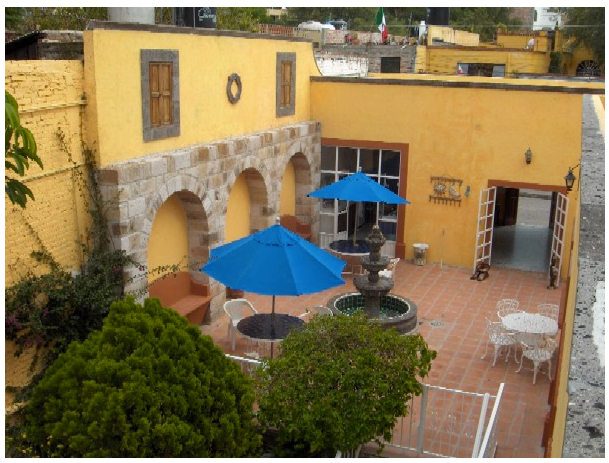 Mexican songs class on Wednesday from 4 pm to 5:30 pm .
Mexican cooking class ( and lunch on the school patio of course ) on Friday from 1:00 PM to 3:30 pm.”
“Our team of highly qualified professors, has designed a practical, dynamic, and communicative method to learn Spanish in a spontaneous and natural way.
All activities are in Spanish with an emphasis on improving speaking and listening skills. With the interaction of language, culture and society, learning Spanish is not confined to the classroom.”
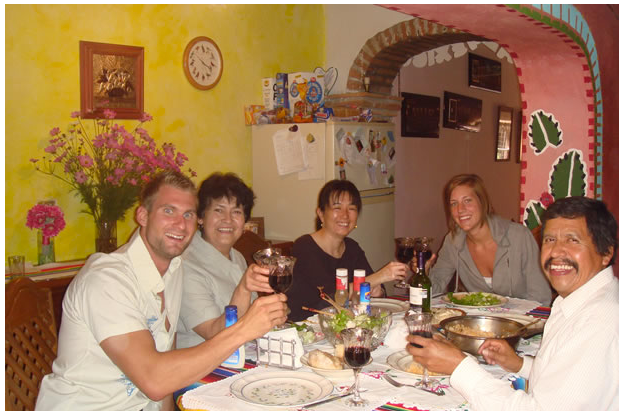 “Living with a Mexican family substantially enriches the language and cultural experience. It is surely your best choice if you would like to enjoy a total immersion in the Spanish language and Mexican culture. We can guarantee that all accommodations are with middle to upper class Mexican families, personally known to us.
All homes are clean and comfortable. We try to place each student with a family that matches his or her interests and age. Families serve as excellent hosts in the town and provide a comfortable and safe environment in which to assimilate to another country.”
Our current plan is to stay with a Mexican family. The included three meals a day sound both tasty and convenient. Besides it’s the more adventurous option & something we’ve never done before.
Hiking
The hope is to get in a couple of days of hiking.
 The lay-up is some hiking in the Los Pichachos mountains above San Miguel.
Close and scenic with one of the most beautiful forests in the region at an altitude of 7217ft – 8500 ft above sea level.
And there are ancient rock paintings.
Another possibility is Peña de Bernal, the 3rd highest monolith in the world (1150 ft.), after the Rock of Gibraltar and Rio de Janeiro’s Sugarloaf Mountain.
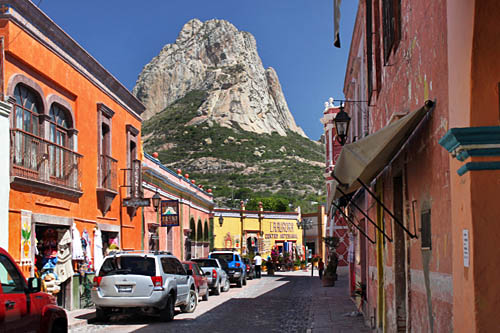 Peña de Bernal towers above San Sebastián Bernal, a small colonial town in the Mexican state of Querétaro about 1.5 hours from San Miguel.
Bernal itself, might be worth the trip.
Founded by the Spanish in 1642, it is reputed to be home to more centenarians than any other town in Mexico. Some say that the average life expectancy in Bernal is 94.5 years.
Bernal is an official Pueblo Mágico or magic town.
A tourist town, but the tourists are purportedly overwhelmingly Mexican.
Before the Spanish arrived, the area was considered sacred by the local Chichimeca Indians, a semi-nomadic people. They’ve never gotten much respect, but they sure gave the Spanish grief.
“The first descriptions of “Chichimecs” are from the early conquest period. In 1526, Hernán Cortés writes in one of his letters of the northern Chichimec tribes who were not as civilized as the Aztecs he had conquered, but commented that they might be enslaved and used to work in the mines.
The Chichimeca War (1550–1590) was a military conflict waged between Spanish colonizers and their Indian allies against a confederation of Chichimeca Indians. It was the longest and most expensive conflict between Spaniards and the indigenous peoples of New Spain in the history of the colony.
The conflict proved much more difficult and enduring than the Spanish anticipated. The Chichimecas seemed primitive and unorganized. But they proved to be a many-headed hydra. Although the Spanish often attacked and defeated bands of Chichimecas, Spanish military successes had little impact on other independent groups who continued the war…
During the war, the Chichimecas learned to ride horses and use them in war. This was perhaps the first time that the Spanish in North America faced mounted Indian warriors.
As the war continued unabated, it became clear that the Spanish policy of a war of fire and blood had failed. The royal treasury was being emptied by the demands of the war. Churchmen and others who had initially supported the war of fire and blood now questioned the policy.
…to end the conflict, the Spanish began to work toward an effective counter insurgency policy which rewarded the Chichimeca for peaceful behavior while taking steps to assimilate them.
The Peace by Purchase program worked. Hostilities died down and the majority of the Chichimecas gradually became sedentary, Catholic or nominally Catholic, and peaceful.”
I particularly like nominally Catholic as applied to battle-hardened, self-aware, indigenous peoples.
The hiking trail only goes about half way up the monolith.
If we get there, it will be an opportunity to remember the Chichimecas. Barbarians who wore few if any clothes, grew their hair long, and painted and tattooed their bodies.
And who, when faced with the same Spanish war machine that toppled grand empires, had the resourcefulness to not only persist, but learn the rules of this new game.
I wonder what the Chichimecas thought about the butterfly migration.
2013 Mexico; Itinerary February 26 – March 18
Tuesday February 26 2013: Leave Boston fly to San Miguel de Allende. Stay in home stay.
Wednesday February 27: Day off. Stay in home stay.
Thursday February 28: Monarch trip: 7:00 am Leave St. Paul’s Church (Cardo no. 6, Centro SMA) Breakfast while traveling. Arrive at Agua Blanca and check in; Lunch at hotel; Time for relaxing and enjoying the thermal mineral hot springs pool; Hiking around Agua Blanca’s trails; 6:00 pm Cocktail time (drinks not included) & Monarch movie presentation; 7:00 pm Dinner
Friday March 1: Monarch trip: 7:00 am Breakfast; Check out; 8:30 am Leave for the Rosario Monarch Biosphere Reserve; Arrive at the reserve; Hike to the butterfly colony or ride horse (horse not included*) Hike or ride downhill towards the bus; 1:00 pm Leave Sanctuary for Rancho Givali for lunch. Bus Leaves for San Miguel de Allende; 7:00 pm Arrival in San Miguel de Allende. Stay overnight in home stay.
Saturday March 2: Day off. Stay in home stay.
Sunday March 3: Day off. Stay in home stay.
Monday March 4 through Friday March 8. Home stay & Spanish School at Habla Hispana.
Saturday March 9/ Sunday March 10: Weekend. Hiking/ Bird watching etc
Monday March 11 through Friday March 15. Home stay & Spanish School at Habla Hispana.
Saturday March 16/ Sunday March 17: Weekend. Hiking/ Bird watching etc. Home stay.
Monday March 18?: Return to Boston.
 Advencha before Dementia
Hello advenchadementia,
I want to tell you that,you shared very information to us. As i search for some valuable content and your blog is come up. Please keep sharing this kind of information, this is very helpful to others.
Thanks and great work!!